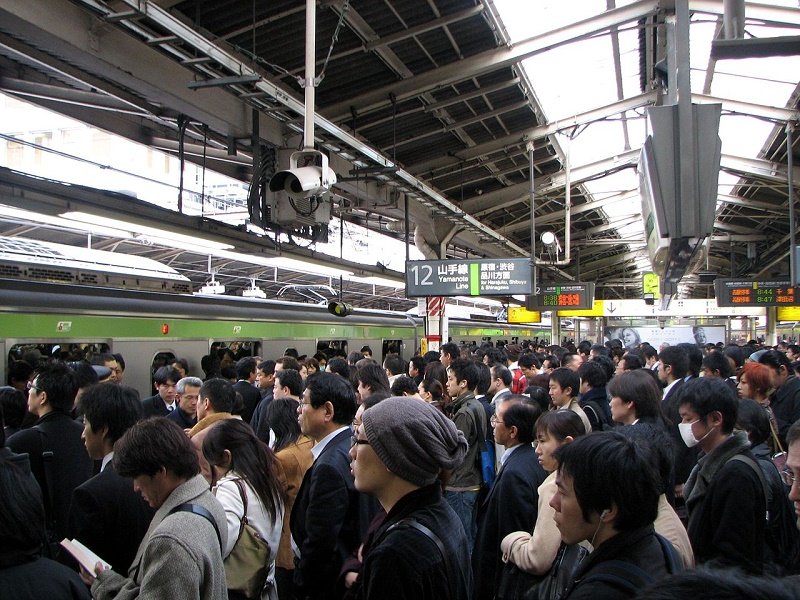
The busiest railway stations in the world are the major transport hubs of megacities, where business, commerce and daily life are formed as a single system covering several urban areas.
Shinjuku station in Tokyo took the first place in the rating. It serves approximately 1.164 billion passengers annually. Next are Shibuya (1.023 billion) and Ikebukuro (843 million) recorded.
Osaka-Umeda and Yokogama stations also entered the top 5, which shows the superiority of Japan in this ranking. And India’s Howrah and Sealda stations are distinguished by the huge volume of suburban and regional traffic.
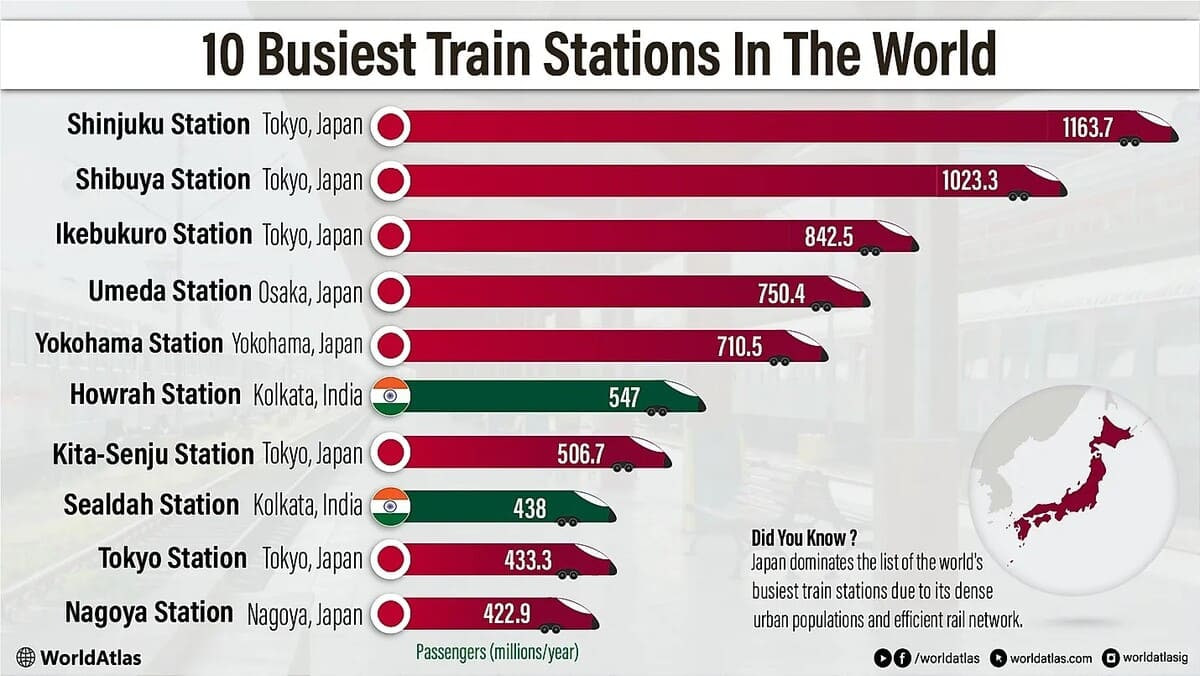
Eight out of ten places in the rating were occupied by Japanese stations. Five of them are located in Tokyo. Experts explain this situation with the country’s high-density railway network, frequent passenger transfers and traffic intensity.
Shinjuku Station opened in 1885 and is now a major transportation hub connecting central Tokyo, the suburbs, and regional routes. There are more than 200 exits and several underground floors in the station area.
Kita-Senju, Tokyo and Nagoya stations are also listed in the next places of the rating. They function not only as transport hubs, but also as large urban complexes combined with commercial, hotel and office infrastructure.