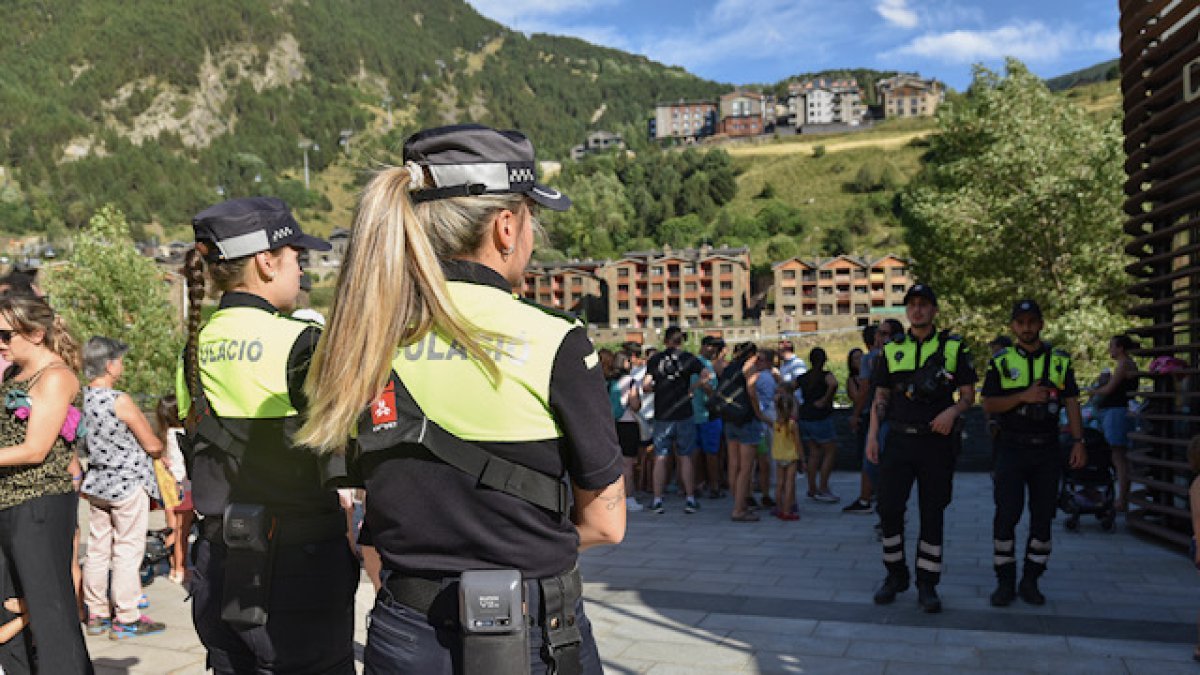
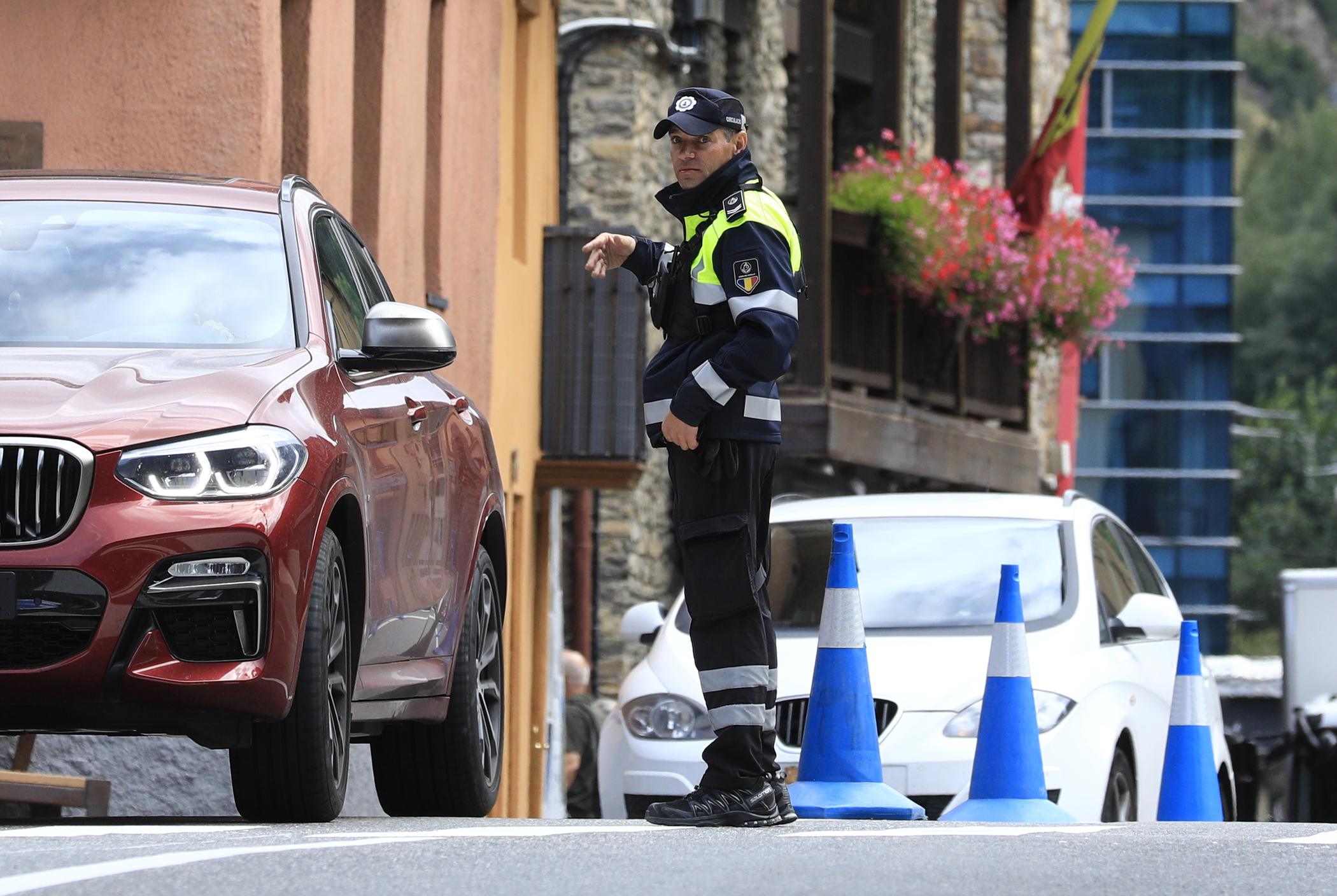
The pilot test to equip the Canillo traffic agents with mobile video surveillance devices has a difficult fit in communal regulations. Last Friday, July 17, the municipality announced in a statement that this new tool would be used on a timely basis during the parish’s major holidays. The pilot test, the same press release points out, is legally based on the Regulation regulating the use of mobile video surveillance devices for traffic agents, approved by the common council of Canillo on January 21 of this year.
This regulation, however, does not seem to equal the pilot test. We quote article 7 in full: “The use of mobile video surveillance devices by municipal traffic officers requires prior administrative authorization from the ministry competent in matters of the interior, in accordance with what is established in the Qualified Law of Public Security in force.” The commons, including that of Canillohave not yet received authorization to use chest cameras from the national video surveillance commission, a body under the Ministry of the Interior in charge of supervising the video surveillance systems of the country. Nor does the regulation provide that recording devices can be used as part of a pilot test.
“A pilot test does not change this analysis, because the images are recorded the same”
The same obligations
For his part, the lawyer specialized in data protection Víctor Roselló warns that the legal obligations in a pilot test are the same as in the case that the implantation of chest cameras was definitivesince from the first moment “personal data is being captured”. As emphasized in statements to diarythe fact that it is only a testing phase does not exempt the administration from meeting all the requirements provided by the regulations, because the cameras will record images – and eventually also audio – of citizens. “A pilot test does not change this analysis, because the images are recorded the same”, he reiterated.
“If there is a less intrusive measure, the chest camera cannot be used”
On the other hand, Roselló also considers it essential that, before deploying the devices, one has been carried out data protection impact assessment which determines the risks, the security measures, the retention time of the recordings, who can access them and under what circumstances the cameras can be activated.
Rosselló also emphasizes the principle of proportionality that governs this type of video surveillance systems. The lawyer points out that the authorities they will have to prove that the use of body cameras is really necessary to guarantee public safety and that there are no other less intrusive mechanisms to achieve the same objective. “If there is a less intrusive measure, the chest camera could not be applied,” says the data protection expert.
The common makes a positive balance of the first days of use of the cameras
In this sense, the lawyer also defends that theAndorran Data Protection Agency should validate the protocol that regulates the operation of the devices before any definitive implementation. According to the expert, this document should establish in detail when the cameras can be activated, how the recordings are kept and what they can be used for, especially if the recorded images end up being evidence in judicial or administrative proceedings.
The regulation does not provide that widgets can be used in the test phase
The pilot test was launched by the Major Festival of Canilloheld last weekend. The senior consul, Jordi Alcobémade a very positive assessment of the start of the project, since it has allowed us to start studying the “operational functioning” of the cameras. Recording devices, he argued, have a “preventive and deterrent effect” which contributes to strengthening security, especially in events where there is strong competition.
The use of these devices in a pilot test inevitably raises a question: the police could request access to the images recorded by Canillo traffic agents with the aim of investigating alleged criminal acts when the common does not yet have authorization tointerior? As the consul replied, he could have access as long as one authorized it Battle.