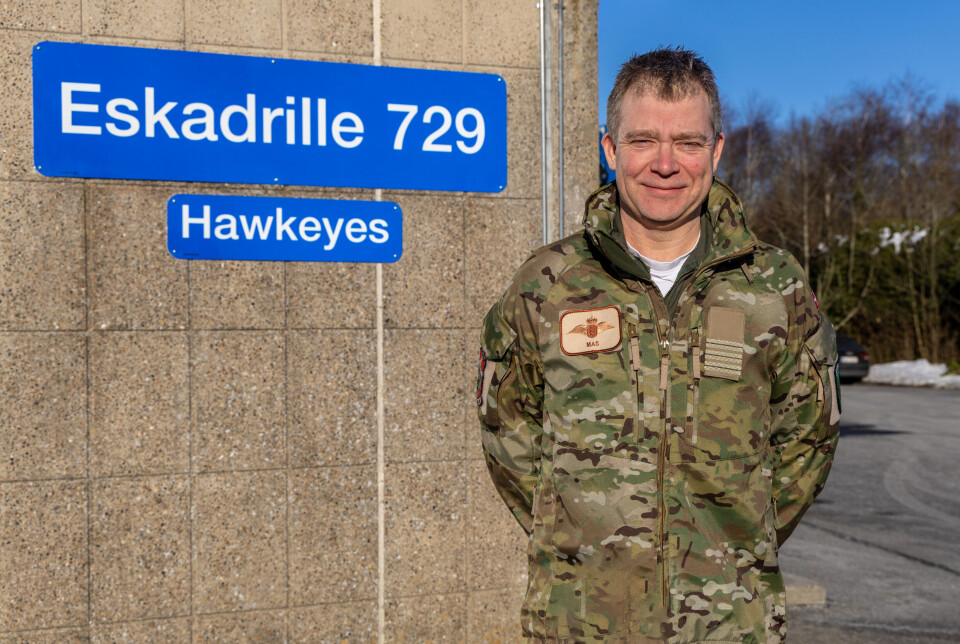
– I’m in, that most people say drones in everyday speech, but personally I prefer the term “remotely manned aircraft”, says Major Mark Christiansen, who is the head of the air force’s new surveillance squadron 729, which is based at Flyvestation Aalborg under the Air Transport Wing, which already operates the air force’s Hercules and Challenger aircraft.
– Because in reality it is far from the drones that both the defense and other authorities use when they need to have a quick overview of an area.
– I’m in, that most people say drones in everyday speech, but personally I prefer the term “remotely manned aircraft”, says Major Mark Christiansen, who is the head of the air force’s new surveillance squadron 729, which is based at Flyvestation Aalborg under the Air Transport Wing, which already operates the air force’s Hercules and Challenger aircraft.
– Because in reality it is far from the drones that both the defense and other authorities use when they need to have a quick overview of an area.
– The new drones are in fact real planes – just with the small difference that there is no crew on board. The crew sits in a cockpit on the ground, explains Mark Christiansen in a solo interview with Sermitsiaq.
Big planes
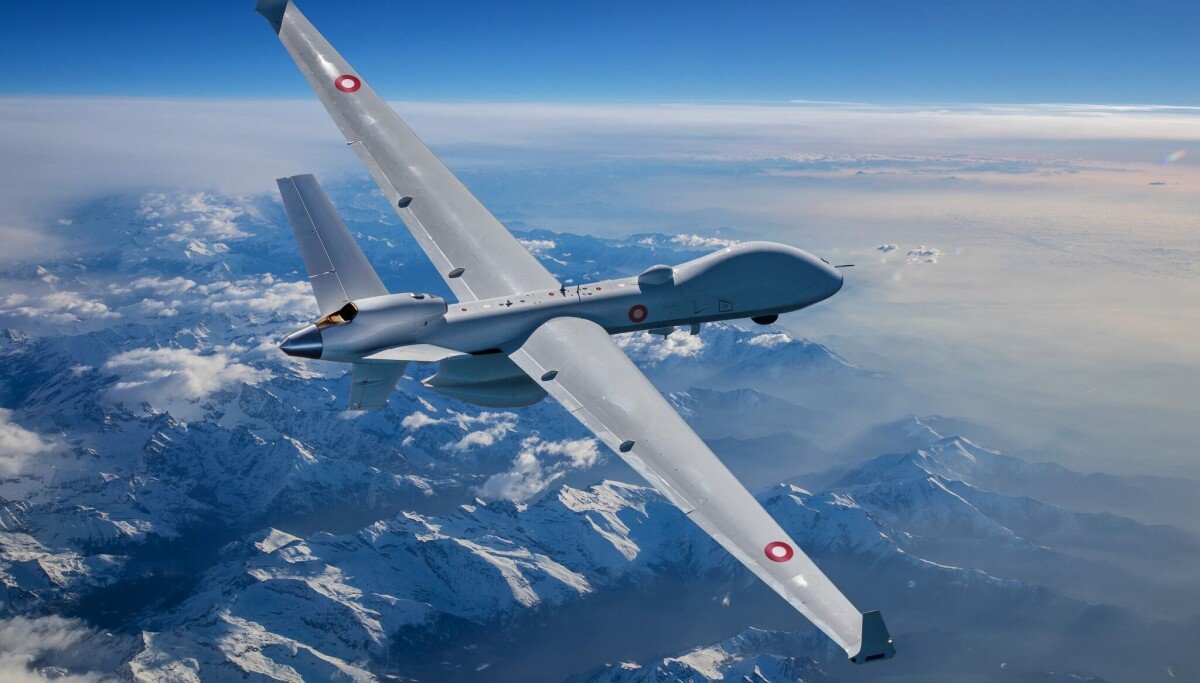
The Danish defense has ordered four drones from the American weapons manufacturer General Atomics Aeronautical Systems. The choice has fallen on the type MQ-9B SeaGuardian, which in terms of size can best be compared to a Challenger aircraft. The wingspan is slightly larger – 24 meters – while the body is slightly smaller – 12 meters. Propulsion is created with a propeller which, like the engine, is mounted at the rear of the fuselage.
The drone looks like a real plane – except that where the cockpit normally is, there is a box full of radar equipment – and under the drone there is even more surveillance equipment – Flir camera, radars and other equipment that can be used both for surveillance, intelligence activities and SAR operations.
The crew of the new drones consists of a pilot, a sensor operator and a number of payload operators for the many sensors and the radar.
– The remote-manned aircraft are controlled from the ground, where the pilot and the sensor operator sit next to each other in a traditional cockpit, which is very similar to a flight simulator, says Mark Christiansen.
– It will be just like an ordinary flight, where the pilots must communicate with air traffic control and other aircraft in the same way as if they were on board.
Flight time of over a day
Mark Christiansen comes from a position at Flyvestation Karup, where he has been part of the project group that has been responsible for the purchase of the new remote-manned aircraft – or drones.
– One of the decisive priorities for us has been the flight time – and here the new planes are something very special. They can be in the air for over a day without refueling and stopovers.
– This is a feature that we believe will be of great importance, among other things, in connection with SAR operations, where the MQ-9B can stay in the air above an accident site at sea for hours – thus ensuring that the rescue team knows exactly the extent of the accident and the weather situation, already while they are en route.
The long flight time is connected, among other things, to the shape of the remotely piloted aircraft.
– If you look at the MQ-9B, it has some of the same characteristics as a glider with long, narrow wings – and this is, among other things, what enables the new aircraft to stay in the air almost without using fuel, explains Mark Christiansen.
– Incidentally, the fuel is regular Jet-A1, so there is nothing to prevent the MQ-9B from landing at all air bases where the runway is long enough – for example Kangerlussuaq – as long as there is a reception team that can handle the situation.
However, Mark Christiansen will not reveal whether reception facilities may need to be established in Kangerlussuaq for the new drones.
– These are some operational considerations that we do not share with the public – so I can neither confirm nor deny that.
100 new employees
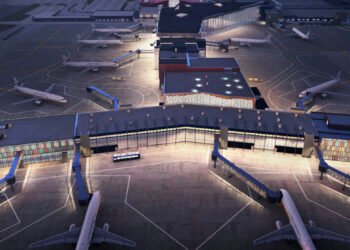
It is certain that a home base for the long-range drones must now be established at Aalborg Airport.
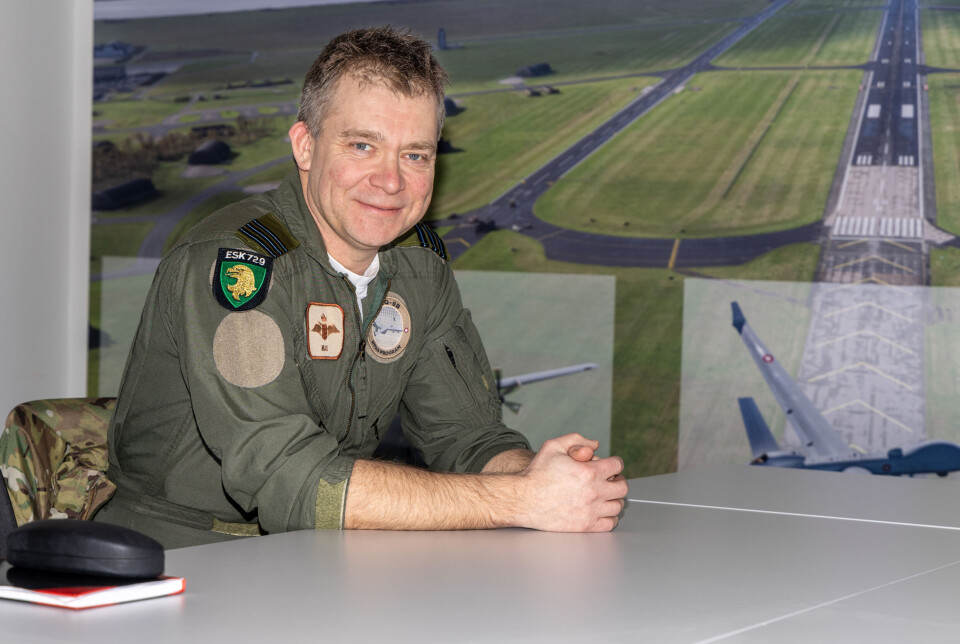
– It will be a nice big building. A hangar must be built for the four remotely piloted aircraft. The squadron will have approximately 100 employees – primarily intelligence officers, pilots and aircraft technicians. Among other things, the new building will accommodate three workplaces for pilots and technicians on the flights in Greenland and the North Atlantic. The entire construction must be completed at the end of 2028, when the new MQ-9Bs arrive from the factory in the USA.
Mark Christiansen comes to the new surveillance squadron with a solid flying background. He has flown helicopters for 25 years – most recently the EH101 rescue helicopters, of which there are three on duty in Denmark around the clock. On the other hand, Mark Christiansen has no experience with the Arctic and Greenland.
– On the other hand, they have that at the Air Transport Wing, so I will also be on the learning bench and absorb all their knowledge about flying in the Arctic and Greenland. Because they are the experts – and I am willing to learn, says Mark Christiansen.
The new squadron 729 is actually not new at all in the Danish air force. The squadron existed during the Cold War in the years 1955 – 1993, where information was collected especially over the Baltic Sea with photo planes. The squadron then had the call sign Hawkeyes – Høgeøjne – and that will also be the drone squadron’s call sign.