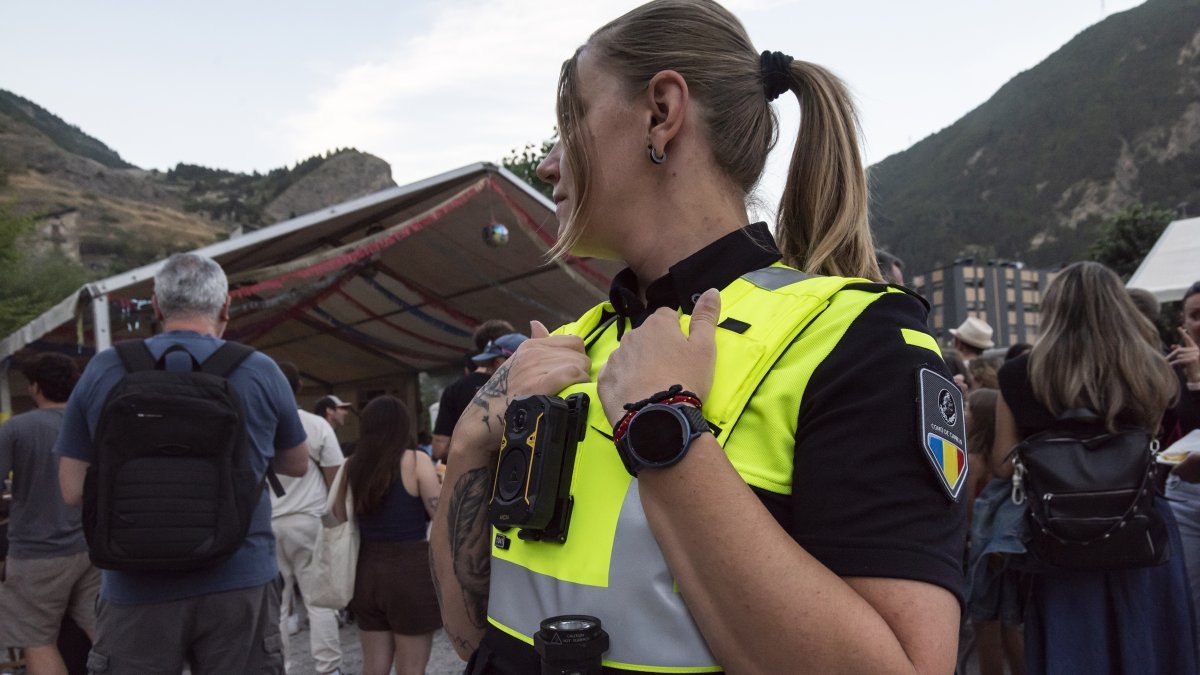

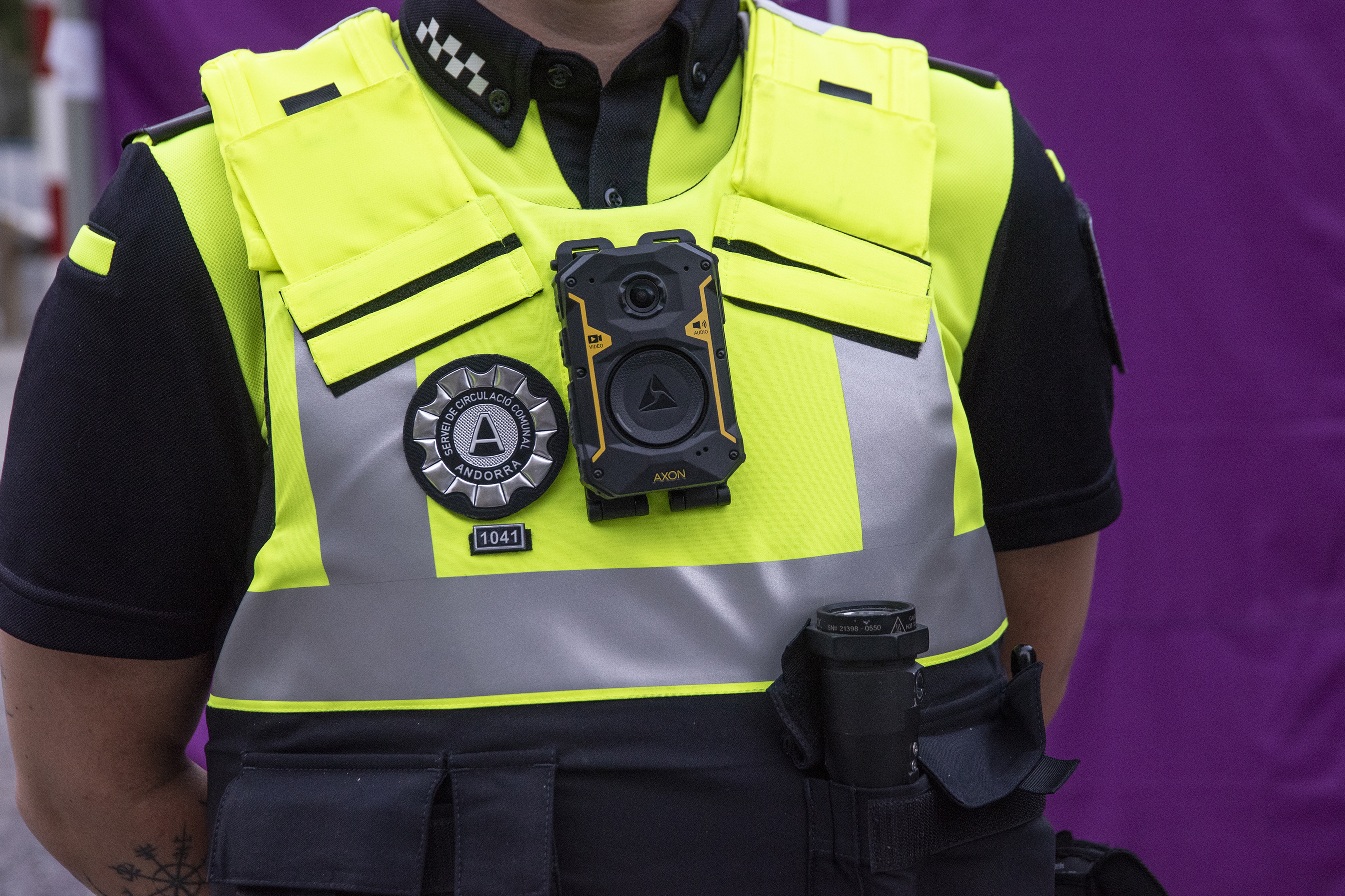
Immediate and comprehensive response from Government and theData Protection Agency (APDA) to the intention of the commons that traffic officers wear chest cameras before December 1. The executive and the institution of public law warn that the legal system must be respected and wait for the national video surveillance commission to issue an opinion on whether the use of these systems is legally compatible or not.
The Government spokesman, Guillem Casalhe stressed in a press conference that “we must work with the maximum possible guarantees, and that “under the umbrella of public security we cannot do any kind of action”. In this same line, theAPDA he asked that the deployment of this measure “be done on a solid legal basis and with all the guarantees”, considering that respecting the requirements “generates confidence both among the professionals who use it and among the people who may be recorded”.
“Under the umbrella of public security we cannot do any kind of action”
The commission will analyze this matter in the next meeting, scheduled for the end of this month. Casal explained that based on the Law of the police force and the Public security lawas well as also having the opinion of Batlliaa response will be issued. In the event that it is unfavorable, however, the executive is open to “finding a legal fit”. Now, the Government i Data protection they criticize that the commons establish the deadline of December 1. Casal remember that “tempos will not make it legally compatible or not” and theAPDA states that “fixing a date does not replace the requirements established by law”.
In a statement, the public law institution warned that corporations cannot shield themselves in the approval of a communal regulatory framework, because “it does not replace the prior authorization of the corresponding Ministry of the Interior or the other requirements that may be legally required”.
The agency recognizes that local government legislation “is an important part of the guarantee system”, but establishes other essential conditions for the systems to be used. On the one hand, the aforementioned authorization from the national video surveillance commission and, on the other hand, to fulfill the obligations that the Data protection law imposes on the common as responsible for the treatment. In this sense, the institution reveals that a prior assessment of the risks and the corresponding impact is required, data protection by design and the adoption of appropriate technical and organizational security measures.
Beyond these points, theAPDA he assures that he shares the purpose of protecting the safety of the agents and the public, and recalls that the commons already made it clear that “permanent recording of daily activity” is not considered. He also sees room for corporations not to breach the regulations, since the senior consuls of Andorra la Vella and Sant Julià de Lòria, Sergi González and Cerni Cairatrespectively, assured that it is a measure of pressure and that “they do not want to cross according to which lines”.