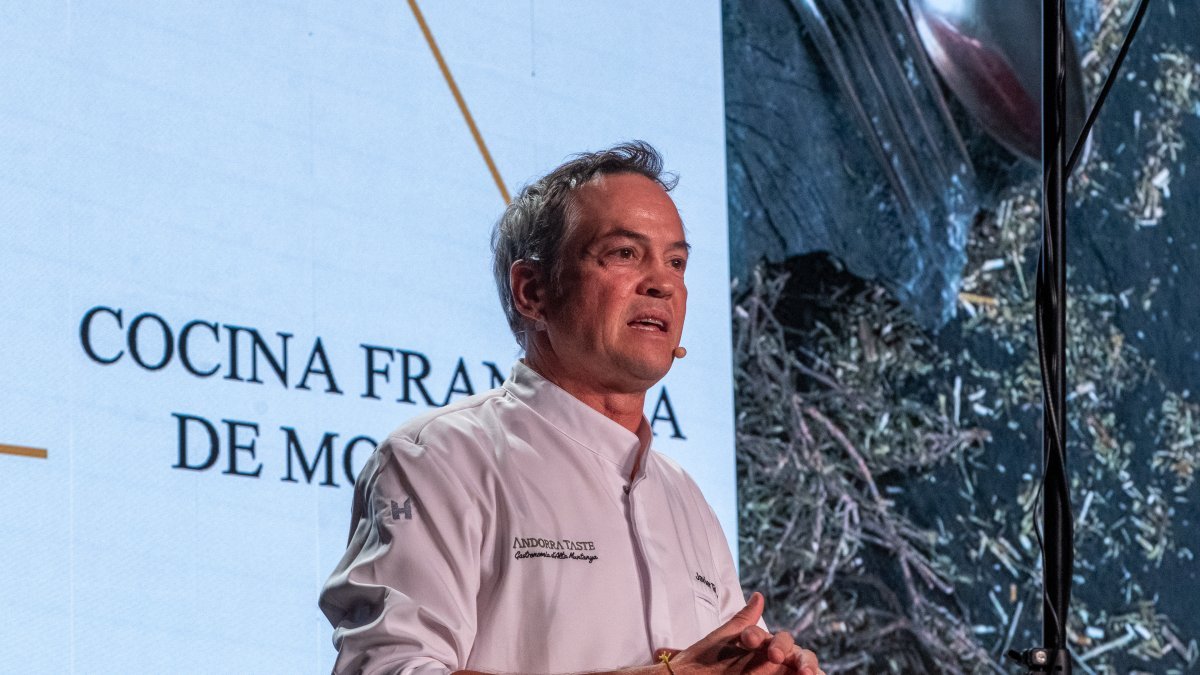

the chef Javier Torres has put this Thursday the focus on mountain cuisine and in their adaptation to the territory during their participation in theAndorra Taste. The chef has reviewed the influences of the Catalan and French cuisine in Andorran gastronomy and has defended a way of cooking based on few ingredients, conservation and the integral use of products.
Torres has defined mountain cuisine as a “survival kitchen”, conditioned by thealtitude and the need to obtain a high energy contribution from the available resources. Among the features he has highlighted are the radicality of temporality, conservation techniques, long cooking and the use of all parts of food.
in the case ofAndorrathe cook has pointed out that the country’s gastronomy has received influences from both Catalan and French mountain cuisine. From the first, he highlighted the culture of the pig, legumes, escudels, mushrooms, nuts and conservation techniques. Of the second, the use of bases, sauces, reductions, butter and cheeses.
towers he remarked, however, that Andorran cuisine is not a simple fusion of the two traditions, but one adaptation to the territory. An example of this evolution is the chopped with rostathat has elaborated during the presentation and which he has defined as a dish present in different points of Catalonia i Andorrawith its own variants according to the products of each area.
Chef Javier Torres, preparing the chopped with facethis morning during the Andorra Taste.
The demonstration also had as protagonist the brown cow of the Pyrenees. The dish, dubbed ‘ripened brown cow from the Pyrenees’, is based on the integral use of the animal. The bones have been used to make a stock, while the cow’s fat has been turned into a mayonnaise to add creaminess. The meat has been marked and served in thin slices, accompanied by escalivada, sprouts and a broth made from the juices of the pepper.
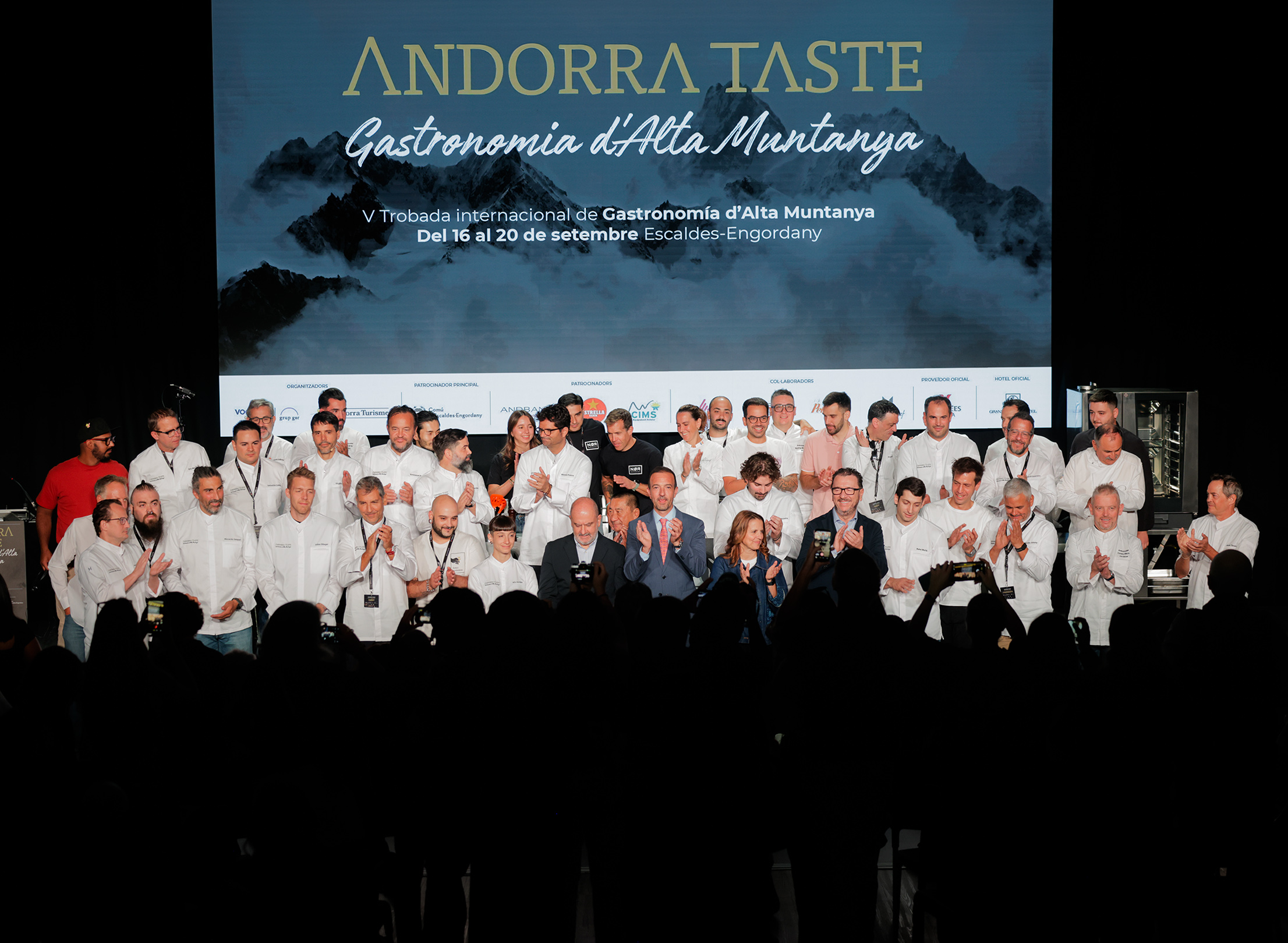
During the presentation, the chef also claimed the relationship between gastronomy and territory and highlighted the human component ofAndorra Tastea space that allows, as he explained, to unite people with the environment.