The day after the political earthquake of the United States accusation against the current governor of Sinaloa and nine other senior officials of that State for their links with drug trafficking, the president, Claudia Sheinbaum, entered the room where her daily conference is held, smiling and with apparent poise, to address “the people of Mexico.” Interspersing his sentences with the word sovereignty, he stated that if Washington does not present “irrefutable” evidence, its motivation “is political.” The next day he turned up the volume on the homeland – “in the face of foreign attacks, there must be national unity” – and stirred up the opposition going back to 1848, when Mexico lost half of its territory in the war against the United States. “They are absolutely no different from the conservatives of the 19th century who went to ask for foreign intervention in Mexico,” he told them.
The specter of US interference in Mexico is almost as old in the bilateral relationship. But in Donald Trump’s second term, it appears frequently and more visibly, invoked by Sheinbaum in an increasingly defensive speech. Regardless of whether the guilt of the governor, of Morena, the party in Government, can be proven with evidence, the accusation made public by the United States Department of Justice – instead of keeping the matter reserved, something that has bothered Mexico – has strained an already tense and asymmetric relationship in which Washington has many levers of pressure in the event of a refusal.
Both countries are in the countdown with Canada to review the USMCA, a key trade agreement for Mexico, very dependent on the north and its tariff policy, at a time in which its economy has just experienced a 0.8% drop in GDP in the first quarter. The request to arrest the governor and how Mexico responds could contaminate the negotiating table, because it signals suspicions about narcopolitics, a week after Ambassador Ronald Johnson in Sinaloa reproached the corruption in the country, since investments need, he said, “certainty, security and an environment free of corruption.”
The fear of interference in security matters is also great on this side of the border. The fear is that Trump will act against the cartels in Mexican territory on his own, bypassing the limits that Mexico sets for Trump’s repeated offers of military aid, who has said that “Mexico is governed by cartels”. Several countries, such as Ecuador and Argentina, have accepted this presence and joint operations, aligned with the US vision of Latin America as its area of influence and which crystallized in the Shield of the Americas, with 12 countries very close to Trump, united in the militarized crusade against drugs.
Mexico has taken down the Jalisco cartel with the help of information from the United States, but it may not be enough to contain Trump. Washington wants more. Two days ago, Secretary of War Pete Hegseth asked Mexico to “further intensify its efforts and do so quickly.” In recent weeks, the traffic accident in which two Mexican officials died and dCIA agents sounded the alarm of interference when Sheinbaum said that the Government had not authorized the presence of these agents and charged for putting the sovereignty at risk against the governor of Chihuahua, a State on the border that has extensive security cooperation with the northern neighbor. Javier Martín Reyes, UNAM researcher, connects the US request to arrest and extradite the governor to this event. “The United States could be upset by Sheinbaum’s attitude against the governor of Chihuahua; it interprets it as a way to curtail its cooperation with that State, but with how many more state governments will the CIA be cooperating?” he asks.
If Trump’s rhetoric is interventionist and aggressive, Sheinbaum’s for internal consumption, for the bases of his party, is about sovereignty and total adherence to Mexican protocols, procedures and laws that the State is not always able or willing to enforce. And even less, as Raúl Benítez Manaut, a researcher at the North American Research Center, says, in the fight against drug trafficking. Strictly, he explains, “the person in charge of combating drug trafficking is the Attorney General’s Office, but it has not carried out investigations for 20 years. This inability was covered by the Army and the Navy, and that is outside the law, just as is the way in which the drug lords have been extradited.”
Several analysts question the laxity with which this Government has handed over 92 alleged drug traffickers to the United States and the legal exquisiteness with “irrefutable evidence” that Sheinbaum demands to arrest and extradite the governor of Sinaloa. Benítez points out something else: “In the United States there is a bipartisan consensus on the fragility of the Mexican State and the penetration of drug trafficking in the institutions. Trump is an interventionist, but we must put it into perspective, because on the other side, drug traffickers are also perceived as the enemy but Mexico does not stop him.”
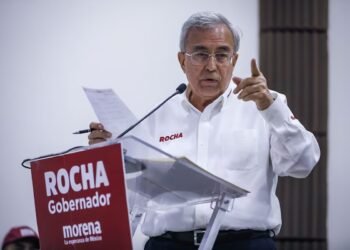
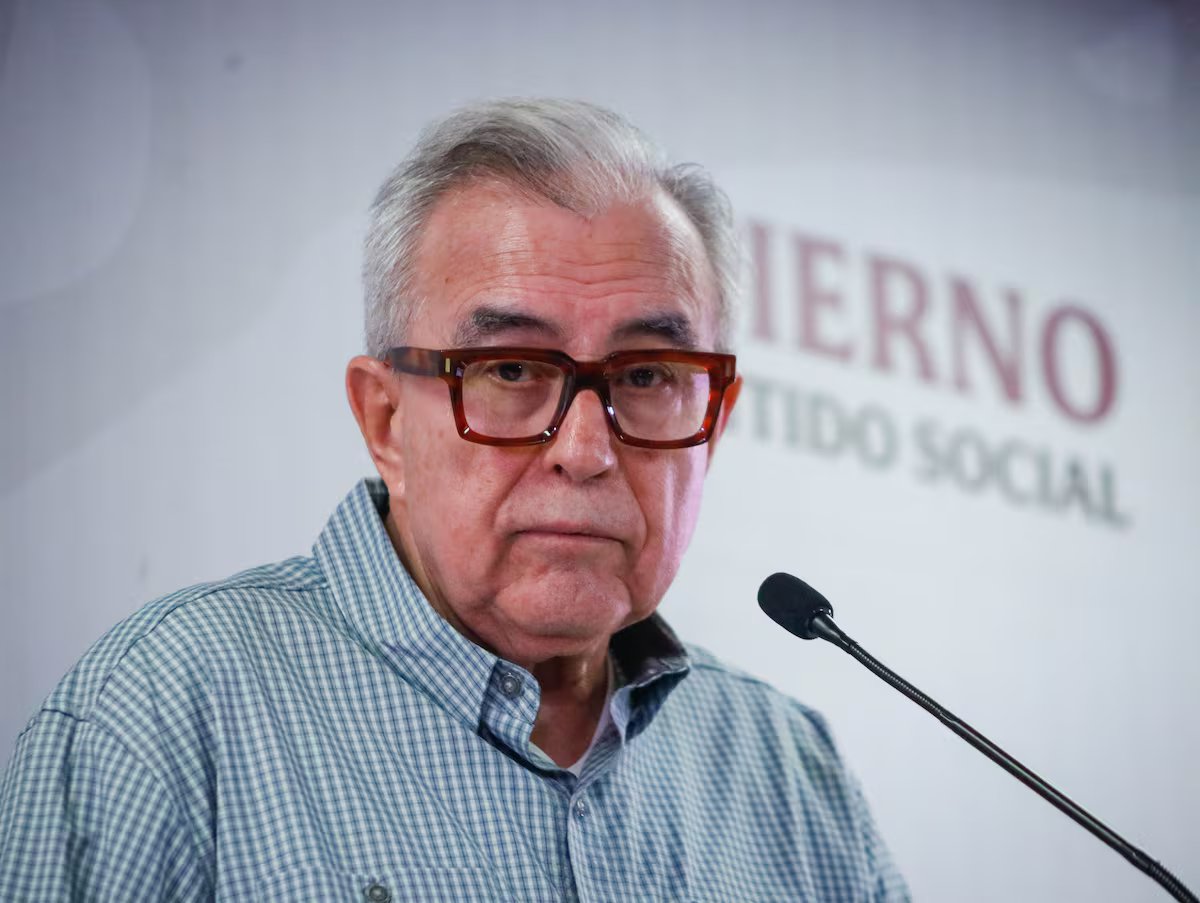
In that sense, and since drug trafficking is a cross-border crime—Mexico’s reproach to the north is greater control of the weapons that the cartels obtain from there—the American justice system also plays a role that usually has political consequences in other countries. The investigation that the Prosecutor’s Office of the Southern District of New York has carried out against the governor of Sinaloa, Rubén Rocha Moya, a senator and eight other senior state officials maintains that the politician won the elections with the help of a faction of the powerful Sinaloa cartel, Los Chapitos, which was in charge of stealing ballot boxes and intimidated and kidnapped rivals. Once in office, the governor would have facilitated their criminal activities. Also in the American city Nicolás Maduro and his wife are being tried these days, Cilia Flores, for narcoterrorist conspiracy, based on investigations initiated in 2020 by prosecutor Jay Clayton, the same one who has substantiated both accusations.
Another of these investigations in the United States led to the sentencing of Juan Orlando Hernández, former right-wing president of Honduras, to 45 years in prison for links to drug trafficking. However, Trump pardoned him and he was released from prison two days after the elections in the Central American country, in which a Trump ally won.
The House Foreign Affairs Committee, which oversees US foreign policy in Congress, celebrated this Thursday in X the accusation against the governor of Sinaloa: “The days of impunity for narcoterrorists are over. From Nicolás Maduro to Rubén Rocha Moya, if you are complicit in drug trafficking we will make you answer for it. This is just the beginning.” President Sheinbaum herself also opened the door to possible political motivation from the United States if she does not present strong evidence to indict him. The governor has decided to temporarily step aside from office while the Attorney General’s Office ―that at the moment he sees no evidence that shows the urgency to arrest him—evaluates the strength of the US accusation. While the evidence arrives and is analyzed, Sheinbaum has become involved in the defense of sovereignty and points, once again, to the specter of interference.