Dr. Ali Hammoud
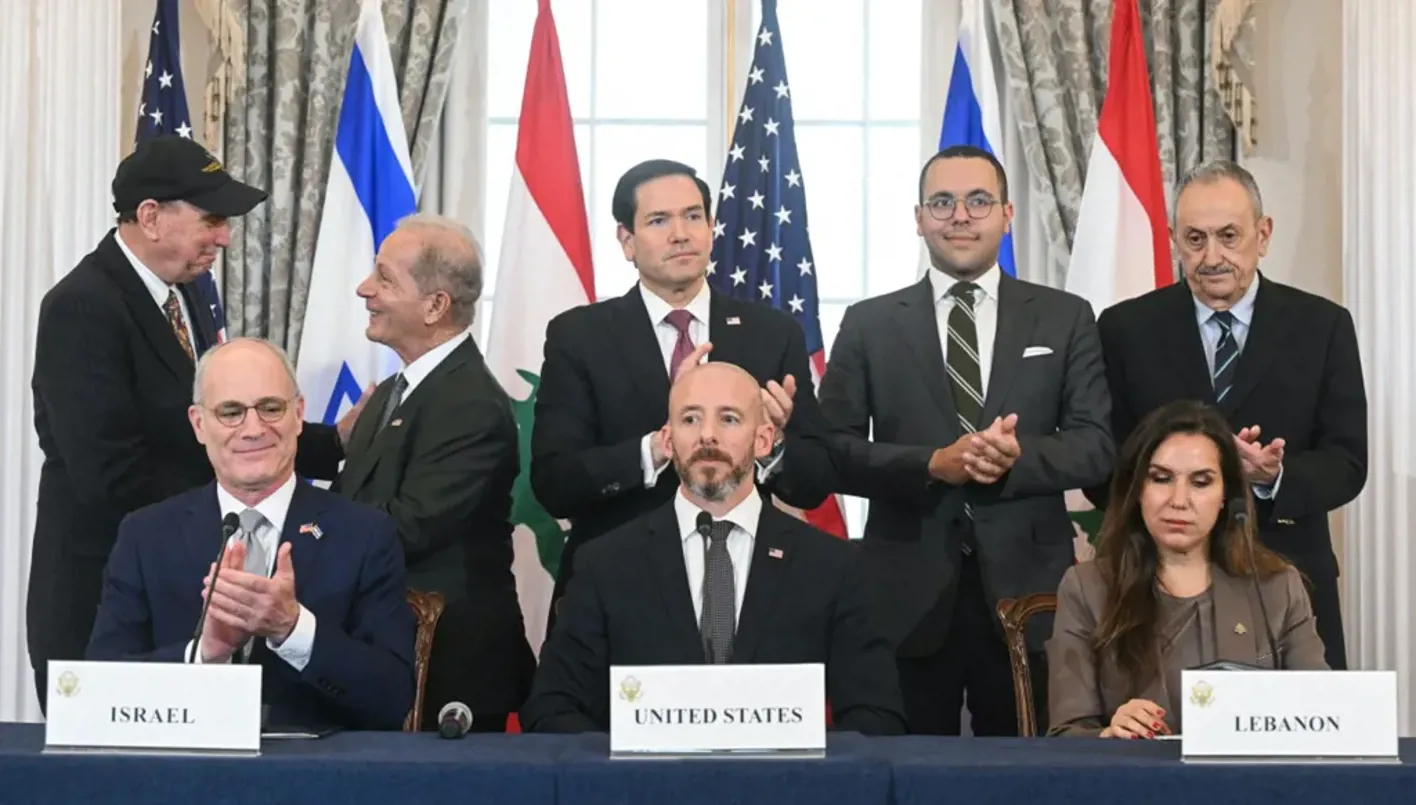
The signing of the framework agreement by Lebanon and Israel, under the auspices of the United States, in Washington represented an unprecedented political and security milestone in the history of the conflict between the two countries. US Secretary of State Marco Rubio described the agreement as the “first step” on the path to ending decades of confrontation, while Washington considered it the beginning of a path aimed at establishing security on the southern border and creating conditions for a broader settlement.
However, despite the atmosphere that accompanied the signing ceremony, the Lebanese scene quickly divided between those who saw the agreement as a political achievement that might restore the reputation of the Lebanese state and give it an opportunity to restore stability, and those who considered it a dangerous concession to national constants. Some opponents went on to describe it as an “agreement of shame,” considering that it precedes the implementation of the Israeli obligations stipulated in the ceasefire understandings.
Those who support the agreement are based on a realistic reading of regional and international variables. After years of economic crises, financial collapse, and repeated wars, they believe that Lebanon can no longer tolerate a continued state of open confrontation. They consider that the agreement may open the door to a gradual withdrawal of Israeli forces from some areas, strengthening the deployment of the Lebanese army, the return of the displaced to their villages, and launching a reconstruction path with international support, in line with the goal of restricting the decision of war and peace to the state and strengthening its sovereignty.
On the other hand, those who reject it believe that any new agreement must not precede the implementation of existing commitments, most notably the complete Israeli withdrawal from the occupied Lebanese territories, the cessation of military violations, the release of Lebanese prisoners, and the reconstruction of areas destroyed by the war. They consider that moving to a framework agreement before these demands are met gives Israel political and security gains without sufficient guarantees.
The objections go beyond the content of the agreement to its internal repercussions, as some of its provisions are related to security arrangements and enhancing the role of the Lebanese army, which Lebanese forces consider an issue that must be resolved through an internal national dialogue. Some warn that the absence of consensus may lead to a political and security crisis, but the assertion that Lebanon is inevitably heading toward civil war remains an inconclusive conclusion, because that depends on how the agreement is implemented and the extent of the availability of internal consensus and international guarantees.
In conclusion, the Washington agreement represents a turning point in the course of the Lebanese-Israeli relationship, but its success will be measured by its ability to respect Lebanese sovereignty, implement mutual obligations, and achieve stability without deepening the internal division.