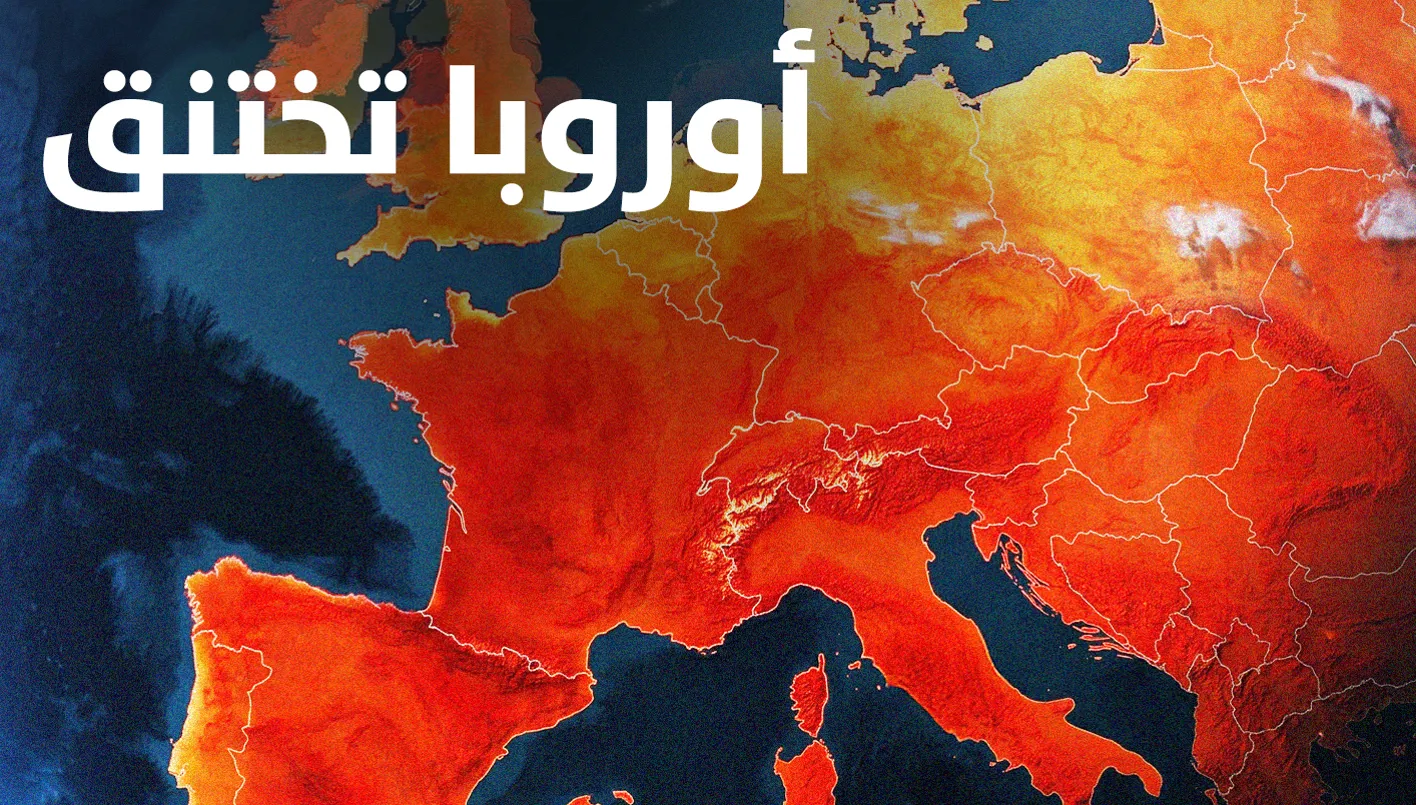
Heat waves are in Europe Constant news for successive years, as evidence that the Old Continent is entering a different climatic zone. Data from the European Copernicus Observatory and the World Meteorological Organization indicate that Europe is the fastest warming continent in the world. Its temperature is more than twice the global average: the degree of warming has reached about 2.5 degrees Celsius compared to the pre-industrial era, while global warming stands at a threshold of approximately 1.4 degrees.
“An-Nahar” reviews a file entitled “Europe is suffocating“The challenges facing Europe as a result of climate change and the emergence of heat waves annually.

A heat wave hits Poland (AFP).
Here are the most important materials:
1- George Issa: The flames of climate change are engulfing Europe…at the worst time
Climate change has previously contributed to alleviating some European tensions. Between the ninth and thirteenth centuries, Europe experienced milder temperatures that helped boost agricultural yields and, among other factors, reduced Viking invasions to the north.
Current climate change cannot be given optimistic results. The worst thing about the current European heat wave is not only its scorching temperatures, but the possibility of it turning into a normal European summer in future summers.

A man cools himself with the water of the Trocadero spring near the Eiffel Tower, June 24, 2026. (AP)
2- Abdul Rahman Ayas: European summer is no longer what it was: heat waves are redrawing the tourism map
Until recently, the European scene was familiar to the point of repetition. With the beginning of July, the beaches of Spain, Greece, Italy and southern France are full, hotel occupancy rates rise to their maximum, and the cities of the Mediterranean turn into a destination for millions of tourists coming from different parts of the world. The equation was simple: the hotter the heat, the greater the demand for the sea.
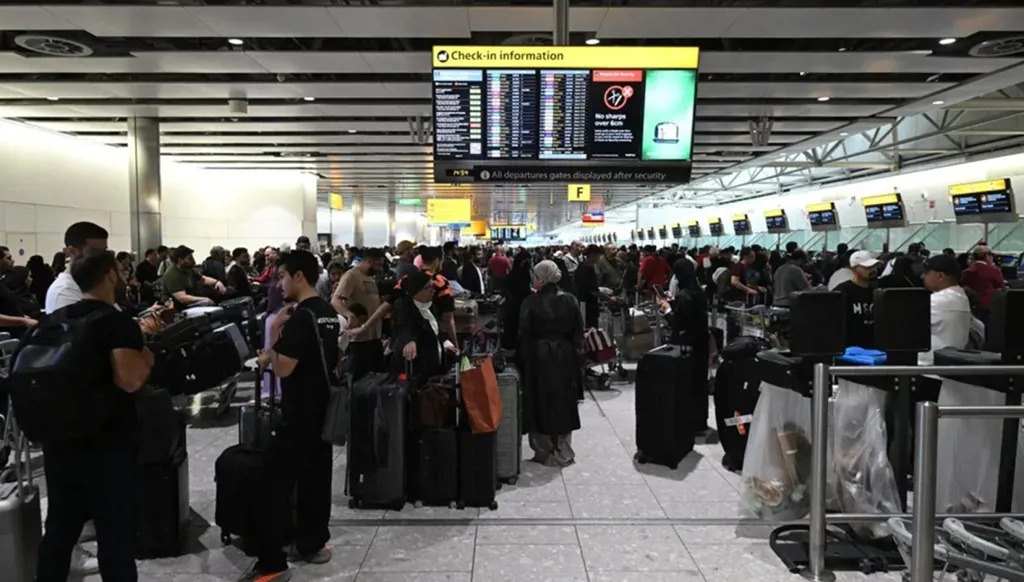
Passengers waiting in Terminal 4 at Heathrow Airport, west of London (AFP)
3- Abdul Rahman AyasHeat bill: How has the climate become at the heart of the European economic equation?
The heat waves that hit Europe every summer are no longer a fleeting event that headlines weather forecasts for a few days before withdrawing from public attention. In recent years, record temperatures there have come to be read in a different language: the language of economics. What was previously considered a health or environmental crisis is now a constant item in central bank reports, corporate accounts, government plans, and investor estimates.

Heat wave hits Europe (AFP)
4- From Paris, Randa Taqi Al-Din: France in the face of heat waves: it always reacts and never prepares
Twenty-three years ago, the late French President Jacques Chirac issued an unforgettable warning from the pulpit in Johannesburg: “Our house is burning and we are looking in another direction.” A few months later, the summer of 2003 claimed the lives of about fifteen thousand French people within a few weeks. It was a national disaster that everyone thought would be a course-changing shock.

French people cool off at the Trocadero Fountain at the bottom of the Eiffel Tower in Paris (AFP).
5- Health and Science: Europe is getting hotter…why?
The basic premise of climate science is clear: heat waves are no longer the result of “temporarily bad weather” or a “transient air mass.” The Copernicus Observatory talks about what is called “the behavior of the jet stream and atmospheric blocking.” The jet stream is a band of strong winds that move from west to east in the upper atmosphere, and is responsible for directing weather systems in the Northern Hemisphere. Due to global warming, in summer this current tends to split into two parts, or slow down into meandering, steady waves.