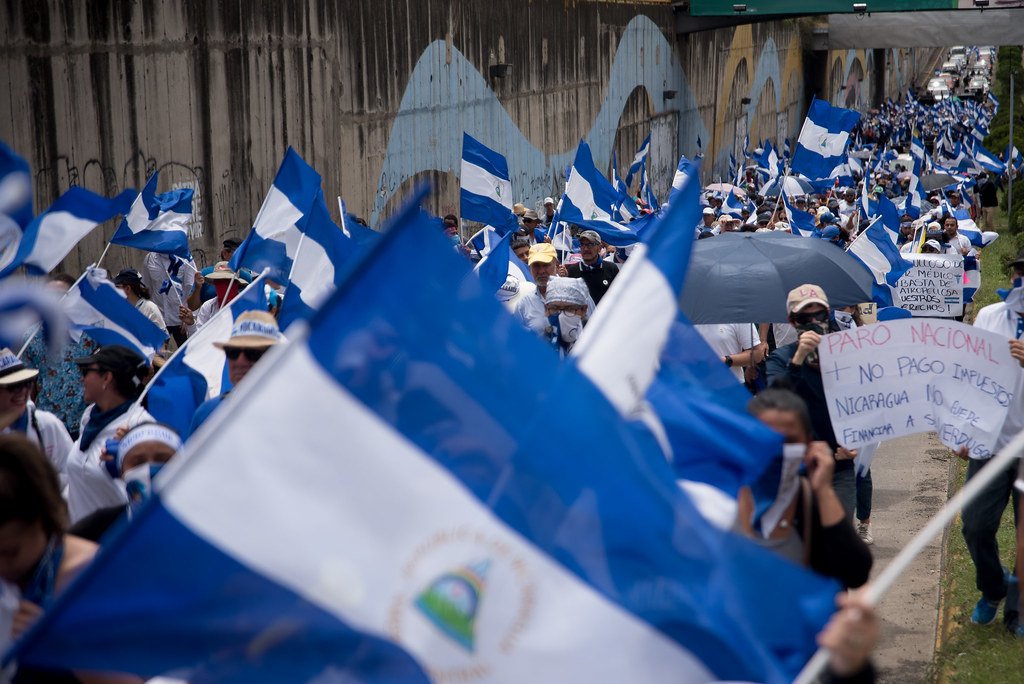
Eight years have passed since the rebellion of April 2018 and the resistance has taken multiple forms: protesting, documenting, exiling, sustaining memory and refusing silence. None of those efforts have been in vain; They have been a way of defending life and keeping open the possibility of justice. But after all this time, an uncomfortable question remains: what happens when a society turns all its energy outward and postpones looking inward?
For a long time we understood that resistance meant concentrating our efforts outside: denunciations, visibility, international pressure and sanctions. Today it is evident that profound transformations—in a person, in a movement, and in a country—do not occur only when the environment changes, but when there is the courage to review what we also are.
This critical review is not isolation, nostalgia, or spiritual retreat. It is an uncomfortable political practice and an exercise without anesthesia. It implies recognizing what violence, silences, logics of power or wounds we continue to collectively reproduce while we invoke democracy.
I had to do that exercise.
I didn’t go inward to find peace or to rebuild myself emotionally. I went inward to support myself politically, to not blame my country for all the pain experienced, to not break the bond even in the midst of so much violence, to not lose direction, to understand what happened to us as a society and decide where to walk without ending up becoming a reflection of what I was fighting. I also entered to see myself in these years: my limits, my contradictions, my lights and my shadows.
After all, no body is just individual.
Bodies are political: fear, resistance and history are inscribed in them.
That same examination that an individual owes to himself, the resistance as a collective body owes. It is not enough to oppose the authoritarianism of the day if we replicate its practices in the name of freedom. Nor is it enough to challenge vertical hierarchies if we inhabit spaces where self-criticism is closed, disagreement is assimilated as betrayal, or political legitimacy depends on maintaining a supposedly intact moral purity.
Democracy is not only demanded; is practiced.
In societies plagued by political violence, dignity does not emanate from moral purity, but from the ability to review, transform and not repeat. Finally, there is the country. The body-country that hurts in the distance and in the closeness. For years we looked for a way out of the country and outside of ourselves. All of this matters. But the resolution of the crisis in Nicaragua also requires looking back at its own matrix: its history, its political culture and the ways in which we learned to relate to power. A country is not transformed by replacing one government with another; he transforms when he is able to take charge of the history he helped build.
This memory does not admit simplistic dichotomies between absolute good people and absolute culprits. The history of a nation also belongs to those who fought, remained silent, resisted or simply tried to survive. What we did and what we omitted is part of the present we inhabit. This does not equalize responsibilities or erase power asymmetries, but it confirms that no society breaks the authoritarian loop if it turns memory into a dispute over moral sanctities.
Societies do not break their authoritarian cycles only by remembering the past, but by understanding how they were possible.
Introspection is not an anchor in the past; It is the foundation of non-repetition.
Memory is not nostalgia. Memory is responsibility.
There comes a time when the individual, the resistance and the country must look up and make decisions.
And that decision is always political.
The exit was outwards when life had to be saved.
The way out is inward if one day we want to change the country.