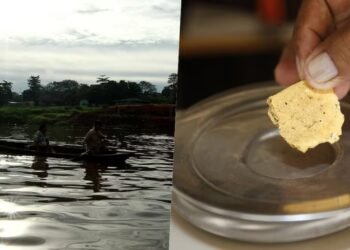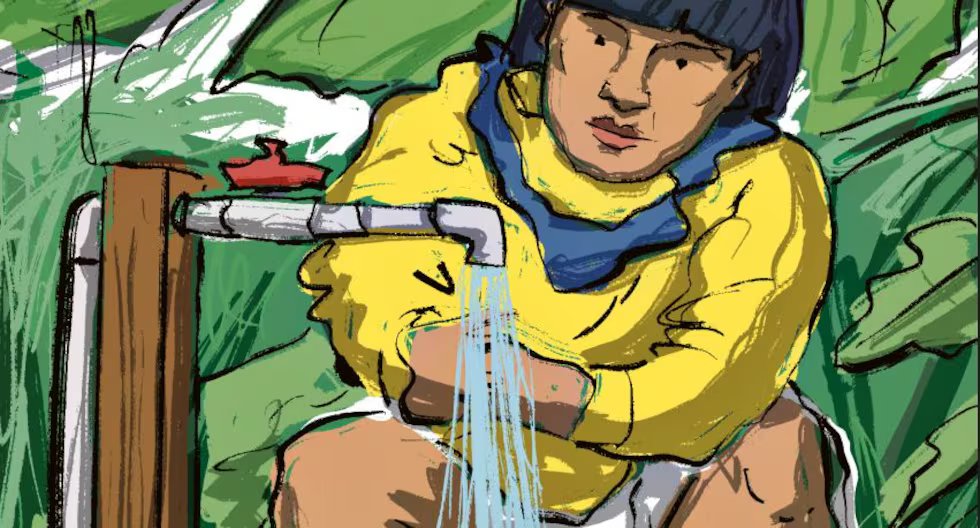

Every September 26, the World Environmental Health Day It reminds us that the environment in which we live determines, to a large extent, our health. Nowhere in Peru is this relationship as direct and as urgent as in Loreto, where the water that is drunk literally defines the future of childhood.
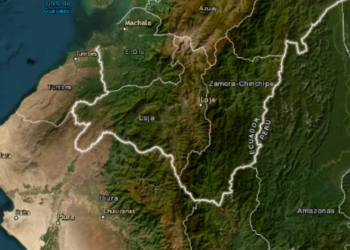
The figures are overwhelming. In Loreto, 72.2% of the population does not have access to drinking water, and the department is among those that register less than 14% of water with adequate levels of chlorination, according to the INEI. This occurs because the sources from which thousands of families are supplied (rivers, ditches, rain) arrive contaminated by untreated wastewater, deforestation and leaks from blind wells into the subsoil, and because they almost never go through a treatment process before being consumed. According to the World Health Organization, 80% of the world’s infectious, parasitic and gastrointestinal diseases are due to the use and consumption of unsafe water. In Loreto, this reality is translated into concrete figures: 63.1% of children in rural areas suffer from anemia, according to the Endes-INEI, and water-borne diseases claim 19.2 lives per 1,000 live births, according to the Geresa.
These are links in the same chain. Unsafe water also directly affects the absorption of nutrients, and this has a school correlation that we rarely connect: only 12.8% of fourth grade students in Loreto reach a satisfactory level in reading comprehension, and only 6.3% in mathematics, according to Minedu. Environmental health is, in reality, the basic condition of education and human development, and not a separate topic.
Environmental health is not resolved only with infrastructure, but when the community that lives with that infrastructure understands it, cares for it, and decides about it. A water system installed without that link becomes very fragile, deteriorates and is abandoned, and environmental health returns to square one within a few years.
For this reason, as president of the board of the Encuentros Foundation, we work on environmental health as a governance problem: we accompany Amazonian communities to create and sustain their own water and sanitation organizations, capable of managing, maintaining and deciding on their system in the long term. In the Kukama-Kukamiria community of San José de Parinari, in Loreto, the first Water, Sanitation and Environment Committee (CASA) in the country has just been established under the framework of the Universal Access to Drinking Water Law. It is the first time that this law is applied in the territory. Thus, health stops depending on an external project and begins to be sustained from within.
On World Environmental Health Day, the question we must ask ourselves is not only how much has been invested in Loreto, but whether that investment has come with a model capable of being sustained over time. Saint Joseph of Parinari shows that it is possible. The children of the Amazon don’t need more promises: they need a system that works, and that they themselves can care for.
*El Comercio opens its pages to the exchange of ideas and reflections. In this plural framework, the Diario does not necessarily agree with the opinions of the columnists who sign them, although it always respects them.