to report Online economyThe ceasefire in Lebanon has apparently been extended for three weeks, but in the field, the exchange of fire between Israel and Hezbollah has intensified. Where stopping the war is one of Iran’s conditions for an agreement with America. But it seems that Israel is using the ceasefire as an opportunity to advance in southern Lebanon and hit Hezbollah’s military strength.
The Israeli war machine, regardless of the agreements on paper, has turned the so-called “clearing of Hezbollah’s infrastructure” operation into a full-scale war of attrition. America has also announced that the issue of Lebanon has nothing to do with Iran.
On the other hand, Hezbollah has also announced that it will continue to resist and will not accept the results of the Lebanese government’s negotiations with Israel. While the Lebanese government is trying to disarm Hezbollah under the pressure of America and Israel, and considers this group to be the cause of the war in Lebanon.
Israel’s advance in the shadow of the ceasefire
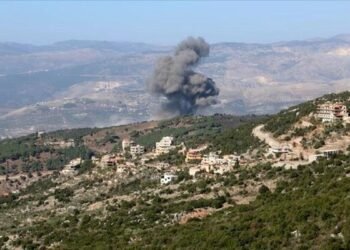
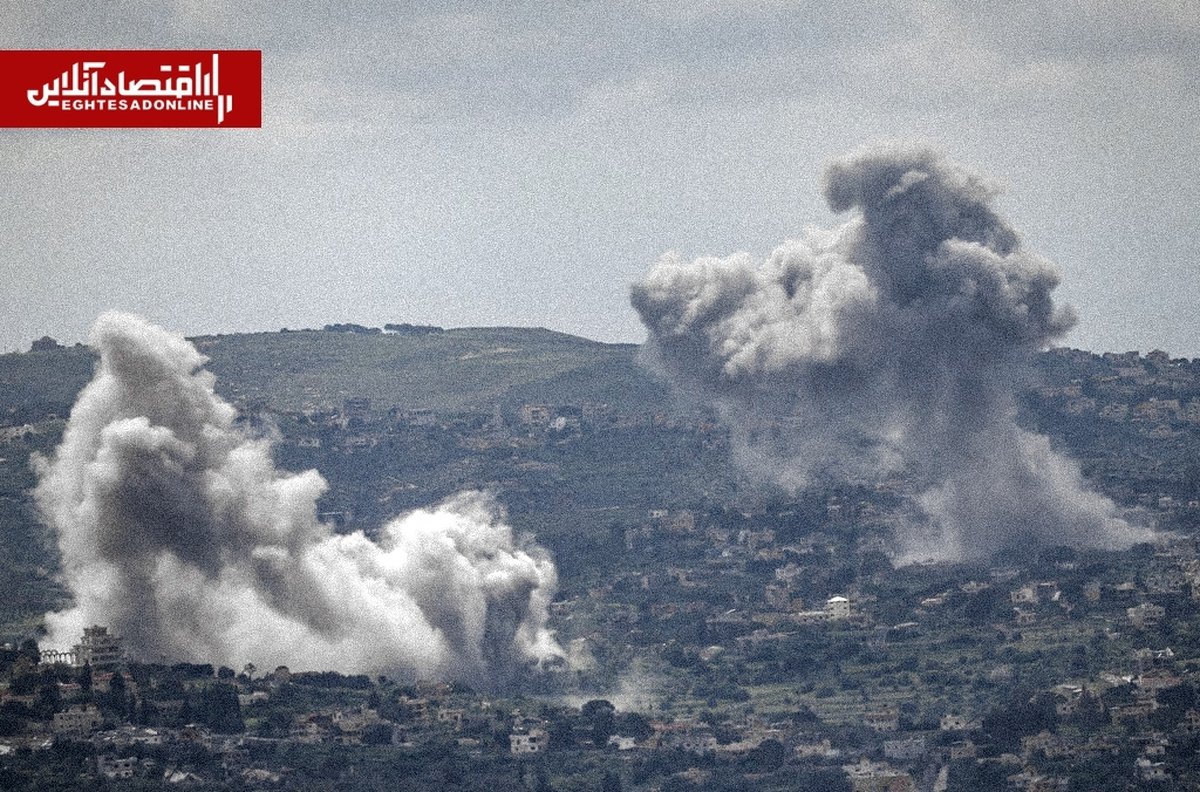
The Ministry of Health of Lebanon has reported that at least 13 people were killed in the recent airstrikes in the areas of Habboush, Zararieh and Ain Baal. The presence of women and children among the victims indicates a change in the pattern of Israeli attacks towards targeting residential areas with claims of military infrastructure. Since the beginning of March, more than 2,600 Lebanese have lost their lives, among which 103 were martyred from the medical staff.
By issuing repeated evacuation orders for more than 11 towns and villages, Israel is practically seeking to create a “buffer zone” 10 kilometers deep into Lebanese soil.
Tel Aviv’s strategy at this point appears to be the systematic destruction of cities to render the south uninhabitable and to physically destroy Hezbollah’s weapons capability.
On the other hand, despite not directly interfering in the text of the ceasefire agreement, Hezbollah is resisting by targeting Israeli military gatherings. The loss of 17 Israeli soldiers in the last month is proof of stubborn resistance in Lebanon.
Lebanon’s Hezbollah on the table of negotiations between Iran and the United States
The battle in southern Lebanon is directly related to the war between America and Israel with Iran. Although Israel’s attacks on Lebanon have continued for more than a year, with the start of the military attack on Iran on March 9, Hezbollah, as a strategic arm of the resistance, entered the retaliatory phase.
For this reason, Iran has now emphasized the need to “stop the war on all fronts”, including Lebanon, as a prerequisite for any agreement in the 14-point proposal to the United States.
A senior Iranian official told Reuters that the Islamic Republic has put a plan on the table that includes the withdrawal of American forces, the lifting of the naval blockade and the release of blocked assets in exchange for the reopening of the Strait of Hormuz. The key point of this proposal is to postpone the nuclear case until after the ceasefire is established.
However, Donald Trump’s reaction on the social network Truth Social emphasized that he does not accept Iran’s offer. In a sharp tone, Trump claimed that Iran has not yet paid a “sufficient price” for its past actions. This position has greatly increased the possibility of resuming direct conflicts to break the deadlock of negotiations. While Trump has also raised this possibility in response to reporters.
The Lebanese army and the ambiguous role of the United States
In the middle of these conflicts, the meeting of General Rudolph Hikel, commander of the Lebanese army, with his American counterpart in Beirut has raised many questions.
By strengthening the Lebanese National Army, America is trying to present it as an alternative to Hezbollah in the south. The recent post of the US embassy in Beirut guaranteeing Lebanon’s “full sovereignty” in the event of a direct agreement with Netanyahu is part of the political-military disarmament project of the resistance.
But one of the representatives of the Lebanese parliament close to Hezbollah emphasized that this group is a national option to defend the soil. Hezbollah’s five conditions, including the complete withdrawal of Israel without any yellow or buffer zones, show that Hezbollah does not intend to return to the pre-March 2 equations.
War explosion or agreement?
The developments of recent days show that the region is in a state of suspension. Israel is looking to inflict the biggest blow on Hezbollah’s military body before the end of the three-week deadline in order to have the upper hand in the upcoming negotiations.
On the other hand, the naval blockade of Iran continues and it is said that Iran has set a one-month deadline for negotiation and agreement in its proposal. In such a situation, it is the realities of the field that will determine the path of future developments, and it is unlikely that the Islamic Republic of Iran will have an agreement with the United States without considering Lebanon’s Hezbollah.