Monday, May 4, 2026
    The GeoStrategic Consensus
    No Result
    View All Result
    • Login
    • HOME
    • AMERICAS
      • Argentina
      • Brazil
      • Canada
      • Chile
      • Colombia
      • Costa Rica
      • Cuba
      • Dominican Republic
      • Ecuador
      • El Salvador
      • Greenland
      • Guatemala
      • Honduras
      • Mexico
      • Nicaragua
      • Panama
      • Paraguay
      • Peru
      • United States
      • Uruguay
      • Venezuela
    • ASIA-PACIFIC
      • Australia
      • Brunei Darussalam
      • Cambodia
      • China
      • Federated States of Micronesia
      • Fiji
      • Indonesia
      • Japan
      • Kiribati
      • Laos
      • Malaysia
      • Marshall Islands
      • Mongolia
      • Myanmar
      • Nauru
      • New Zealand
      • North Korea
      • Palau
      • Papua New Guinea
      • Philippines
      • Samoa
      • Singapore
      • Solomon Islands
      • South Korea
      • Taiwan
      • Thailand
      • Timor-Leste
      • Tonga
      • Tuvalu
      • Vanuatu
      • Vietnam
    • CARICOM
      • CARICOM – Non-English
        • Haiti
        • Suriname
      • CARICOM Associates
        • Anguilla
        • Bermuda
        • British-Virgin-Islands
        • Cayman-Islands
        • Curacao
        • Turks-and-Caicos
      • CARICOM English
        • Antigua and Barbuda
        • Barbados
        • Belize
        • Dominica
        • Grenada
        • Guyana
        • Jamaica
        • Montserrat
        • Saint Kitts and Nevis
        • Saint Lucia
        • Saint Vincent and the Grenadines
        • The Bahamas
        • Trinidad and Tobago
    • EURASIA
      • Armenia
      • Azerbaijan
      • Balarus
      • Georgia
      • Kazakhstan
      • Kyrgyzstan
      • Moldova
      • Russia
      • Tajikistan
      • Turkmenistan
      • Ukraine
      • Uzbekistan
    • EUROPE
      • Albania
      • Andorra
      • Austria
      • Bosnia and Herzegovina
      • Bulgaria
      • Croatia
      • Cyprus
      • Czech Republic
      • Denmark
      • Estonia
      • Finland
      • France
      • Germany
      • Greece
      • Holy See
      • Hungary
      • Iceland
      • Ireland
      • Italy
      • Kosovo
      • Latvia
      • Liechtenstein
      • Lithuania
      • Luxembourg
      • Malta
      • Monaco
      • Montenegro
      • Netherlands
      • North Macedonia
      • Norway
      • Poland
      • Portugal
      • Romania
      • San Marino
      • Serbia
      • Slovakia
      • Slovenia
      • Spain
      • Sweden
      • Switzerland
      • United Kingdom
    • MIDDLE EAST AND NORTH AFRICA
      • Algeria
      • Bahrain
      • Egypt
      • Iran
      • Iraq
      • Israel
      • Jordan
      • Kuwait
      • Lebanon
      • Lybia
      • Morocco
      • Oman
      • Palestinian Territories
      • Qatar
      • Saudi Arabia
      • Syria
      • Tunisia
      • Turkey
      • United Arab Emirates
      • Western Sahara
      • Yemen
    • SOUTH ASIA
      • Afghanistan
      • Bangladesh
      • Bhutan
      • India
      • Maldives
      • Nepal
      • Pakistan
      • Sri Lanka
    • SUB-SAHARAN AFRICA
      • Angola
      • Benin
      • Botswana
      • Burkina Faso
      • Burundi
      • Cabo Verde
      • Cameroon
      • Central African Republic
      • Chad
      • Comoros
      • Cote d’Ivoire
      • Democratic Republic of the Congo
      • Djibouti
      • Equatorial Guinea
      • Eritrea
      • Eswatini
      • Ethiopia
      • Gabon
      • Gambia
      • Ghana
      • Guinea
      • Guinea Bissau
      • Kenya
      • Lesotho
      • Liberia
      • Madagascar
      • Malawi
      • Mali
      • Mauritania
      • Mauritius
      • Mozambique
      • Namibia
      • Niger
      • Nigeria
      • Republic of the Congo
      • Rwanda
      • Sao Tome and Principe
      • Senegal
      • Seychelles
      • Sierra Leone
      • Somalia
      • South Africa
      • South Sudan
      • Sudan
      • Tanzania
      • Togo
      • Uganda
      • Zambia
      • Zimbabwe
    • HOME
    • AMERICAS
      • Argentina
      • Brazil
      • Canada
      • Chile
      • Colombia
      • Costa Rica
      • Cuba
      • Dominican Republic
      • Ecuador
      • El Salvador
      • Greenland
      • Guatemala
      • Honduras
      • Mexico
      • Nicaragua
      • Panama
      • Paraguay
      • Peru
      • United States
      • Uruguay
      • Venezuela
    • ASIA-PACIFIC
      • Australia
      • Brunei Darussalam
      • Cambodia
      • China
      • Federated States of Micronesia
      • Fiji
      • Indonesia
      • Japan
      • Kiribati
      • Laos
      • Malaysia
      • Marshall Islands
      • Mongolia
      • Myanmar
      • Nauru
      • New Zealand
      • North Korea
      • Palau
      • Papua New Guinea
      • Philippines
      • Samoa
      • Singapore
      • Solomon Islands
      • South Korea
      • Taiwan
      • Thailand
      • Timor-Leste
      • Tonga
      • Tuvalu
      • Vanuatu
      • Vietnam
    • CARICOM
      • CARICOM – Non-English
        • Haiti
        • Suriname
      • CARICOM Associates
        • Anguilla
        • Bermuda
        • British-Virgin-Islands
        • Cayman-Islands
        • Curacao
        • Turks-and-Caicos
      • CARICOM English
        • Antigua and Barbuda
        • Barbados
        • Belize
        • Dominica
        • Grenada
        • Guyana
        • Jamaica
        • Montserrat
        • Saint Kitts and Nevis
        • Saint Lucia
        • Saint Vincent and the Grenadines
        • The Bahamas
        • Trinidad and Tobago
    • EURASIA
      • Armenia
      • Azerbaijan
      • Balarus
      • Georgia
      • Kazakhstan
      • Kyrgyzstan
      • Moldova
      • Russia
      • Tajikistan
      • Turkmenistan
      • Ukraine
      • Uzbekistan
    • EUROPE
      • Albania
      • Andorra
      • Austria
      • Bosnia and Herzegovina
      • Bulgaria
      • Croatia
      • Cyprus
      • Czech Republic
      • Denmark
      • Estonia
      • Finland
      • France
      • Germany
      • Greece
      • Holy See
      • Hungary
      • Iceland
      • Ireland
      • Italy
      • Kosovo
      • Latvia
      • Liechtenstein
      • Lithuania
      • Luxembourg
      • Malta
      • Monaco
      • Montenegro
      • Netherlands
      • North Macedonia
      • Norway
      • Poland
      • Portugal
      • Romania
      • San Marino
      • Serbia
      • Slovakia
      • Slovenia
      • Spain
      • Sweden
      • Switzerland
      • United Kingdom
    • MIDDLE EAST AND NORTH AFRICA
      • Algeria
      • Bahrain
      • Egypt
      • Iran
      • Iraq
      • Israel
      • Jordan
      • Kuwait
      • Lebanon
      • Lybia
      • Morocco
      • Oman
      • Palestinian Territories
      • Qatar
      • Saudi Arabia
      • Syria
      • Tunisia
      • Turkey
      • United Arab Emirates
      • Western Sahara
      • Yemen
    • SOUTH ASIA
      • Afghanistan
      • Bangladesh
      • Bhutan
      • India
      • Maldives
      • Nepal
      • Pakistan
      • Sri Lanka
    • SUB-SAHARAN AFRICA
      • Angola
      • Benin
      • Botswana
      • Burkina Faso
      • Burundi
      • Cabo Verde
      • Cameroon
      • Central African Republic
      • Chad
      • Comoros
      • Cote d’Ivoire
      • Democratic Republic of the Congo
      • Djibouti
      • Equatorial Guinea
      • Eritrea
      • Eswatini
      • Ethiopia
      • Gabon
      • Gambia
      • Ghana
      • Guinea
      • Guinea Bissau
      • Kenya
      • Lesotho
      • Liberia
      • Madagascar
      • Malawi
      • Mali
      • Mauritania
      • Mauritius
      • Mozambique
      • Namibia
      • Niger
      • Nigeria
      • Republic of the Congo
      • Rwanda
      • Sao Tome and Principe
      • Senegal
      • Seychelles
      • Sierra Leone
      • Somalia
      • South Africa
      • South Sudan
      • Sudan
      • Tanzania
      • Togo
      • Uganda
      • Zambia
      • Zimbabwe
    No Result
    View All Result
    Agentially
    No Result
    View All Result
    Home ASIA-PACIFIC Singapore

    US aggression risks pushing a cornered Iran towards a global shadow war

    The Analyst by The Analyst
    April 22, 2026
    in Singapore
    US aggression risks pushing a cornered Iran towards a global shadow war


    Follow our live coverage here.

    READ ALSO

    Iran foreign ministry says US must ‘abandon its excessive demands’

    Will rising F&B salaries see workers replaced by machines?

    SINGAPORE – A second attempt at US-Iran peace talks in Islamabad, originally scheduled for April 21, is now fraught with considerable uncertainty, raising serious doubts about not just the viability of a negotiated outcome, but also where relations between the two countries might go from here.

    What’s clear is that even if the negotiations result in a lasting ceasefire, the structural damage to US-Iran relations wrought by the war is irreversible. There is no returning to the status quo before the US and Israel started their attacks on Iran on Feb 28.

    The new Iranian leadership taking over the mantle following the targeted assassination of their predecessors is especially aware that the parameters of their relationship with the US have fundamentally altered. 

    For decades, despite the US branding Iran as the world’s largest state sponsor of terror, successive US administrations operated within established guard rails, stopping short of an all-out war to oust the Iranian regime. 

    Even during President Donald Trump’s first term, the 2020 assassination of Major-General Qasem Soleimani – then commander of the Islamic Revolutionary Guard Corps (IRGC) – was carefully contextualised. Following his assassination, President Trump notably stated, “We did not take action to start a war”, and clarified that the US did not “seek regime change”, despite labelling the Iranian leaders as “terrorist warlords”.

    Iran’s measured response to the killing of Maj-Gen Soleimani was perhaps also based on a tacit, unspoken understanding that the US strike was a localised retaliation for suspected Iranian involvement in assassination plots and violent incidents in the West. 

    However, Iran has long targeted US interests in the region, including Israel and the Gulf countries, via its proxies, notably Hezbollah in Lebanon, Palestinian militant group Hamas, and the Houthis in Yemen. 

    This network of militant groups across the Middle East provided Iran with leverage in its long-running tense relationship with the US and Israel, allowing it to claim some degree of self-restraint and envelop itself with plausible deniability. It made it hard – though not impossible – to attribute the attacks to Tehran. 

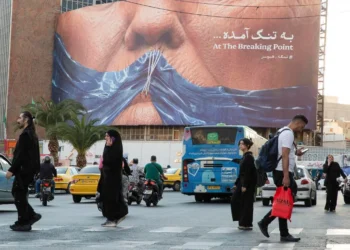
    Now, however, the US-Israeli military campaigns against Iran in 2025 and 2026, the most extensive in decades with an explicit goal of regime change, are aimed at blowing this cover entirely.

    Hamas and Hezbollah are believed to have been significantly weakened by Israel’s military actions since October 2023. Almost all of Hamas’ 24 battalions are believed to have been destroyed. Thousands of Hezbollah fighters and the group’s key leaders have been killed.

    Yet, both Iranian proxies are still militarily active and have not been disarmed.

    Prior to the 10-day ceasefire between Israel and Lebanon announced on April 16, Hezbollah put up stiff resistance and launched missiles into Israel when Israeli forces encroached into south Lebanon to create a new buffer zone.

    “Despite deep mistrust towards the United States, Iran still engaged in negotiations in 2025 and 2026… However, in each case, the United States killed the diplomatic process and attacked Iran,” Mr Seyed Hossein Mousavian, Visiting Research Collaborator at Princeton University and former spokesman for Iran’s nuclear dossier, told The Straits Times.

    “If diplomacy fails to provide security, Iran may invest in multiple deterrence options, including strengthening the Axis of Resistance,” he added, referring to Iran’s proxies across the Middle East.

    Observers expect the IRGC, now more powerful domestically, to take an increasingly hardline stance.

    Following the death of former supreme leader, Ayatollah Ali Khamenei, the US intercepted an Iranian transmission to multiple countries, which some analysts believe was an encrypted message to activate its sleeper cells.

    Iran has also escalated its rhetoric on stepping up its nuclear programme and expanding proxy violence beyond the region, which would create a more dangerous world. 

    “Some voices in Iran increasingly argue that the most effective deterrent would be a nuclear capability similar to that of North Korea,” Mr Mousavian, the former Iranian nuclear negotiator, noted.

    Iran is estimated to possess 440kg of highly enriched uranium, and unless its nuclear programme is verifiably dismantled, the possibility of it developing nuclear weapons in the next few years remains a troubling prospect.

    “In the absence of a reliable agreement with the United States, the recent wars have led many in Iran to conclude that international treaties like the Non-Proliferation Treaty and existing international rules may not adequately protect the country’s sovereignty and security,” Mr Mousavian told ST.

    After the recent near relentless attacks by the US and Israel – and bombastic threats by President Trump – Tehran may feel that all traditional red lines have been erased and that it should deploy the full extent of its asymmetric capabilities to ensure its survival.

    Iran’s core asymmetric capability is its arsenal of supporters and militant groups across the region, and possibly, sleeper cells – operatives clandestinely deployed by the Iranian regime in the West to do its bidding.

    Since the start of the war, a few Jewish establishments in Europe and the US have been attacked by sympathisers of the Islamic republic.

    While the Iranian leadership was not believed to be behind those attacks, the US, Canada and countries across Europe have heightened their security alerts over fears of more sophisticated and well-planned attacks by Iranian sleeper cells.

    Dr Colin P. Clarke, director of research at The Soufan Group, a US-based consultancy, told ST: “It’s impossible to know how extensive Iran’s ‘sleeper assets’ are in the West… It could be that the threat is overblown; we really don’t know, but if the Iranians do possess this capability, it could strike a devastating blow if they were to take action.”

    Just weeks preceding the war, the European Union designated the IRGC a terrorist organisation, citing its role in repression in Iran and activities in Europe.

    “Hezbollah would be the Iranians’ tip of the spear, especially in the West. I think Tehran views this as an ace up its sleeve, something to pull out in case the situation continues to deteriorate further,” said Dr Clarke.

    Another serious possibility is that Iran may target Western leaders for assassination, in particular, key leaders in the Trump administration and President Trump himself.

    A Pakistani man was found guilty in the US in March in an IRGC-linked plot to assassinate Mr Trump to avenge the death of Maj-Gen Soleimani.

    “In terms of whether the regime is desperate enough to cross that red line, I’d say yes, this conflict is existential for Iran. The supreme leader has already been killed… the Iranians are looking for a reciprocal response, so I don’t think anything is quite off the table at this stage,” Dr Clarke said.

    South-east Asia is no stranger to proxy threats from Iran-backed groups, which historically have had an interest in the region.

    In the 1990s and early 2000s, a few Hezbollah-linked plots and intelligence operations targeting US and Israeli interests in the region were uncovered.

    A Hezbollah bomb plot on the Israeli Embassy in Thailand in 1994 came close to succeeding.

    Through their propaganda, Hezbollah and Hamas have continued to radicalise South-east Asians, where they maintain a small but sizeable base of sympathisers.

    The escalation of the conflicts in the Middle East, in particular, the humanitarian crisis in Gaza and Lebanon, and the religious overtones by some in the Trump administration and Israel in their rhetoric justifying the wars in the region, feed into Iran and its proxies’ narratives.

    Dr Ghada Soliman, a research fellow at the S. Rajaratnam School of International Studies in Singapore, said: “While Gaza’s prolonged conflict has severely weakened Hamas, the group remains resilient through its regional and global support networks including in Malaysia. The Palestinian Cultural Organisation Malaysia has been engaged in public outreach and fund raising for the group.”

    She added: “Similarly, the IRGC has sought to expand its influence among the Shi’ite populace in the region by promoting Al-Mustafa University, which maintains an active branch in Bangkok, Indonesia and Malaysia.”

    Al-Mustafa University is an Islamic seminary-style institution backed by Shi’ite-majority Iran. It has international branches and allegedly acts as a front for IRGC recruitment.

    A few Singaporeans have been issued detention and restriction orders under the Internal Security Act in the last few years, after they were radicalised by Iranian proxy groups.

    In January 2026, a 14-year-old Singaporean boy was issued a restriction order after he was radicalised through absorbing the ideology of various groups, including Hamas.

    While Iran and its proxies’ narrative centred on victimhood might resonate more strongly within Shi’ite rather than Sunni communities, the demographic divide might be blurring with the war.

    “Sectarian differences may be overcome if radical groups use this narrative of victimhood to describe Islam’s overall condition, thus appealing to different schools of Muslims,” Dr Soliman said.

    The US and Israel, through their recent campaign, have sought to end the threat posed by the regime, including through its proxies, once and for all.

    The gamble has so far not only failed to end it, but may have altered Tehran’s strategic calculus, forging a far more dangerous and globally destructive force.


    Source link

    Related Posts

    Iran foreign ministry says US must ‘abandon its excessive demands’
    Singapore

    Iran foreign ministry says US must ‘abandon its excessive demands’

    May 4, 2026
    Will rising F&B salaries see workers replaced by machines?
    Singapore

    Will rising F&B salaries see workers replaced by machines?

    May 4, 2026
    As EVs dominate Singapore’s roads, these are the safety questions we should be asking
    Singapore

    As EVs dominate Singapore’s roads, these are the safety questions we should be asking

    May 3, 2026
    Are stock markets in denial about the true cost of Iran war?
    Singapore

    Are stock markets in denial about the true cost of Iran war?

    May 3, 2026
    Marathoner’s defiance of human limits is an act of rare, inspirational beauty
    Singapore

    Marathoner’s defiance of human limits is an act of rare, inspirational beauty

    May 3, 2026
    Home Team to develop space satellite, humanoid robots, more AI
    Singapore

    Home Team to develop space satellite, humanoid robots, more AI

    May 3, 2026
    Next Post

    VP impeach hearing takes up SALN, SEC, BIR papers—and Trillanes

    POPULAR NEWS

    Justin Bieber fans flood Coachella festival for headlining show – Entertainment

    Justin Bieber fans flood Coachella festival for headlining show – Entertainment

    April 20, 2026

    Over 600 flee homes as Army, NPA clash in Negros Occidental

    April 21, 2026

    Ex-DPWH exec recalls P800-M ‘delivery’ to Zaldy Co 

    April 20, 2026

    Former PM Paluckas suspends party membership, to waive immunity over criminal probe

    April 24, 2026
    Pres. Ali challenges CARICOM to transform into health research powerhouse

    Pres. Ali challenges CARICOM to transform into health research powerhouse

    April 23, 2026

    EDITOR'S PICK

    MEHRD commends mothers’ union literacy initiative

    MEHRD commends mothers’ union literacy initiative

    May 4, 2026
    Premier touts economic resilience as budget advances

    Premier touts economic resilience as budget advances

    April 22, 2026
    PM announces energy mission to Venezuela… team will hold talks to ensure T&T gets ‘just share’ of cross-border resources

    PM announces energy mission to Venezuela… team will hold talks to ensure T&T gets ‘just share’ of cross-border resources

    April 9, 2026
    Singapore to study feasibility of tapping geothermal energy for power, heating and cooling needs

    Singapore to study feasibility of tapping geothermal energy for power, heating and cooling needs

    May 3, 2026

    Recent Posts

    • Regional symposium targets renewable transition and stronger energy data across Pacific SIDS
    • The Prime Minister of Italy arrived in Yerevan – ARMENPRESS Armenian News Agency
    • How can this pan-Armenian shrine, an architectural pearl, be distorted like this? Lilit Galstyan
    • Turkmenistan plans 10 bcm gas processing plant at Galkynysh field – Turkmengaz

      © 2026 Agentially - Navigating shifting sovereignties and global risk .

      Welcome Back!

      Login to your account below

      Forgotten Password?

      Retrieve your password

      Please enter your username or email address to reset your password.

      Log In
      No Result
      View All Result

        © 2026 Agentially - Navigating shifting sovereignties and global risk .

        This website uses cookies. By continuing to use this website you are giving consent to cookies being used. Visit our Privacy and Cookie Policy.