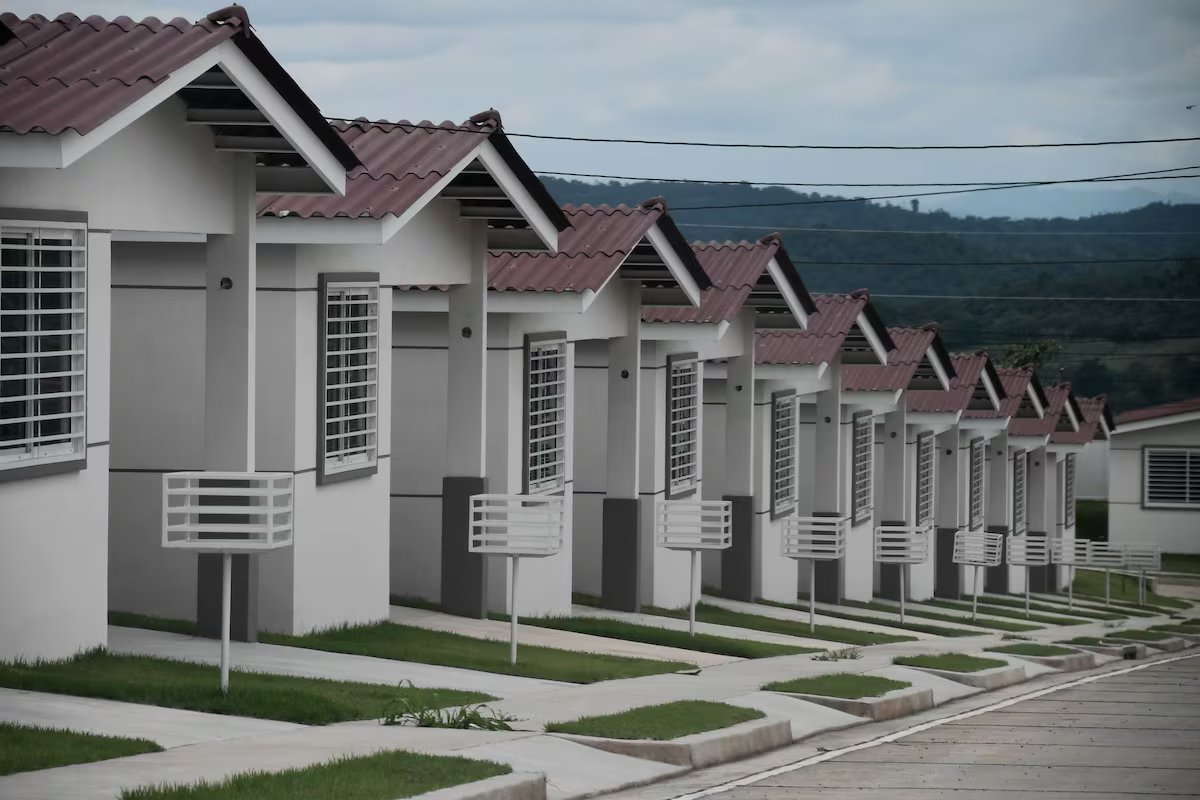
The value of constructions fell 38.8% at the end of December, there are 30.1% fewer residential constructions and a contraction in sales of housing units is reported, a situation that may be accentuated this year, warns Convivienda.
The pandemic, the closure of the mine, the uncertainty about the preferential interest law in various government periods, the closure of streets and protests and the loss of incentives have caused a gradual decline in construction activity in recent years, which has in turn generated a loss of jobs that reaches 40 thousand since 2018.
This is confirmed by studies carried out by the National Housing Council (Convivienda) with data from the National Institute of Statistics and Censuswhich reflect that by 2018 the population employed in the construction sector added up to 189,839 people, by 2020 there was a decrease to reach 138,729 and at the end of 2025 it stood at 152,543 workers, That is, the jobs lost 8 years ago have not yet been recovered.
The analysis presented by the economist Eric Molinomentions that in 2025 alone, the value of constructions contracted 38.8%, reflecting a more pronounced drop in Arraiján (-86.1%), Chitré (-43.3%), Panama (-36.3%) and Santiago with a reduction of 21.7%.
Molino Ferrer added that currently, there are additional factors that could deepen the slowdown in the sector such as new tax burdens.
He explained that the introduction of new costs, such as the collection of 2% of the Real Estate Transfer Tax (ITBI) on new homes, directly impacts the purchasing dynamics, in a market that already shows signs of weakness in sales and job creation.
The specialist warned that, unlike other products, housing in Panama is highly price sensitive, due to its level of affordability.
“It takes the average Panamanian about 10 years to buy a house“, he noted, which implies that any additional increase can significantly reduce demand and delay purchasing decisions in an already pressured economic context.
Added to this is a structural limitation of financing: the ITBI tax is not covered by banks, which forces buyers to assume a larger initial payment.
As explained, this factor can exclude a significant part of the population from access to housing, especially in segments with lower incomes, where the ability to save is already limited.
He explained that a person who earns less than $800 per month—a group that represents a significant part of the population—has more than 50% of their salary tied up in debt, which limits their ability to save. Even allocating 5% of her income, it would take her about 34 months to raise the money necessary to cover initial costs associated with purchasing a home, which in practice leaves her outside the formal real estate market.
From the sector, it was also warned that these types of measures could affect a drop in investment. Elisa Suarezdirector of Convivienda, maintained that the additional costs end up being transferred to the final price of the homes, which not only affects the buyer, but also reduces the rotation of projects and discourages new developments at a time when the supply is already decreasing.
“We have a huge impact on the construction sector. This tax will generate less construction and if we invest less we will have fewer jobs and less economic development“Suárez warned.
Tax on new homes suffocates buyers and builders
In that sense, they agreed that the deterioration of the sector does not respond to a single factor, but rather to an accumulation of shocks in recent years.
Added to the drop in the value of construction and employment are elements such as the increase in financing costs, the increase in material costs and regulatory uncertainty, configuring a scenario in which new charges could aggravate the negative trend that the sector’s figures already reflect.
They stressed that it is important to encourage construction that has a positive effect on the economy and tax collection. “Of every dollar generated in construction, $2.34 is contributed to the economy in the gross domestic product plus $0.24 in tax payments,” said Molino Ferrer.
Fewer mortgages
Another indicator that reflects the contraction is the fall in demand for mortgage loans.
They specified that at the end of the first quarter of 2026, the demand for housing financing shows a contraction of more than 40% compared to the same period of the previous year, according to data from the Superintendency of Banks.
This reduction shows a cooling in purchase intention, in line with the slowdown in sales of housing units and the lower execution of real estate projects.
Specialists explained that this decrease responds to a combination of factors, including the increase in interest rates in recent years, the loss of jobs and the uncertainty around the Preferential Interest Law that was presented in 2025.
Added to this are new charges that increase the acquisition cost such as the ITBI, which delays the purchase decision and reduces the ability of households to qualify for a loan, thus deepening the contraction of the real estate sector.
They reiterated that the fiscal impact of the new ITBI tax could be negative in net terms.
According to the analysis presented, although the State could collect around $37 million in an optimistic scenario, the contraction in activity in the sector would cause a greater drop in other tax revenues, such as income tax, ITBMS and contributions linked to employment.
In that sense, they warned that the measure could end up generating a loss of more than $123 million in revenue, in addition to significantly reducing the economic activity associated with construction with an estimated loss of $1.3 billion, which is why they request the Ministry of Economy and Finance to reconsider this issue and restore the exemption that existed for new homes.