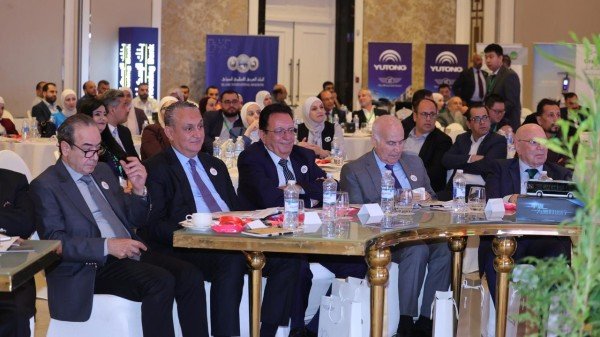
Today, Saturday, the second National Conference on Climate Change and Green Economy concluded in the capital, Amman, under the slogan “National Integration in Climate Action: From Adaptation to Transformation,” with broad participation from governmental, regional and international institutions and the private sector.
The conference sessions discussed paths of transformation towards a green economy, sustainable transportation, and low-emission cities, amid emphasis on the necessity of moving from climate risk management to comprehensive development transformation policies.
The conference witnessed a specialized session entitled “Electric Mobility: Today’s Reality and Tomorrow’s Opportunities,” which discussed the reality of the transition towards electric transportation in Jordan and the Arab region, the challenges associated with the infrastructure of charging stations, and regulatory legislation, in addition to investment opportunities in this vital sector as it is one of the most prominent tools for reducing carbon emissions in the transportation sector.
The Director of Sales and Operations at GRASEN Company, Engineer Mohamed Ghabs, reviewed the company’s experience in developing electric transportation solutions and smart infrastructure, highlighting the future opportunities offered by the global shift towards electric vehicles and low-emission buses, stressing that the region has promising potential to benefit from modern technologies in building more efficient and sustainable transportation systems.
The session presented a visual presentation of the experience of the Chinese company Yutong, one of the most prominent global companies in the manufacture of electric buses, which presented an advanced model in the transition towards sustainable public transportation by employing clean energy technologies and smart solutions, which contributes to reducing emissions, improving operating efficiency, and reducing operational costs in the long term.
Participants in the “City Resilience in the Green Economy” theme discussed the importance of sustainable urban planning, and enhancing the ability of cities to adapt to climate change by developing green infrastructure, expanding reliance on renewable energy, and improving the efficiency of using natural resources, in a way that supports the construction of more sustainable and resilient cities.
In the theme of “Climate Change: From Risk Management to Transition to a Sustainable Future,” the speakers emphasized that the current climate challenges are no longer managed solely by the logic of response, but rather require a strategic transition towards comprehensive economic and development transformation policies that enhance water, food, and energy security, and support long-term sustainable development paths.
In its final recommendations, the conference concluded with the necessity of accelerating the shift towards electric transportation, expanding investments in green infrastructure, strengthening international partnerships in the fields of clean technology and climate finance, in addition to supporting capacity-building and knowledge transfer programs, and developing national legislation and policies that support the green economy and low-emission smart cities.
Participants stressed that the success of climate action requires an integrated partnership between governments, the private sector, international institutions, and local communities, ensuring that climate change challenges are transformed into sustainable development and economic opportunities for future generations, and consolidating Jordan’s position as an active regional center in green transformation paths.
In addition, the conference witnessed the signing of a memorandum of understanding between the Ministry of Environment and the Arab Federation of Land Transport regarding the preparation of specialized studies on carbon emissions resulting from the land transport sector.
The memorandum was signed by the Minister of Environment, Dr. Ayman Suleiman, on behalf of the Ministry of Environment, and on behalf of the Arab Federation of Land Transport, Secretary General of the Federation, Engineer Malek Haddad, in a step aimed at strengthening institutional cooperation and developing solutions.
The memorandum aims to establish a technical cooperation framework between the Ministry of Environment and the Arab Federation of Land Transport to prepare scientific and technical studies to measure and estimate the size of carbon emissions resulting from the activities of land transport companies in the Kingdom, with the possibility of expanding the scope of the study in the future to include Arab transport companies that are members of the Federation.
The memorandum also includes building a unified methodology for measuring carbon emissions in the land transport sector, taking into account different types of vehicles, their operating ages, travel distances, and types of fuel used, in addition to creating a national database on the sector’s emissions that can be relied upon in developing climate policies and plans.
Under the agreement, the Ministry of Environment assumes its role as a national reference in the environmental aspects and scientific methodologies of the study, while the Arab Federation for Land Transport contributes to coordination with transport companies and Arab federations and facilitates the collection of data and information necessary for the study.
The Ministry of Environment and the Jordanian Petroleum Products Marketing Company “Jopetrol” also signed a memorandum of understanding to cooperate in implementing initiatives and awareness campaigns aimed at reducing indiscriminate dumping of waste and promoting positive environmental behaviors. It was signed by Dr. Ayman Suleiman on behalf of the ministry, and on behalf of “Jopetrol” its general manager, Engineer Khaled Muhammad Al-Zoubi, in the presence of a number of officials, experts and representatives of national entities participating in the conference.
This memorandum comes as one of the outcomes of the conference, and a translation of efforts to enhance national integration in environmental work, by involving the private sector in implementing practical initiatives that support the national strategy for cleanliness and reducing random dumping of waste.
Under the memorandum, the two parties will cooperate in launching awareness programs targeting community members and vehicle users by preparing and distributing reusable waste bags for vehicles (Car Bag) and providing designated waste containers and baskets carrying awareness messages at gas station sites and other locations that are agreed upon.
The initiative also includes preparing awareness content, posters and environmental messages aimed at raising awareness of the importance of maintaining public cleanliness and promoting the concept of shared responsibility towards the environment.