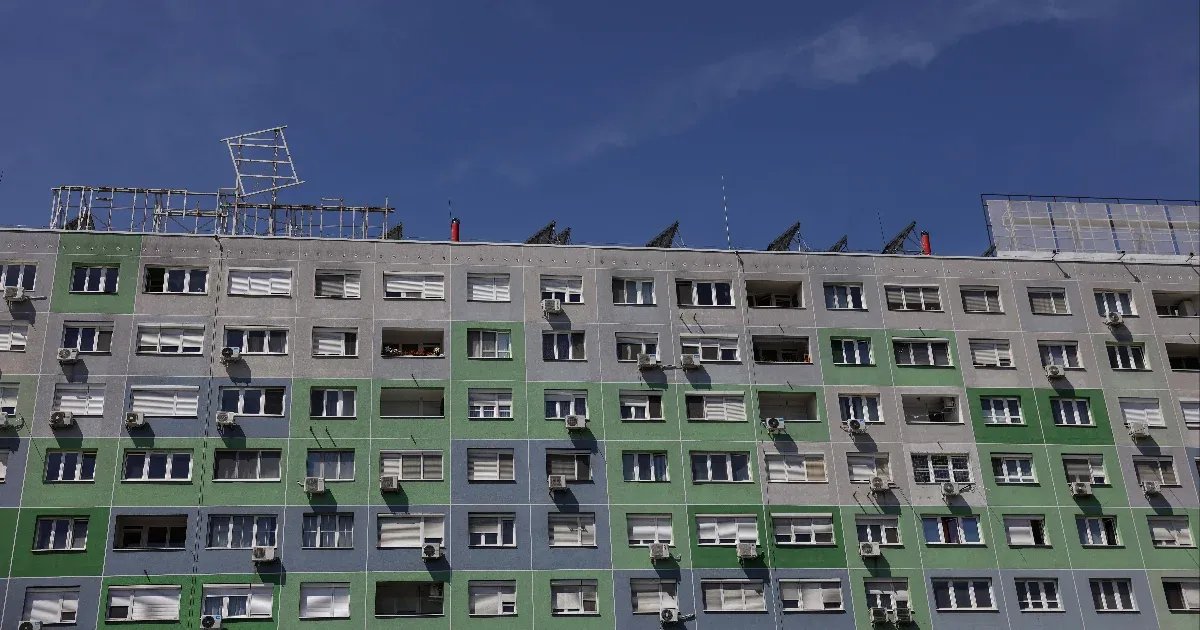
Those who can, should turn off the air conditioner between 6 and 9 p.m. and do not charge their electrical devices or cars at this time, so electricity consumption can be reduced, he suggested Captain István Minister of Economy and Energy.
Let’s quickly point out: this is economically very useful advice, it will help the country a lot if we follow it, but let’s not dramatize the announcement too much, don’t think that there is a power supply emergency in Hungary. In this article, we explain how electricity market balancing works and what the minister has proposed makes sense.
Operation of the electricity market
The most important principle of the electricity market is that the supply and demand in the domestic electricity system must be the same every second: we can consume as much electricity as we can feed into the system through domestic production and imports. Mavir (is operated and maintained by the Hungarian Electricity Industry Transmission System Management Co., Ltd.
Why is it different from other energy markets? Of course, we cannot consume more material than we have on the fuel market either, but there are opportunities to balance immediate consumption, such as gas stations, company or strategic product storage, which can be used to balance.
At the end of the day, demand and supply will also be in balance with natural gas, but we have gas storage facilities, which help to adjust supply to demand in addition to continuous domestic production and imports.
However, there must not only be a balance in the electricity market as a whole, that is, it must not simply exist that Hungarian consumers consume the same amount as the available supply on an annual, monthly or daily basis, but this situation must always and continuously exist.
Can we ask back that we hear nothing more than storage subsidies and battery programs, are these not enough to compensate? Yes, to a certain extent, this also helps more and more at the residential, corporate or even industrial level, but at the moment its capacity is still quite limited, electricity storage has not yet been solved in really large quantities.
The role of Mavir
The electricity market must therefore be in equilibrium at all times. The problem now is that the European heat wave and the accompanying heat dome have also reached Hungary, and the biggest change in demand stems from this: people come home from work in the afternoon or evening or go to a hotel in Balaton, and run the power-hungry air conditioners with steam power, which means that demand increases.
The supply side, on the other hand, is struggling. The solar power plants, which are very widespread in Hungary, are operating during the day, the Paks 1 nuclear power plant is working, the coal-fired Mátrai Power Plant is working, and the few wind power plants we have, and if there is a demand for them, the expensive gas power plants are also switched on.
Unfortunately, the aforementioned heat dome, which causes daytime temperatures of up to 38-40 degrees, is not good for thermal power plants and nuclear power plants either. They have to be cooled, which is a huge thermodynamic problem: just when many people would need electricity to cool their homes, there are even supply elements that don’t like this weather.
Kapitány István talked about the period between 6 and 9 because after 6 o’clock the production of solar power plants suddenly drops, and because of this, it is a period that usually requires a lot of attention. Mavir is not without tools, but it helps if people pay attention.
Import and stock exchange
Of course, there are many times when domestic production is unable to satisfy domestic demand, in which case imports come in, which can balance the Hungarian imbalance. However, the weather in our area is the same now, which means that the demand from our neighbors is just as high as it is from us.
All this is followed by the concentrated market of electricity trade, so the HUPX Hungarian Power Exchange named power exchange. The stock market price always shows the above processes, unfortunately in Hungary, for example, the intraday or the next day’s hourly price is quite volatile.
On Sunday mornings, when the Hungarian solar power plants produce electricity, but the domestic industry does not consume much electricity, the price is often very low or negative, while on weekday afternoons and evenings, when there is no more solar production, but people are watching TV, ironing, washing, opening the refrigerators and also using the air conditioners with steam power, the price of electricity soars to insane heights. The early evening period stands out because consumption is very high there, but production is relatively low, which is clearly shown by the development of the stock market price.
But – and this is also very important – the stock market price is not connected to the supply, Mavir is also a market player in that it calls out public tenders, but its job is to always have electricity. In other words, there is no such thing as a supply problem with higher prices, the price level cannot affect the security of supply. For Mavir, the price is a parameter, but if it is high, it is also considered a normal business process, that is, schedules and operational plans are also prepared in this case, only the work has to handle this reality described by high demand and high price.
Unfortunately, in this case, we cannot resort to anything other than what we have: a new nuclear power plant cannot be built in an instant, nor can a gas power plant, a wind power plant, or a solar power plant. It is possible to switch on reserve generators, such as expensive but flexible gas power plants, but if we can help the Hungarian economy with some voluntary population demand regulation, it is useful even if there is no financial incentive for this in the utility reduction system. If we want to act this way, we should rather consume when the solar power plants are producing (for example, this can be done partially even when we are not at home with the programming or remote control function of modern devices and smart home systems), or simply try to operate our electricity-consuming machines less in the more critical, early evening period.