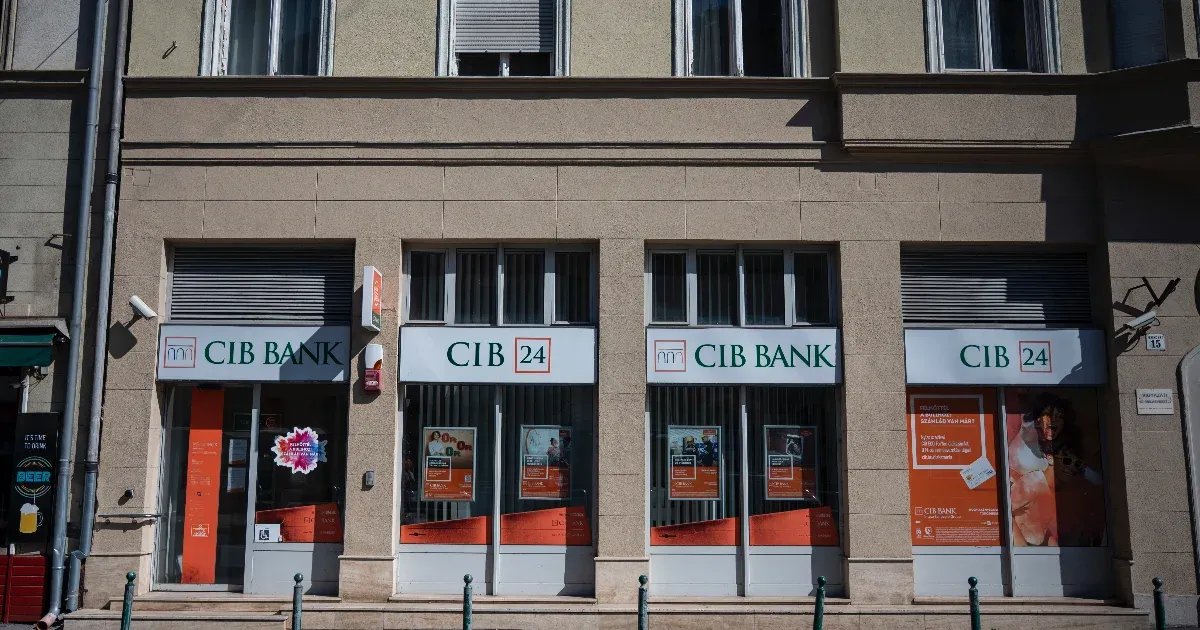
Our reader, Márton, recently contacted Telex with a story about a bank fraud. The mother-in-law of Márton (whose name has been changed) was called a few weeks ago on behalf of his bank, claiming that unauthorized persons were trying to access his account. They asked him over the phone to transfer his nearly five million HUF savings in his account to several different secure accounts. Her mother-in-law was at home alone at the time, and under the pressure of the caller on the other end of the phone, in desperation, she transferred all the money she had set aside through several transactions.
At the end of the hour and a half phone conversation, they told him that he would see the amount in his account again after the transfers, and then they hung up. After an hour, Márton’s mother-in-law realized that she had been scammed and immediately notified CIB Bank, where the clerks immediately blocked her card and online customer ID.
Up to this point, the case of Márton’s mother-in-law is not particularly different from the usual bank frauds. They filed a report with the police, where it was difficult to disable the customer ID (in the absence of it, the bank employees could not identify it online, so they could not release any information to the customer), so they finally went to one of the bank’s branches to see if the administration would be easier.
Then, however, they were faced with an absurd development: when they re-downloaded the bank application on their mother-in-law’s phone, they were surprised to notice that instead of the usual one million daily transfer limit for residential customers, it was thirty million forints per month
Márton’s mother-in-law has a limit of HUF 200 million per day and HUF 500 million per month.
The elderly woman had not previously requested an increase in the limit, neither online nor in the bank branch, but only in the bank’s application did they see that this was included as a default setting in the woman’s account. In the case of more greedy fraudsters and more money stored in bank accounts, nothing would have prevented the old woman from recklessly transferring an even larger amount to bank fraudsters.
Why would a residential customer need a daily limit of 200 million?
THE in CIB Bank’s customer regulations we found different answers to this question: according to this, for accounts opened after August 5, 2024, the basic daily transfer limit is HUF 200 million, and the monthly transfer limit is HUF 500 million, while the basic setting may be stricter for accounts opened earlier. Since this seemed quite surreal at first, we also asked for the opinion of Bankmonitor’s experts, who also interpreted the business regulations in a similar way to us, but after asking several CIB bank customers, we found that they all had a limit of HUF one per day and HUF thirty million per month.
We then contacted CIB Bank to ask what the reason is for the exceptionally high daily and monthly transfer limit for some retail customers, and if this affects a wider group, whether they plan to change this practice.
To do this, let’s first clarify what the limit maximum and the current limit mean, i.e. the default limit. The former refers to the amount in which customers can transfer – in case of need – this is HUF 200 million per day and HUF 500 million per month at CIB Bank, which is an upper limit and cannot be increased further. If a retail client wants to transfer such an amount, he must either transfer it in the bank application or apply in person at the bank branch, but he cannot transfer more than this amount.
The basic setting used in practice is what actually determines the amount in which customers can start a transfer. This is good so that there is already a limit on the maximum amount that fraudsters who have unauthorized access to our account can withdraw, and this protection is also available to customers who do not set such a limit independently. The basic setting varies from bank to bank, but is generally much lower than the maximum limit, usually between HUF 600,000 and HUF 5 million per day, HUF 20-30 million per month, and some banks set it individually based on the customer’s expenses.
According to the CIB, the phenomenon is not common, and the affected cases are being remedied
The bank replied that the extremely high daily limit is not common. The bank following the recommendation of the Hungarian National Bank In August 2024, the basic limit was changed to HUF 1 million per day and HUF 30 million per month for those who did not previously request a higher limit, but there was no reduction in the case of accounts opened since then, the default limit for them is 200-500 million, which is also the maximum limit – so this is the maximum amount that their retail customers can transfer.
According to the CIB, it was later identified that it was not possible to set the lower default limit uniformly even for those customers who opened accounts before August 2024, but the affected cases began to be treated.
For cases like that of Márton’s mother-in-law, they have a multi-layered security system that they are constantly developing, they monitor transactions in real time and try to filter them out through the system if they see a client’s behavior that differs from his previous transaction patterns. Theoretically, this would allow them to identify unusual or potentially abusive actions as soon as possible, but they were unable to detect this in the case of Márton’s mother-in-law.
However, compensation is not self-evident
We also asked the bank whether victims of wire transfer fraud can expect compensation. The bank replied, “each case is judged on the basis of all relevant circumstances, especially the circumstances of the transactions, the communication between the client and the bank, and the individual consideration of the security measures applied”, since these cases are complex, since the clients initiate the transfers under the influence of deception, but with their own approval.
The bank does not comment on individual cases, so they did not answer whether Márton’s mother-in-law would eventually get her money back. And although banks are constantly improving their protection systems and informing their customers about the currently popular forms of fraud, even so, HUF five billion per quarter they can extort money from the victims.
There will always be scammersso you should always be suspicious if someone tries to extort money from us over the phone, pretending to be a bank clerk. First of all, it is worth checking in our banking application how much limit is set for daily transfers, and then read our articles about bank frauds in which we have been involved about tips that can be passed on to children starting with kamu to investment proposals lots of bank fraud methods.