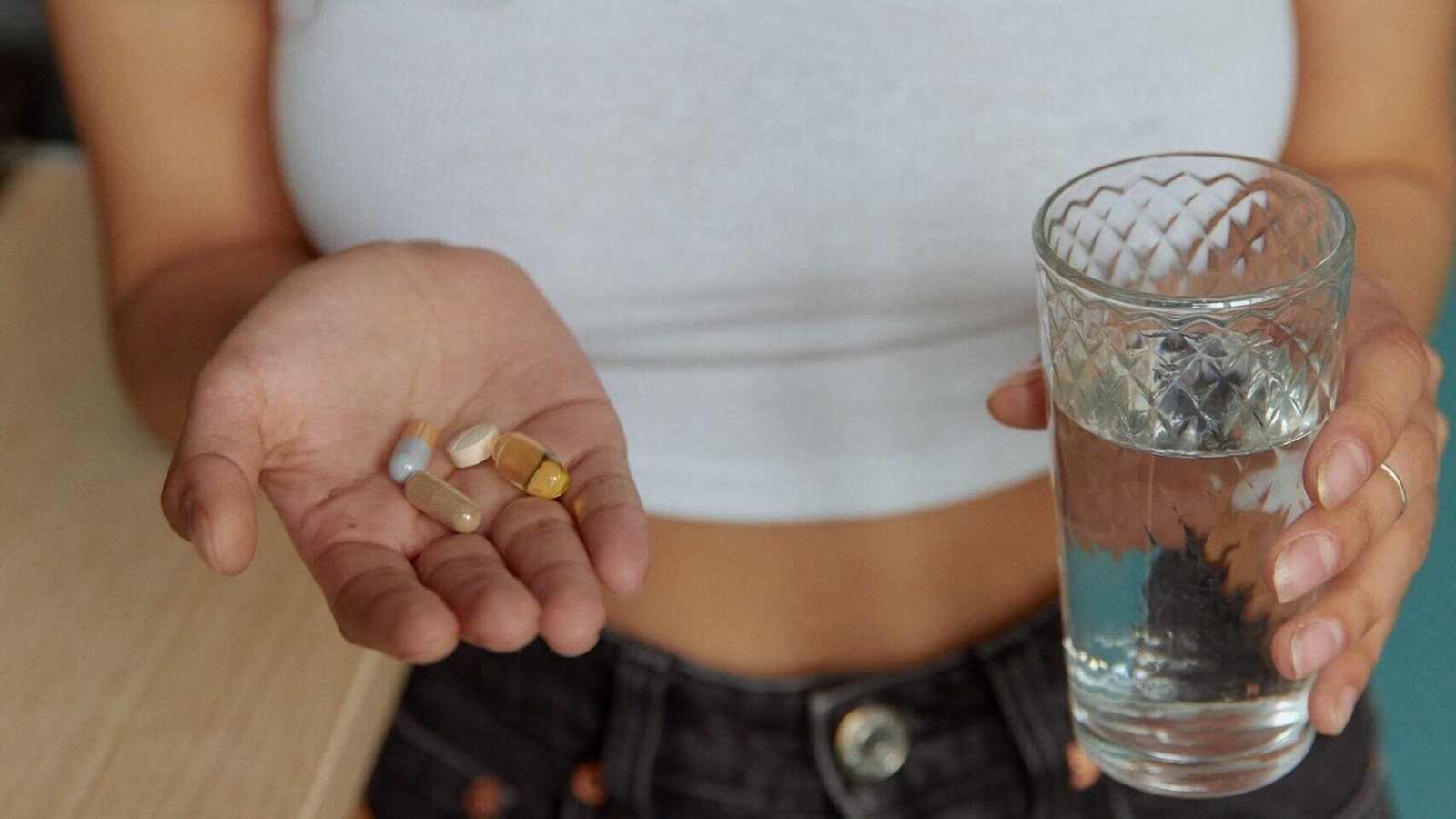

When taking a tablet or capsule, most people reach for the glass that happens to be nearby, whether it is mineral water or medicinal water. But that can be a mistake. A study by pharmacists at Semmelweis University in Budapest shows that certain types of water can dissolve the protective coating of enteric-coated medications within minutes, rendering the treatment ineffective.
Enteric-coated medications—which include many antireflux drugs, gastric protectants, pain relievers, and psychiatric medications—have a special coating. This is designed to prevent the active ingredient from being released in the stomach. There are two reasons for this. Either the stomach acid would destroy the active ingredient, or the active ingredient would irritate the stomach lining too severely. The release is therefore intended to occur later, in the alkaline environment of the intestine.
However, certain waters disrupt precisely this mechanism. The Budapest researchers examined 22 commonly consumed beverages.
They demonstrated that alkaline (basic) and mineral-rich mineral and medicinal waters attacked the protective coating.
In the case of some medicinal waters, the enteric coating began to break down after just five minutes. After a simulated pre-soaking time of 15 to 30 minutes, more than 90% of the active ingredient had already been released prematurely. If this happens in the body, the drug’s effect is often completely lost.
Until now, it was often assumed that only the pH value (alkalinity) of the water played a role. However, the new study in the journal Pharmaceutics shows that a high mineral and ion content also accelerates the dissolution of the protective coating. In comparison, more acidic liquids such as apple juice maintained the drug coating much more stably.
The results are particularly alarming for patients who cannot swallow capsules or tablets whole. “This phenomenon is especially important for people who open hard capsules due to difficulty swallowing and mix their contents into a liquid, yogurt, or applesauce,” explained Adrienn Demeter, a PhD candidate and the study’s first author. This primarily affects older adults, children, or patients with temporary, painful throat infections. If the exposed granules are then taken with the wrong type of mineral water, the medication is practically ineffective.
The researchers also scrutinized the prescribing information and package inserts for 103 enteric-coated medications—with sobering results.
Patient education is lacking. In 42 cases, there was no indication whatsoever of which liquid the medication should be taken with. In 31 cases, the instructions merely referred vaguely to “liquid.” In 21 cases, it simply said “water.” Only nine of the examined preparations provided specific instructions (e.g., taking the medication with a slightly acidic liquid or apple juice).
The situation in pharmacies is similar. Many patients are unaware that the beverage used to take the medication with can determine the success or failure of a treatment. Experts emphasize that mineral and medicinal waters are naturally healthy in themselves and should continue to be consumed. However, stricter rules apply to taking tablets.
While it is taken for granted among experts that medications should be taken with plain tap water—due to the vast selection of different waters available in supermarkets, this is no longer clear to patients,
according to Nikolett Kállai-Szabó, a lecturer at Semmelweis University and the study’s last author.
The expert outlined three golden rules for practice:
Use tap water: Enteric-coated medications should always be taken with a large glass of plain tap water.
Do not experiment with splitting: Capsules should never be opened without consulting a healthcare professional, and tablets should not be split on your own.
Ask if in doubt: If you have difficulty swallowing or are unsure, you should always consult your doctor or pharmacist for advice beforehand.
Featured image: Pexels