Monday, May 4, 2026
    The GeoStrategic Consensus
    No Result
    View All Result
    • Login
    • HOME
    • AMERICAS
      • Argentina
      • Brazil
      • Canada
      • Chile
      • Colombia
      • Costa Rica
      • Cuba
      • Dominican Republic
      • Ecuador
      • El Salvador
      • Greenland
      • Guatemala
      • Honduras
      • Mexico
      • Nicaragua
      • Panama
      • Paraguay
      • Peru
      • United States
      • Uruguay
      • Venezuela
    • ASIA-PACIFIC
      • Australia
      • Brunei Darussalam
      • Cambodia
      • China
      • Federated States of Micronesia
      • Fiji
      • Indonesia
      • Japan
      • Kiribati
      • Laos
      • Malaysia
      • Marshall Islands
      • Mongolia
      • Myanmar
      • Nauru
      • New Zealand
      • North Korea
      • Palau
      • Papua New Guinea
      • Philippines
      • Samoa
      • Singapore
      • Solomon Islands
      • South Korea
      • Taiwan
      • Thailand
      • Timor-Leste
      • Tonga
      • Tuvalu
      • Vanuatu
      • Vietnam
    • CARICOM
      • CARICOM – Non-English
        • Haiti
        • Suriname
      • CARICOM Associates
        • Anguilla
        • Bermuda
        • British-Virgin-Islands
        • Cayman-Islands
        • Curacao
        • Turks-and-Caicos
      • CARICOM English
        • Antigua and Barbuda
        • Barbados
        • Belize
        • Dominica
        • Grenada
        • Guyana
        • Jamaica
        • Montserrat
        • Saint Kitts and Nevis
        • Saint Lucia
        • Saint Vincent and the Grenadines
        • The Bahamas
        • Trinidad and Tobago
    • EURASIA
      • Armenia
      • Azerbaijan
      • Balarus
      • Georgia
      • Kazakhstan
      • Kyrgyzstan
      • Moldova
      • Russia
      • Tajikistan
      • Turkmenistan
      • Ukraine
      • Uzbekistan
    • EUROPE
      • Albania
      • Andorra
      • Austria
      • Bosnia and Herzegovina
      • Bulgaria
      • Croatia
      • Cyprus
      • Czech Republic
      • Denmark
      • Estonia
      • Finland
      • France
      • Germany
      • Greece
      • Holy See
      • Hungary
      • Iceland
      • Ireland
      • Italy
      • Kosovo
      • Latvia
      • Liechtenstein
      • Lithuania
      • Luxembourg
      • Malta
      • Monaco
      • Montenegro
      • Netherlands
      • North Macedonia
      • Norway
      • Poland
      • Portugal
      • Romania
      • San Marino
      • Serbia
      • Slovakia
      • Slovenia
      • Spain
      • Sweden
      • Switzerland
      • United Kingdom
    • MIDDLE EAST AND NORTH AFRICA
      • Algeria
      • Bahrain
      • Egypt
      • Iran
      • Iraq
      • Israel
      • Jordan
      • Kuwait
      • Lebanon
      • Lybia
      • Morocco
      • Oman
      • Palestinian Territories
      • Qatar
      • Saudi Arabia
      • Syria
      • Tunisia
      • Turkey
      • United Arab Emirates
      • Western Sahara
      • Yemen
    • SOUTH ASIA
      • Afghanistan
      • Bangladesh
      • Bhutan
      • India
      • Maldives
      • Nepal
      • Pakistan
      • Sri Lanka
    • SUB-SAHARAN AFRICA
      • Angola
      • Benin
      • Botswana
      • Burkina Faso
      • Burundi
      • Cabo Verde
      • Cameroon
      • Central African Republic
      • Chad
      • Comoros
      • Cote d’Ivoire
      • Democratic Republic of the Congo
      • Djibouti
      • Equatorial Guinea
      • Eritrea
      • Eswatini
      • Ethiopia
      • Gabon
      • Gambia
      • Ghana
      • Guinea
      • Guinea Bissau
      • Kenya
      • Lesotho
      • Liberia
      • Madagascar
      • Malawi
      • Mali
      • Mauritania
      • Mauritius
      • Mozambique
      • Namibia
      • Niger
      • Nigeria
      • Republic of the Congo
      • Rwanda
      • Sao Tome and Principe
      • Senegal
      • Seychelles
      • Sierra Leone
      • Somalia
      • South Africa
      • South Sudan
      • Sudan
      • Tanzania
      • Togo
      • Uganda
      • Zambia
      • Zimbabwe
    • HOME
    • AMERICAS
      • Argentina
      • Brazil
      • Canada
      • Chile
      • Colombia
      • Costa Rica
      • Cuba
      • Dominican Republic
      • Ecuador
      • El Salvador
      • Greenland
      • Guatemala
      • Honduras
      • Mexico
      • Nicaragua
      • Panama
      • Paraguay
      • Peru
      • United States
      • Uruguay
      • Venezuela
    • ASIA-PACIFIC
      • Australia
      • Brunei Darussalam
      • Cambodia
      • China
      • Federated States of Micronesia
      • Fiji
      • Indonesia
      • Japan
      • Kiribati
      • Laos
      • Malaysia
      • Marshall Islands
      • Mongolia
      • Myanmar
      • Nauru
      • New Zealand
      • North Korea
      • Palau
      • Papua New Guinea
      • Philippines
      • Samoa
      • Singapore
      • Solomon Islands
      • South Korea
      • Taiwan
      • Thailand
      • Timor-Leste
      • Tonga
      • Tuvalu
      • Vanuatu
      • Vietnam
    • CARICOM
      • CARICOM – Non-English
        • Haiti
        • Suriname
      • CARICOM Associates
        • Anguilla
        • Bermuda
        • British-Virgin-Islands
        • Cayman-Islands
        • Curacao
        • Turks-and-Caicos
      • CARICOM English
        • Antigua and Barbuda
        • Barbados
        • Belize
        • Dominica
        • Grenada
        • Guyana
        • Jamaica
        • Montserrat
        • Saint Kitts and Nevis
        • Saint Lucia
        • Saint Vincent and the Grenadines
        • The Bahamas
        • Trinidad and Tobago
    • EURASIA
      • Armenia
      • Azerbaijan
      • Balarus
      • Georgia
      • Kazakhstan
      • Kyrgyzstan
      • Moldova
      • Russia
      • Tajikistan
      • Turkmenistan
      • Ukraine
      • Uzbekistan
    • EUROPE
      • Albania
      • Andorra
      • Austria
      • Bosnia and Herzegovina
      • Bulgaria
      • Croatia
      • Cyprus
      • Czech Republic
      • Denmark
      • Estonia
      • Finland
      • France
      • Germany
      • Greece
      • Holy See
      • Hungary
      • Iceland
      • Ireland
      • Italy
      • Kosovo
      • Latvia
      • Liechtenstein
      • Lithuania
      • Luxembourg
      • Malta
      • Monaco
      • Montenegro
      • Netherlands
      • North Macedonia
      • Norway
      • Poland
      • Portugal
      • Romania
      • San Marino
      • Serbia
      • Slovakia
      • Slovenia
      • Spain
      • Sweden
      • Switzerland
      • United Kingdom
    • MIDDLE EAST AND NORTH AFRICA
      • Algeria
      • Bahrain
      • Egypt
      • Iran
      • Iraq
      • Israel
      • Jordan
      • Kuwait
      • Lebanon
      • Lybia
      • Morocco
      • Oman
      • Palestinian Territories
      • Qatar
      • Saudi Arabia
      • Syria
      • Tunisia
      • Turkey
      • United Arab Emirates
      • Western Sahara
      • Yemen
    • SOUTH ASIA
      • Afghanistan
      • Bangladesh
      • Bhutan
      • India
      • Maldives
      • Nepal
      • Pakistan
      • Sri Lanka
    • SUB-SAHARAN AFRICA
      • Angola
      • Benin
      • Botswana
      • Burkina Faso
      • Burundi
      • Cabo Verde
      • Cameroon
      • Central African Republic
      • Chad
      • Comoros
      • Cote d’Ivoire
      • Democratic Republic of the Congo
      • Djibouti
      • Equatorial Guinea
      • Eritrea
      • Eswatini
      • Ethiopia
      • Gabon
      • Gambia
      • Ghana
      • Guinea
      • Guinea Bissau
      • Kenya
      • Lesotho
      • Liberia
      • Madagascar
      • Malawi
      • Mali
      • Mauritania
      • Mauritius
      • Mozambique
      • Namibia
      • Niger
      • Nigeria
      • Republic of the Congo
      • Rwanda
      • Sao Tome and Principe
      • Senegal
      • Seychelles
      • Sierra Leone
      • Somalia
      • South Africa
      • South Sudan
      • Sudan
      • Tanzania
      • Togo
      • Uganda
      • Zambia
      • Zimbabwe
    No Result
    View All Result
    Agentially
    No Result
    View All Result
    Home EUROPE Hungary

    Telex: According to political science, what happened in Hungary on April 12, 2026?

    The Analyst by The Analyst
    April 21, 2026
    in Hungary
    Telex: According to political science, what happened in Hungary on April 12, 2026?


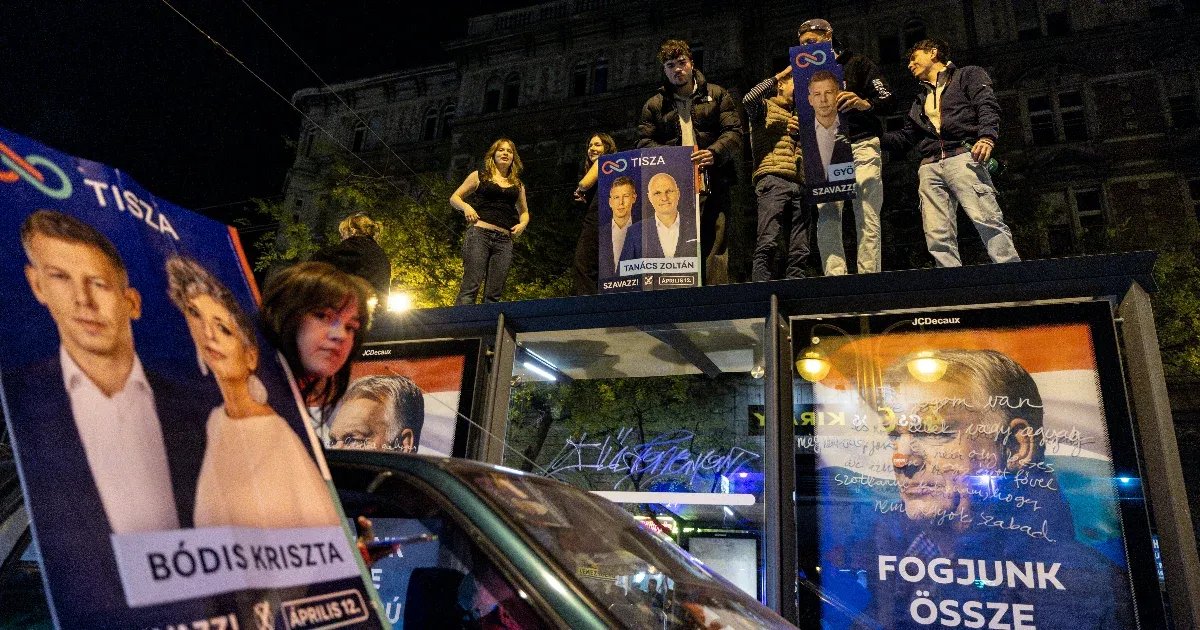
    It is difficult to fully describe the 2026 Hungarian parliamentary election with the usual political science categories. What is certain is that it was not a simple change of government. According to the final results, the Tisza Party won 141 seats in the 199-member parliament, while Fidesz lost power after 16 years. The election was accompanied by an extremely high turnout of almost 80 percent.

    READ ALSO

    Telex: The billion-dollar state support of the cultural holding in Pécs is delayed, the clues lead to Péter Hoppál

    No Room for Exhausted Politicians in the New Fidesz Parliamentary Group

    For such a situation, many of the established terms would use the terms critical choice, total reorganization or, more simply, landslide. However, they only partially cover what happened. A critical election, in the classical sense, is an election that permanently rearranges political fault lines and the structure of the party system with a particularly high turnout (Key 1955; Burnham 1970). Reorganization similarly refers to the permanent reorganization of socio-political coalitions and voter loyalties. Landslide, on the other hand, describes the extent of the victory rather than the systemic meaning of the turnaround. In the case of Hungary in 2026, however, it is not just about a large-scale victory or a reorganization of the electorate, but about the fact that the voters peacefully and constitutionally removed a ruling bloc that had been embedded for a long time.

    This is why the concept of the electoral revolution justifiably arises. It is no coincidence that already on the night of the election several political scientists (for example András Bozóki) started mentioning this concept. Electoral revolution has a narrower use, also known in political science. In the work of Valerie Bunce and Sharon Wolchik, such developments are primarily related to the hybrid or authoritarian systems of the post-communist region, where the combination of the opposition, civil society and international democracy support was able to make the election a means of breaking through against the regime (Bunce and Wolchik 2011). In this model, the election was more than a procedural event: it became the central arena for challenging the regime and for a democratic breakthrough. The concept originally therefore did not simply mean a radical electoral victory, but a turn that was also connected to the nature of the regime.

    At the same time, a wider usage also appeared in the literature. Andrea Lioy, for example, applies the electoral revolution to the rapid, far-reaching transformation of participation patterns, i.e. not necessarily to regime-changing events, but to events that radically transform the credibility, intensity and social significance of political competition (Lioy 2022). This broader interpretation is particularly important from the point of view of the Hungarian case, because it allows us to understand the concept not only in the scheme of “color revolutions”, but also as a democratic turn that can be grasped from the point of view of extraordinary participation, era-ending empowerment and the correction of the political system. And it is also worth noting that the concept of electoral revolutions has also been criticized on the grounds that the elections identified as such did not clearly lead to a democratic breakthrough (Kalandadze and Orenstein 2009).

    The Hungarian case is interesting precisely because it partly fits, but partly differs from the Bunce-Wolchik model. It fits in that here too, the turnaround occurred in a system that many analyzes have long described as a hybrid, illiberal or competitive authoritarian system. Levitsky and Way classically define these as systems in which the opposition can indeed compete for power, but the playing field is heavily tilted in favor of the incumbent (Levitsky and Way 2010). For years, Freedom House has emphasized about Hungary that Fidesz carried out constitutional and legal changes after 2010 that made it possible to consolidate control over independent institutions (Freedom House 2025). In accordance with this, the OSCE’s 2026 preliminary assessment found that the election was competitive, but did not provide equal opportunities for the actors: the ruling party enjoyed systemic advantages, the border between the state and the party was blurred, and the media and campaign financing distorted the conditions (OSCE 2026a). It is not surprising that the 2026 democracy report of the V-Dem Institute in Gothenburg considers Hungary to be the country with the greatest democratic decline (Nord et al. 2026) and consistently considers it an electoral autocracy from 2018.

    This point is crucial for the applicability of the concept in Hungary. The 2026 election does not refute, but rather retroactively confirms and adds another element to the descriptions of the regime, according to which the democratic competition in the Fidesz regime was formally preserved, but took place under permanently unequal conditions. If a government is not replaced by a routine democratic exchange economy, but by participation that is considered a historical record, and a social grand coalition that creates a broad voting base that is also considered a historical record and correspondingly plebiscite power, it highlights the fact that it was practically impossible to find a way out of the system in a normal cyclical way. Just as expected based on previous regime literature. In other words: here, the electoral revolution does not stand in opposition to previous system diagnoses, but becomes one of their strongest ex post empirical confirmations.

    However, the Hungarian case is not the same as the classic pattern of Eastern European and post-Soviet “electoral revolutions” after the nineties. In them, international support, election observation, civil capacity building and diffusion effects usually played a central role (Bunce and Wolchik 2011). In the case of the 2026 Hungarian election, on the other hand, external intervention does not seem to be the primary explanatory factor. On the contrary: although the changing international context (the deterioration of relations with the EU, the escalation of the conflict with Ukraine, the impact of the US intervention in Iran, etc.) was not unimportant from the point of view of the course of events, the turn itself can be described rather as the result of a sovereign social self-correction. Therefore, the Hungarian case does not fit into the logic of the regime change of 1989-1990 and cannot simply be described as another “color revolution”. Rather, the picture emerges of an electoral revolution carried out by internal social mobilization, which showed that there was indeed a gap in the system’s shield – but it could only be found with extraordinary mass mobilization.

    Therefore, from a scientific point of view, the term electoral revolution can be used fruitfully for today’s Hungary, if it is not used as a mere metaphor, but as a clearly defined concept. It does not mean an armed insurrection, an extra-constitutional takeover, and not an automatic regime change. Rather, that with exceptional participation, the voters gave the change a powerful authorization through a peaceful, electoral process that goes beyond the usual change of government and marks an era in the history of the political system. The power of the concept lies precisely in the fact that it simultaneously captures the descriptive side of the revolution – the extraordinary mobilization and the sweeping away of power – and the regime theory side (along with its normative consequences): the fact that the possibility of democratic change could only open up in this exceptional way.

    Of course, all this does not mean that the electoral revolution would in itself mean democratic consolidation. The election can be revolutionary without automatically succeeding in the institutional reconstruction of the political system. The 2026 Hungarian election therefore opened up an opportunity rather than closing a story. But even this makes the use of the term very justified: what happened in Hungary was more than a critical election, it was more than a landslide and it was more than a simple change of office. This can truly be described as an electoral revolution: a bloodless, constitutional, political era change carried out by mass social force.

    The author of the article is political scientist, sociologist Andrea Szabó and associate professor Zoltán Gábor Szűcs-Zágoni.

    References:

    • Bunce, Valerie J. – Wolchik, Sharon L. (2011): Defeating Authoritarian Leaders in Postcommunist Countries. Cambridge: Cambridge University Press.
    • Burnham, Walter Dean (1970): Critical Elections and the Mainsprings of American Politics. New York: WW Norton.
    • Freedom House (2025): Hungary: Freedom in the World 2025 Country Report. Washington, DC: Freedom House. Kalandadze, Katya and Orenstein, Mitchell A. (2009): Electoral Protests and Democratization Beyond the Color Revolutions. Comparative Political Studies, 42(11): 1403–1425.
    • Key, VO, Jr. (1955): A Theory of Critical Elections. The Journal of Politics, 17(1): 3–18.
    • Levitsky, Steven – Way, Lucan A. (2010): Competitive Authoritarianism: Hybrid Regimes after the Cold War. Cambridge: Cambridge University Press.
    • Lioy, Andrea (2022) Towards a General Theory of Rapid Changes in Voter Turnout. Parliamentary Affairs, 75(3): 492–512.
    • OSCE/ODIHR (2026a): Hungary’s parliamentary elections: vibrant, but no equal opportunities for contestants, international observers say. 13 April 2026.
    • OSCE/ODIHR (2026b): Hungary, Parliamentary Elections. 12 April 2026: Interim Report, 27 March 2026.
    • Nord, Marina – Altman, David – Fernandes, Tiago – Good God, Ana – Lindberg, Staffan I. (2026): Democracy Report 2026: Unraveling The Democratic Era? University of Gothenburg: V-Dem Institute.

    Source link

    Related Posts

    Telex: The billion-dollar state support of the cultural holding in Pécs is delayed, the clues lead to Péter Hoppál
    Hungary

    Telex: The billion-dollar state support of the cultural holding in Pécs is delayed, the clues lead to Péter Hoppál

    May 4, 2026
    No Room for Exhausted Politicians in the New Fidesz Parliamentary Group
    Hungary

    No Room for Exhausted Politicians in the New Fidesz Parliamentary Group

    May 4, 2026
    Anniversary Ice Cream Honors Queen Elisabeth’s Favorite Flavors
    Hungary

    Anniversary Ice Cream Honors Queen Elisabeth’s Favorite Flavors

    May 4, 2026
    A city of the future stuck in the past
    Hungary

    A city of the future stuck in the past

    May 3, 2026
    Seven Podium Finishes at the Open Water Swimming World Cup
    Hungary

    Seven Podium Finishes at the Open Water Swimming World Cup

    May 3, 2026
    Telex: A diabolically organized march to death – this is how the Jewish community of Pécs disappeared
    Hungary

    Telex: A diabolically organized march to death – this is how the Jewish community of Pécs disappeared

    May 3, 2026
    Next Post
    Tongan bikie serving life sentence wanted to “piss off” Australia for deporting him

    Tongan bikie serving life sentence wanted to "piss off" Australia for deporting him

    POPULAR NEWS

    Justin Bieber fans flood Coachella festival for headlining show – Entertainment

    Justin Bieber fans flood Coachella festival for headlining show – Entertainment

    April 20, 2026

    Over 600 flee homes as Army, NPA clash in Negros Occidental

    April 21, 2026

    Ex-DPWH exec recalls P800-M ‘delivery’ to Zaldy Co 

    April 20, 2026

    Former PM Paluckas suspends party membership, to waive immunity over criminal probe

    April 24, 2026
    Pres. Ali challenges CARICOM to transform into health research powerhouse

    Pres. Ali challenges CARICOM to transform into health research powerhouse

    April 23, 2026

    EDITOR'S PICK

    Lae firms welcome govt response to fuel price hike

    April 17, 2026
    JPS powers $10m extra-lessons programme for western students | News

    JPS powers $10m extra-lessons programme for western students | News

    April 9, 2026
    Montreal’s largest school service centre loses more than 100 support staff due to new secularism law

    Montreal’s largest school service centre loses more than 100 support staff due to new secularism law

    April 16, 2026
    The match resumes at Dragão: FC Porto 1, Alverca 0

    The match resumes at Dragão: FC Porto 1, Alverca 0

    May 2, 2026

    Recent Posts

    • Remembrances of sleep.. Praise be to God who revived us after He caused us to die, and to Him is the resurrection
    • ​Water Holding Company: Tightening quality control and combating stealthy connections to the Red Sea photo
    • Libya launches 100-day plan to boost agriculture sector
    • Conflict in the Middle East: no amending finance law in sight, but risks on purchasing power and energy (El Mehdi Fakir)

      © 2026 Agentially - Navigating shifting sovereignties and global risk .

      Welcome Back!

      Login to your account below

      Forgotten Password?

      Retrieve your password

      Please enter your username or email address to reset your password.

      Log In
      No Result
      View All Result

        © 2026 Agentially - Navigating shifting sovereignties and global risk .

        This website uses cookies. By continuing to use this website you are giving consent to cookies being used. Visit our Privacy and Cookie Policy.