Monday, May 4, 2026
    The GeoStrategic Consensus
    No Result
    View All Result
    • Login
    • HOME
    • AMERICAS
      • Argentina
      • Brazil
      • Canada
      • Chile
      • Colombia
      • Costa Rica
      • Cuba
      • Dominican Republic
      • Ecuador
      • El Salvador
      • Greenland
      • Guatemala
      • Honduras
      • Mexico
      • Nicaragua
      • Panama
      • Paraguay
      • Peru
      • United States
      • Uruguay
      • Venezuela
    • ASIA-PACIFIC
      • Australia
      • Brunei Darussalam
      • Cambodia
      • China
      • Federated States of Micronesia
      • Fiji
      • Indonesia
      • Japan
      • Kiribati
      • Laos
      • Malaysia
      • Marshall Islands
      • Mongolia
      • Myanmar
      • Nauru
      • New Zealand
      • North Korea
      • Palau
      • Papua New Guinea
      • Philippines
      • Samoa
      • Singapore
      • Solomon Islands
      • South Korea
      • Taiwan
      • Thailand
      • Timor-Leste
      • Tonga
      • Tuvalu
      • Vanuatu
      • Vietnam
    • CARICOM
      • CARICOM – Non-English
        • Haiti
        • Suriname
      • CARICOM Associates
        • Anguilla
        • Bermuda
        • British-Virgin-Islands
        • Cayman-Islands
        • Curacao
        • Turks-and-Caicos
      • CARICOM English
        • Antigua and Barbuda
        • Barbados
        • Belize
        • Dominica
        • Grenada
        • Guyana
        • Jamaica
        • Montserrat
        • Saint Kitts and Nevis
        • Saint Lucia
        • Saint Vincent and the Grenadines
        • The Bahamas
        • Trinidad and Tobago
    • EURASIA
      • Armenia
      • Azerbaijan
      • Balarus
      • Georgia
      • Kazakhstan
      • Kyrgyzstan
      • Moldova
      • Russia
      • Tajikistan
      • Turkmenistan
      • Ukraine
      • Uzbekistan
    • EUROPE
      • Albania
      • Andorra
      • Austria
      • Bosnia and Herzegovina
      • Bulgaria
      • Croatia
      • Cyprus
      • Czech Republic
      • Denmark
      • Estonia
      • Finland
      • France
      • Germany
      • Greece
      • Holy See
      • Hungary
      • Iceland
      • Ireland
      • Italy
      • Kosovo
      • Latvia
      • Liechtenstein
      • Lithuania
      • Luxembourg
      • Malta
      • Monaco
      • Montenegro
      • Netherlands
      • North Macedonia
      • Norway
      • Poland
      • Portugal
      • Romania
      • San Marino
      • Serbia
      • Slovakia
      • Slovenia
      • Spain
      • Sweden
      • Switzerland
      • United Kingdom
    • MIDDLE EAST AND NORTH AFRICA
      • Algeria
      • Bahrain
      • Egypt
      • Iran
      • Iraq
      • Israel
      • Jordan
      • Kuwait
      • Lebanon
      • Lybia
      • Morocco
      • Oman
      • Palestinian Territories
      • Qatar
      • Saudi Arabia
      • Syria
      • Tunisia
      • Turkey
      • United Arab Emirates
      • Western Sahara
      • Yemen
    • SOUTH ASIA
      • Afghanistan
      • Bangladesh
      • Bhutan
      • India
      • Maldives
      • Nepal
      • Pakistan
      • Sri Lanka
    • SUB-SAHARAN AFRICA
      • Angola
      • Benin
      • Botswana
      • Burkina Faso
      • Burundi
      • Cabo Verde
      • Cameroon
      • Central African Republic
      • Chad
      • Comoros
      • Cote d’Ivoire
      • Democratic Republic of the Congo
      • Djibouti
      • Equatorial Guinea
      • Eritrea
      • Eswatini
      • Ethiopia
      • Gabon
      • Gambia
      • Ghana
      • Guinea
      • Guinea Bissau
      • Kenya
      • Lesotho
      • Liberia
      • Madagascar
      • Malawi
      • Mali
      • Mauritania
      • Mauritius
      • Mozambique
      • Namibia
      • Niger
      • Nigeria
      • Republic of the Congo
      • Rwanda
      • Sao Tome and Principe
      • Senegal
      • Seychelles
      • Sierra Leone
      • Somalia
      • South Africa
      • South Sudan
      • Sudan
      • Tanzania
      • Togo
      • Uganda
      • Zambia
      • Zimbabwe
    • HOME
    • AMERICAS
      • Argentina
      • Brazil
      • Canada
      • Chile
      • Colombia
      • Costa Rica
      • Cuba
      • Dominican Republic
      • Ecuador
      • El Salvador
      • Greenland
      • Guatemala
      • Honduras
      • Mexico
      • Nicaragua
      • Panama
      • Paraguay
      • Peru
      • United States
      • Uruguay
      • Venezuela
    • ASIA-PACIFIC
      • Australia
      • Brunei Darussalam
      • Cambodia
      • China
      • Federated States of Micronesia
      • Fiji
      • Indonesia
      • Japan
      • Kiribati
      • Laos
      • Malaysia
      • Marshall Islands
      • Mongolia
      • Myanmar
      • Nauru
      • New Zealand
      • North Korea
      • Palau
      • Papua New Guinea
      • Philippines
      • Samoa
      • Singapore
      • Solomon Islands
      • South Korea
      • Taiwan
      • Thailand
      • Timor-Leste
      • Tonga
      • Tuvalu
      • Vanuatu
      • Vietnam
    • CARICOM
      • CARICOM – Non-English
        • Haiti
        • Suriname
      • CARICOM Associates
        • Anguilla
        • Bermuda
        • British-Virgin-Islands
        • Cayman-Islands
        • Curacao
        • Turks-and-Caicos
      • CARICOM English
        • Antigua and Barbuda
        • Barbados
        • Belize
        • Dominica
        • Grenada
        • Guyana
        • Jamaica
        • Montserrat
        • Saint Kitts and Nevis
        • Saint Lucia
        • Saint Vincent and the Grenadines
        • The Bahamas
        • Trinidad and Tobago
    • EURASIA
      • Armenia
      • Azerbaijan
      • Balarus
      • Georgia
      • Kazakhstan
      • Kyrgyzstan
      • Moldova
      • Russia
      • Tajikistan
      • Turkmenistan
      • Ukraine
      • Uzbekistan
    • EUROPE
      • Albania
      • Andorra
      • Austria
      • Bosnia and Herzegovina
      • Bulgaria
      • Croatia
      • Cyprus
      • Czech Republic
      • Denmark
      • Estonia
      • Finland
      • France
      • Germany
      • Greece
      • Holy See
      • Hungary
      • Iceland
      • Ireland
      • Italy
      • Kosovo
      • Latvia
      • Liechtenstein
      • Lithuania
      • Luxembourg
      • Malta
      • Monaco
      • Montenegro
      • Netherlands
      • North Macedonia
      • Norway
      • Poland
      • Portugal
      • Romania
      • San Marino
      • Serbia
      • Slovakia
      • Slovenia
      • Spain
      • Sweden
      • Switzerland
      • United Kingdom
    • MIDDLE EAST AND NORTH AFRICA
      • Algeria
      • Bahrain
      • Egypt
      • Iran
      • Iraq
      • Israel
      • Jordan
      • Kuwait
      • Lebanon
      • Lybia
      • Morocco
      • Oman
      • Palestinian Territories
      • Qatar
      • Saudi Arabia
      • Syria
      • Tunisia
      • Turkey
      • United Arab Emirates
      • Western Sahara
      • Yemen
    • SOUTH ASIA
      • Afghanistan
      • Bangladesh
      • Bhutan
      • India
      • Maldives
      • Nepal
      • Pakistan
      • Sri Lanka
    • SUB-SAHARAN AFRICA
      • Angola
      • Benin
      • Botswana
      • Burkina Faso
      • Burundi
      • Cabo Verde
      • Cameroon
      • Central African Republic
      • Chad
      • Comoros
      • Cote d’Ivoire
      • Democratic Republic of the Congo
      • Djibouti
      • Equatorial Guinea
      • Eritrea
      • Eswatini
      • Ethiopia
      • Gabon
      • Gambia
      • Ghana
      • Guinea
      • Guinea Bissau
      • Kenya
      • Lesotho
      • Liberia
      • Madagascar
      • Malawi
      • Mali
      • Mauritania
      • Mauritius
      • Mozambique
      • Namibia
      • Niger
      • Nigeria
      • Republic of the Congo
      • Rwanda
      • Sao Tome and Principe
      • Senegal
      • Seychelles
      • Sierra Leone
      • Somalia
      • South Africa
      • South Sudan
      • Sudan
      • Tanzania
      • Togo
      • Uganda
      • Zambia
      • Zimbabwe
    No Result
    View All Result
    Agentially
    No Result
    View All Result
    Home EUROPE Hungary

    Telex: A diabolically organized march to death – this is how the Jewish community of Pécs disappeared

    The Analyst by The Analyst
    May 3, 2026
    in Hungary
    Telex: A diabolically organized march to death – this is how the Jewish community of Pécs disappeared


    On July 12, 1944, István Boros, the later lord of Pécs, wrote one of the city’s history books: “Nearly four thousand people marched towards his grave, frozen to death, alive. Devilishly evil, in a stage-staged crowd with refined wickedness” of his saddest day to the Hungarian Communist Party’s local paper, Új Dunántúl. On July 4, the gendarmes put almost the entire Jewish community of the city on the train bound for the Auschwitz-Birkenau concentration camp.

    READ ALSO

    Telex: The billion-dollar state support of the cultural holding in Pécs is delayed, the clues lead to Péter Hoppál

    No Room for Exhausted Politicians in the New Fidesz Parliamentary Group

    Only a few Jews from Pécs escaped deportation. József Schweitzer, the national chief rabbi who died in 2015, wrote a complete monograph on the Jewish community in Pécs. Published in 1966, A In the history of the Pécs Israelite Religious Community it presents not only the settlement of the Jews in Pécs, but also the years of fascism, labor service and deportations in detail. According to the researches of the former national chief rabbi, a family from Pécs was able to escape because the head of the family was a war invalid, two older couples escaped to Budapest, and an older man and a girl’s high school student were also in Budapest when the Germans invaded Hungary in March 1944. Three minor brothers were hidden by local Christians.

    775 men were able to avoid the train to Auschwitz because they performed labor service. Of the 906 men who had to get on the train to the concentration camp, only 12 lived to see the end of the world war. A little more people, 25-30, returned from Mauthausen.

    According to Schweitzer, almost 90 percent of the Jews of Pécs were victims of the Holocaust. According to official census data, 3,486 Jews lived in the city in 1940, but only 711 in 1949. However, he considers it more accurate to compare the data with the publication A Könnyek Könyve of the Pécs religious community, which lists the names of 3,022 people who died one by one either in labor service or in the deportations. Comparing this with the census data, according to Schweitzer, only 464 people returned to Pécs, i.e. 86.7 percent of the local Jews died in the Holocaust.

    From a stable to Auschwitz

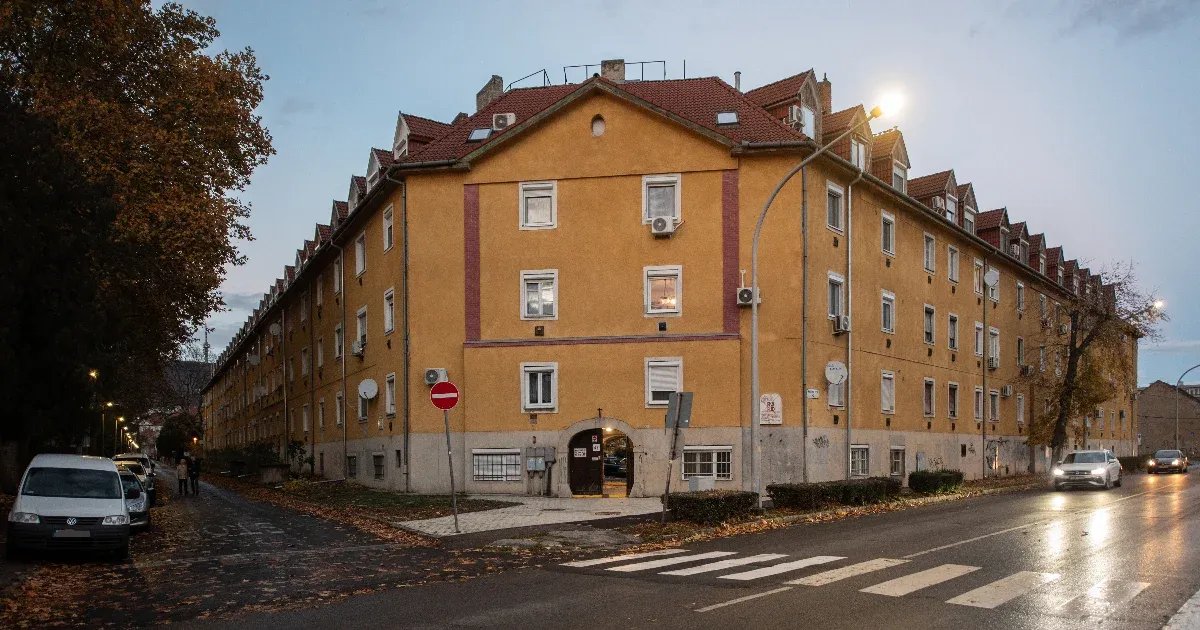
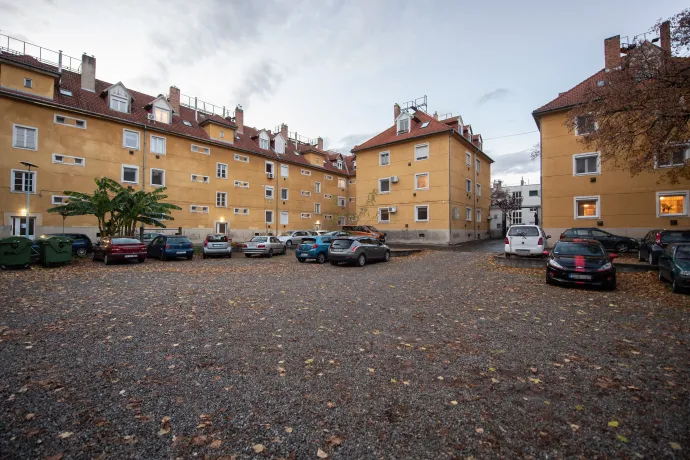
    On May 9, 1944, the Jews of Pécs began to be moved to the ghetto. The Pécs ghetto was created in the Ispitalja part of the city, with the MÁV apartment building as its central building. The ghetto, which was opened on May 8, also extended to the family houses around the apartment building, up to Kassa Street and to the south, then called Bánffy Dezső Street, now known as Martyrs’ Street, in memory of the victims of the Holocaust.

    “In addition to the government measures, the selection took into account the fact that the area designated for the ghetto can be closed, it is on the outskirts of the city, and its proximity to the railway and the airport was also taken into account,” Transdanúl wrote on May 6, 1944.
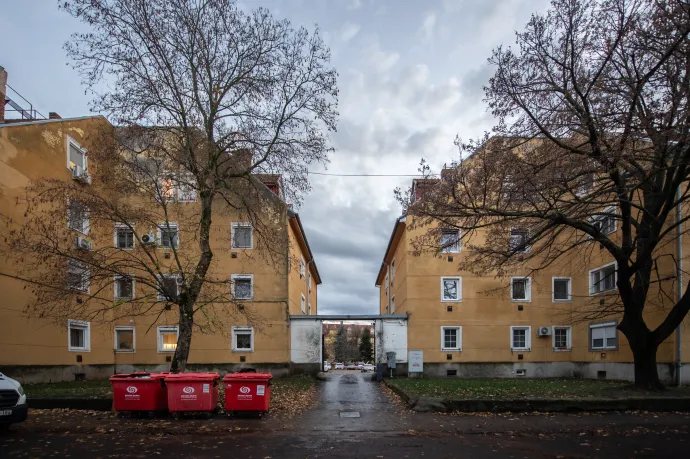
    The MÁV apartment building in Pécs today - Photo: János Bődey / TelexThe MÁV apartment building in Pécs today - Photo: János Bődey / Telex

    The MÁV apartment building in Pécs today – Photo: János Bődey / Telex

    In the light of the later events, in an article with a particularly chilling atmosphere 3400 Jews they wrote about his relocation to the ghetto. While the author of the article noted that “five Jews are allowed in each living room”, the Christians who used to live in the ghetto area were reassured that the next day they would receive the mayor’s decision on which “apartments abandoned by the Jews” they could move into. They wrote that within a few days, the Jews “will start moving together so that as many Jewish apartments as possible will be freed up for the Christian movers on the very first day.”

    In the ghetto surrounded by barbed wire, official supervision was exercised by the police, but internal affairs were handled by the Jewish Council. They were in contact with the police and city authorities. A separate ghetto police force was also organized, and communal kitchens were set up for meals. You could only leave the ghetto area with a special permit. There were people who were able to leave because of physical work, and a couple of families of doctors were exempted because their work was necessary due to the lack of doctors. Immediately before the deportations, however, they were also taken to the ghetto. THE final move-in date It was May 20, 1944, and according to an article in Danántúl, the Pécs ghetto was closed at six in the evening.

    Schweitzer wrote that according to the ghetto book kept in the archives of the Pécs religious community, 2,711 people lived in the ghetto before the deportations. There were roughly twice as many female residents as men, 906 of the latter and 1805 of the former. At that time, 177 children under the age of ten lived in the ghetto, where the atmosphere was very tense due to insecurity, horrible housing conditions, overcrowding and lack of food. According to the article of Dunántúl on May 21, 1944, in an “interesting and characteristic” way, a scandal arose from the fact that the poorer inhabitants of the ghetto it was thrown in the eyes of richer peoplethat because of their greed and pride, “they are the reason for the explosion of the Jewish decrees”.

    Literary historian Soma Csondor, a researcher of the Pécs Jewish Holocaust and the memory of the emergency era, wrote to Telex that he knows of only one person who managed to escape from the Pécs ghetto. Piano teacher Klára Wiesenberg, the then-fiancée of painter Ferenc Martyn, escaped with Martyn’s help. Martyn hid the teacher in the apartment of one of his friends, Géza Szücsi Ágoston tér, for days. Wiesenberg only left the apartment when the police searched Martyn Zrínyi Street’s house and other locations.
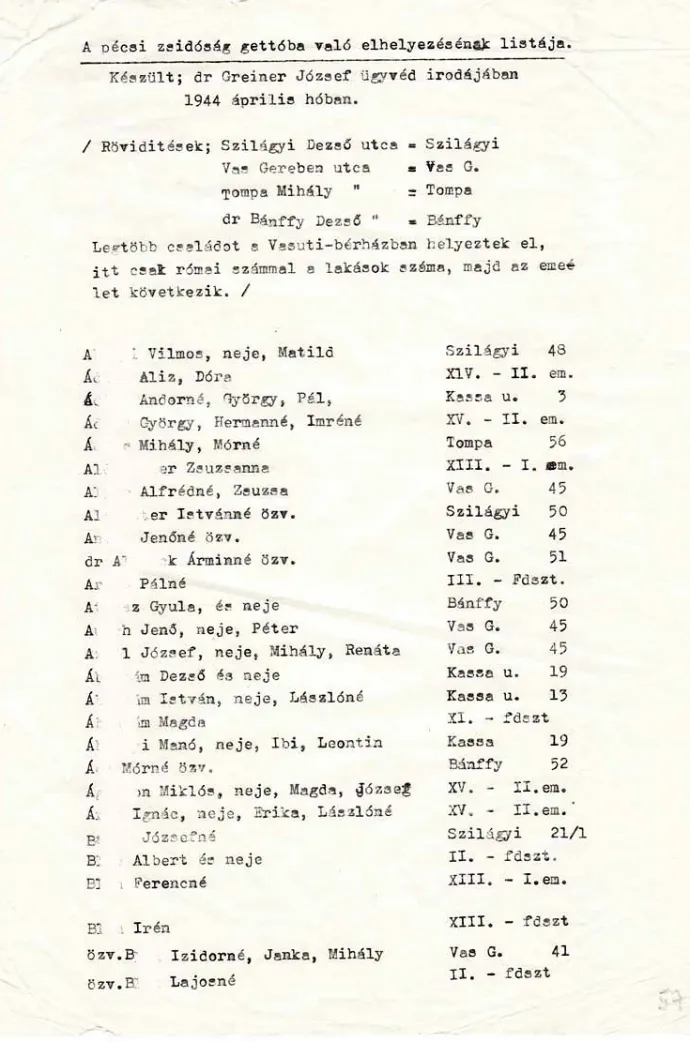
    Ghetto list of the placement of Pécs Jews - Source: Pécsi Jewish Community Records

    Ghetto list of the placement of Pécs Jews – Source: Pécsi Jewish Community Records

    It later came to light that Szücsi hid the woman, so she was arrested and then interned. Wiesenberg continued to hide, finding refuge in Kaposvár, with Martyn’s sister. She telegraphed her fiancé, who was in Budapest at the time, to wait for her at the Dombóvár railway station. In the waiting room, he was then certified by a gendarme, who took him with him to the police station. This is how Klára Wiesenberg returned to the Pécs ghetto, from where she was deported to Auschwitz on July 4. In the end, she was able to return as one of the handful of survivors, and her ex-husband, Martyn, although not of Jewish origin, is still buried in the local Israelite cemetery.

    The Pécs ghetto did not exist for long. On June 23, 1944, the Jewish Council was officially informed that the residents had to move to the Lakits barracks by the evening of June 29, and that they could only take the most necessary clothes with them. They had to leave everything else, furniture, food, all their money in the ghetto. Before departure, everyone was examined, with the help of assigned midwives, older women and young girls as well. They all had to walk to the Lakits barracks, which was not far from the ghetto, and the old and sick were transported by car. At one part of the road, a gendarme officer even ordered them to get off and continue on foot.

    According to the reports, the gendarmes and police accompanying the march beat the lagging behind, helpless old people and the sick. When the march arrived at the Lakits barracks, they were met with conditions even more inhumane than those more experienced in the ghetto. In the barracks, not only the people of Pécs were gathered, but also Jews from Mohács and a few smaller ghettos in the surrounding area. Thus, a total of approximately four thousand people gathered. They were housed in the barracks’ filthy, untidy horse stalls. According to witnesses, there must have been 5-7 people in each stall, and they couldn’t even clean themselves, because there was only one water faucet in the two stable buildings. They had to use latrines as toilets, and were given only low-quality and little official food to eat. Here, too, they were motorcycled and regularly beaten by the gendarmes.
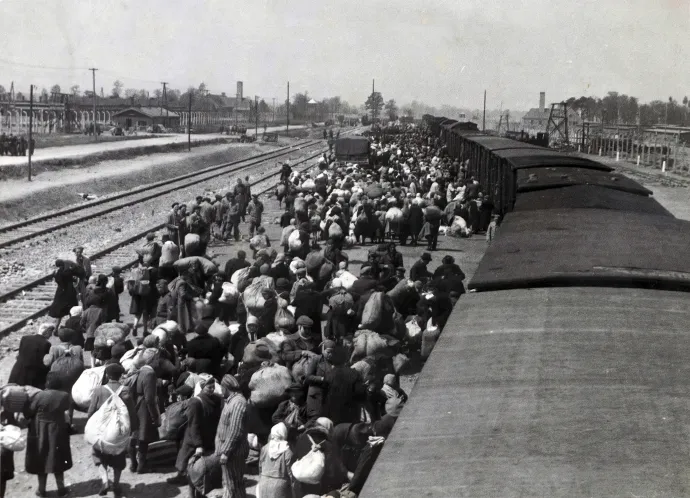
    A train of deported Jews at the Auschwitz concentration camp in 1944 - Photo: Lili Jacob / Fortepan

    A train of deported Jews at the Auschwitz concentration camp in 1944 – Photo: Lili Jacob / Fortepan

    The deportation of the Jews of Pécs took place on July 4, 1944. Under the supervision of the gendarmes, the Jews of Pécs and the surrounding area marched along the deserted streets in the pouring rain, and then boarded the wagons bound for Auschwitz-Birkenau at the Pécs train station.

    “The Pécs ghetto is empty”

    – that’s what the local daily, the openly anti-Semitic Danútúl, wrote on July 6 about the almost complete disappearance of the Jewish community from Pécs.

    Who did Pécs lose?

    “It is clear that the loss is unforeseeable,” Csondor wrote to Telex, emphasizing that not only significant figures in cultural life were lost, but also almost all Jewish children in Pécs. Only two out of 350 children survived the death camp. Four painters from Pécs also died in Auschwitz. From their surviving works, first in 2014, the 70th anniversary of the deportations, and then in 2024, the on his 80th anniversary exhibition organized by the Janus Pannonius Museum and the Jewish Community of Pécs.

    • Lajos Király was in Budapest when the deportation of rural Jews began, and he traveled home to Pécs after hearing the news. He was deported together with his mother and sister, Erzsébet. Erzsébet survived the Holocaust, she and her sons were able to preserve Király’s works.
    • Judit Roder wanted to apply to the Academy of Fine Arts in Budapest, but she was not able to do so because of the Jewish laws, but her works were still included in exhibitions in Pécs. In 1944, he was deported together with his parents and sister. Only one person in his family survived the Holocaust: his sister Judit. Györgyné Révész (Anna Roder) donated part of her sister’s legacy to the Janus Pannonius Museum and the Pécs Jewish Community.
    • Ernő Károly also died in Auschwitz. After high school, he studied at the Model Drawing School, and his pictures were also exhibited in the Art Gallery. Later, he also created abroad, in Albania, Bosnia and the Netherlands, painting landscapes and figurative pictures. Most of his paintings were destroyed, in 2014 he had only two known paintings, but by 2024, five of his works were owned by the Jewish Community of Pécs.
    • Emil Kellermann was ordained a doctor in 1924. He was an intern at the internal medicine clinic in Pécs, later he treated patients in Dorog, then Tata, and finally again in Pécs. In addition to his profession as a doctor, he was also a self-taught painter, and his pictures were regularly exhibited in Pécs and Budapest. Together with his wife and two high school children, he was deported to Auschwitz, where they all later died.

    Zsigmond Danziger, the director of the Israeli elementary school in Pécs, and several of his teachers were murdered in Auschwitz. The careers of several world-famous Pécs artists and scientists of Jewish origin started from this school. For example, the architect Alfréd Forbát, a member of the Bauhaus, studied here street was also named in Pécs. He was able to escape the horrors of the Holocaust because he emigrated to Sweden in 1938.
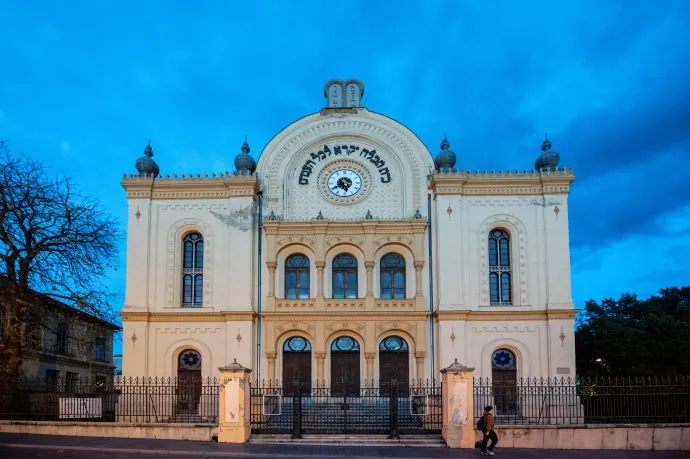
    The synagogue in Pécs - Photo: János Bődey / Telex

    The synagogue in Pécs – Photo: János Bődey / Telex

    Several descendants of Jánosi Engel Adolf, one of the city’s most important patrons, were also deported from Pécs. Jánosi Engel Adolf gave a lot to Pécs, according to the Régi Pécs Blog, he built it In the summer of 1858 the first swimming pool in Pécs, the Balokány spa, which operated until 1993. With his help, he was able to open the Czindery garden roughly in today’s Árkád area, but he also built the Lóránt palace on Széchenyi tér.

    In addition to Engel Adolf, the other prominent patron of Jewish origin was Joachim Schaspringer, who, among other things, helped build the Pécs-Budapest and Pécs-Barcs railway lines. “For more than a quarter of a century, he performed the duties of the president of the Jewish community in Pécs, during which time the local synagogue was built and the community’s school was established,” Csondor wrote about him.

    The Pécs synagogue known today was built between 1868 and 1869. József Schweitzer, who wrote in detail about the history of the Jews in Pécs, noted that the greatest art-historical value of the synagogue is the organ, which was József Angster’s first work. Angster later also in demand at the European level became an organ maker.

    Even though a large part of the local Jews fell victim to the Emergency, the Jewish Community of Pécs it still works today, many cultural discussions and free university lectures are organized. The Pécs Jewish Cultural Festival has already been held independently, and this year, for the first time, Pécs joined the programs of the Jewish Cultural Festival in Budapest.

    Source link

    Related Posts

    Telex: The billion-dollar state support of the cultural holding in Pécs is delayed, the clues lead to Péter Hoppál
    Hungary

    Telex: The billion-dollar state support of the cultural holding in Pécs is delayed, the clues lead to Péter Hoppál

    May 4, 2026
    No Room for Exhausted Politicians in the New Fidesz Parliamentary Group
    Hungary

    No Room for Exhausted Politicians in the New Fidesz Parliamentary Group

    May 4, 2026
    Anniversary Ice Cream Honors Queen Elisabeth’s Favorite Flavors
    Hungary

    Anniversary Ice Cream Honors Queen Elisabeth’s Favorite Flavors

    May 4, 2026
    A city of the future stuck in the past
    Hungary

    A city of the future stuck in the past

    May 3, 2026
    Seven Podium Finishes at the Open Water Swimming World Cup
    Hungary

    Seven Podium Finishes at the Open Water Swimming World Cup

    May 3, 2026
    Oscar-Winner Tan Dun’s Monumental Opera in Hungary for the First Time
    Hungary

    Oscar-Winner Tan Dun’s Monumental Opera in Hungary for the First Time

    May 3, 2026
    Next Post

    This is how relevant Sigmund Freud is today

    POPULAR NEWS

    Justin Bieber fans flood Coachella festival for headlining show – Entertainment

    Justin Bieber fans flood Coachella festival for headlining show – Entertainment

    April 20, 2026

    Over 600 flee homes as Army, NPA clash in Negros Occidental

    April 21, 2026

    Ex-DPWH exec recalls P800-M ‘delivery’ to Zaldy Co 

    April 20, 2026

    Former PM Paluckas suspends party membership, to waive immunity over criminal probe

    April 24, 2026
    Pres. Ali challenges CARICOM to transform into health research powerhouse

    Pres. Ali challenges CARICOM to transform into health research powerhouse

    April 23, 2026

    EDITOR'S PICK

    Opinion | The Democratic Race to the Left

    Opinion | The Democratic Race to the Left

    April 7, 2026
    Tourism sector backs Jogie family

    Tourism sector backs Jogie family

    April 11, 2026
    Xi: Maintain normal traffic via Hormuz

    Xi: Maintain normal traffic via Hormuz

    April 20, 2026
    Ori: ‘People need to start trusting vaccinations again’ – de Ware Tijd

    Ori: ‘People need to start trusting vaccinations again’ – de Ware Tijd

    April 23, 2026

    Recent Posts

    • Man jailed in Venezuela for five years returns home | News
    • What will Spirit Airlines do with people who bought flights before it closes? Here we tell you
    • At the end of the mission, Princess Sarah Zeid warns of the humanitarian emergency and pleads for immediate action in Haiti Following her mission in Haiti, the Princess of Jordan, Sarah Zeid, launches a call for urgent action to respond to the humanitarian and food crisis facing the country.
    • Caribbean tourism leaders recognised for sustainability excellence

      © 2026 Agentially - Navigating shifting sovereignties and global risk .

      Welcome Back!

      Login to your account below

      Forgotten Password?

      Retrieve your password

      Please enter your username or email address to reset your password.

      Log In
      No Result
      View All Result

        © 2026 Agentially - Navigating shifting sovereignties and global risk .

        This website uses cookies. By continuing to use this website you are giving consent to cookies being used. Visit our Privacy and Cookie Policy.