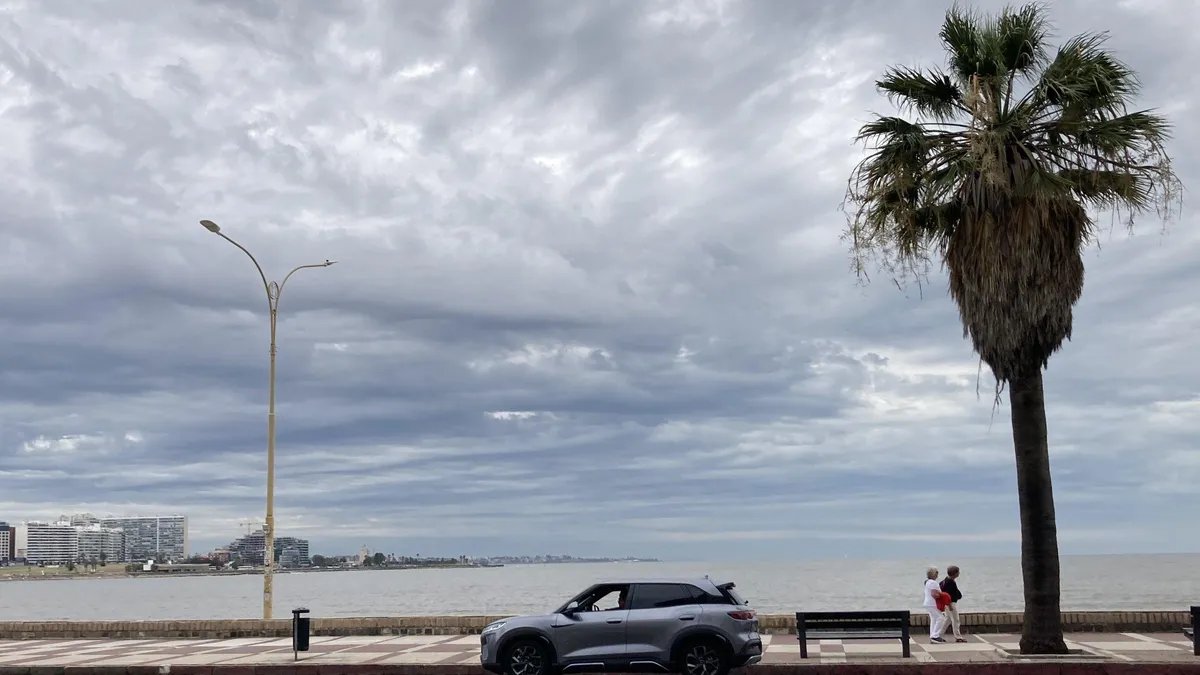
He Uruguayan automotive market has been living for a few months small revolution with the electric vehicles, whose commercialization of zero kilometers increased steadily until reaching, in May, surpass those that run on gasoline.
The change has ignited the parking lot alertswhich report declines in fuel sales and question the tax incentives given by the government within the framework of a State policy to reduce dependence on fossil fuels and promote the decarbonization of the environment.
The spotlights are on the subsidies to the cost of those who charge at UTE points, the discount on the patent and the non-collection of the Specific Internal Tax (Imesi). The three points, added to the increase in gasoline and diesel that is recorded month after month due to the war between the United States and Iran, have tipped the balance and led Uruguayans to opt for this technology above the classic ones.
The debate does not only reach the private sector, but is raising differences within the Executive Branchsince while the Ministry of Economy and Finance understands that the market is “mature” enough how to start retrace incentives in a general waythe Ministers of Environment and Industry think otherwise.
The different points of view have been publicly expressed through statements, but They have also been recorded in internal meetings between ministriesas reconstructed The Observer with government sources. In the Executive Branch, it analyzes whether It is necessary to include the topic in the Accountability.
The Yamandú Orsi administration was authorized to place Imesi to electric vehicles due to an article in the budget law voted last year and which came into force in January. That article – 661 – established that the Executive Branch can set the rates according to the “classification in energy efficiency indices, the use of alternative energies or other factors such as the current market price or customs value, for the different types of vehicles.”
The Colonia and Paraguay portfolio led by Gabriel Oddone has conveyed in those meetings that it is in favor of place Imesi in a general way, without gradualness, stripe or any distinctiona look with which Edgardo Ortuño and Fernanda Cardona disagree.
The position was made explicit by Oddone during an ADM lunch in May in which he conveyed that they were working to review the promotion regime with the purpose of not making those purchases so beneficial because they understood that the “regime has already matured.”
The minister said that the “electrification of the public transportation system” was a “non-negotiable commitment” But he wondered if the country was willing to continue making that tax waiver to stimulate the sale of electric cars. “The object has already generated demand for itself and I don’t have to subsidize it more? It makes perfect sense that we are moving forward in this. Their regime has matured. You don’t see the penetration of electric vehicles in Uruguay anywhere. It is good policy that when something is mature, gets around with fewer crutches”, he stated.
The message enabled opposing voices within the cabinet to also become public and Ortuño was the first to do so during an interview with La Diaria in which he expressed that it should be established “graduality and differentiation”. “I have no doubt, for example, in eliminating benefits for high-end or mid-range electric cars, which are very expensive,” he said, but added that an effort should be made to maintain incentives for public transportation and “lower-cost family mobility.”
After this, Cardona indicated in a press conference that the decision had not been made and that he would present evidence at a work table that Uruguay was not yet at the right time to go in that direction.
“In our graph of the vehicle fleet, electric vehicles do not appear yet. It is one thing to look at how sales increased in a year and another how much it represents within the entire vehicle fleet. At this time in June we are not yet in a position to tax that,” he added.
The data handled internally by Industry and Environment is that There are about 30 thousand electric vehicles and they represent 2.7% of the vehicle fleet.. Until April they were 30% of sales and in 2025 they represented the 20% of zero kilometer marketing.
Beyond the discussion within the government, the MEF has raised its intention to businessmen in the sector such as the ACAU. The authorities had two meetings in which the union requested that there be “sufficient time” of approximately one year to “adapt.” The amount is higher than imagined in the Executive Branch.