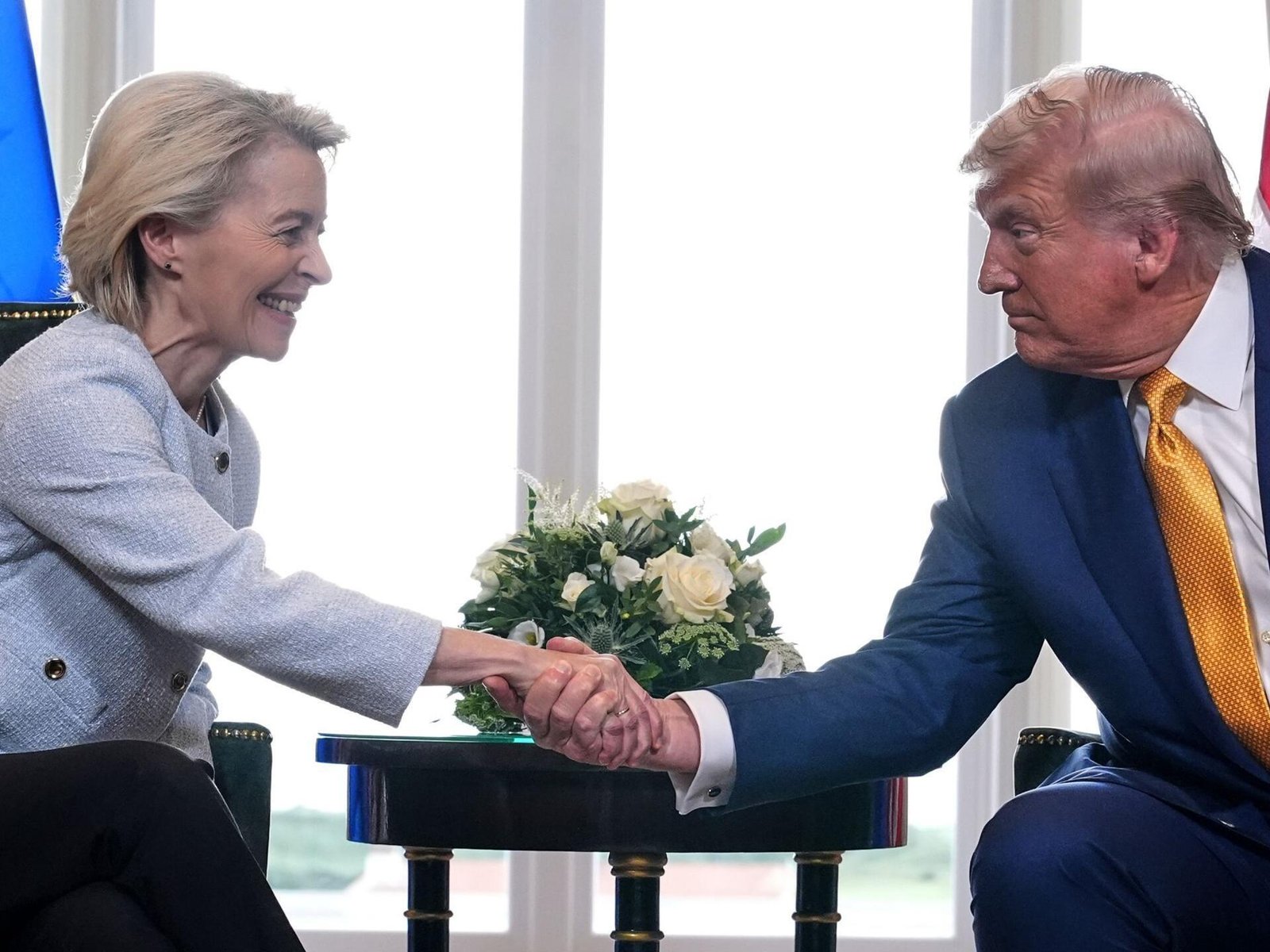
The European Parliament has cleared the way for the full implementation of the controversial customs agreement with the USA. In Strasbourg, MPs voted by a wide majority to eliminate tariffs on US industrial goods and give US seafood and agricultural products better market access. However, with a safety net: It is intended to ensure that the US advantages only apply if the USA fully implements its obligations under the agreement.
Among other things, it is planned that the EU tariff concessions can be suspended again if the USA violates agreements. This could include further tariff increases.
In addition, the USA should reduce tariffs on washing machines and other products containing steel to a maximum of 15 percent by the end of the year. If this does not happen, the EU also wants to consider such tariffs. In addition, there is a fixed expiry date of December 31, 2029.
July 4th deadline?
Confirmation by the Council of Ministers is also necessary for implementation. Representatives of the EU states and Parliament had agreed that the regulations should come into force by July 4th at the latest.
A few weeks ago, US President Donald Trump mentioned the US national holiday on July 4th as the deadline for implementing the trade agreement. If the EU does not fulfill its part of the agreement by then, the tariffs would “unfortunately immediately rise to a much higher level,” Trump said on his Truth Social platform.
USA is considering tariffs
At the beginning of June, the USA also threatened the European Union with tariffs because it was allegedly not taking sufficient action against forced labor when importing products. The EU Commission rejected the accusation.
The chairman of the European Parliament’s Trade Committee, Bernd Lange, explained the US action as the search for a new legal basis for the US government’s arbitrary tariff policy. The US Supreme Court had lifted significant parts of Trump’s previous tariffs.
The US government is also investigating whether structural overcapacity among trading partners is detrimental to the US economy, including in individual sectors of the European Union. If it sees this as confirmed, tariffs could be levied on this basis.
Lange (SPD) said that in July we would have to carefully examine which tariffs the USA wanted to impose depending on the product. The USA was already not complying with the agreed tariff rates for individual products such as leather jackets. If the agreed 15 percent were exceeded, the EU would initiate an investigation and a dialogue to re-establish the tariffs, said Lange.
According to Lange, continuous monitoring will also be established during the implementation of the agreement. In the future, the EU Commission will have to report on trade developments every three months and present a comprehensive assessment six months before the tariff advantages expire. On this basis, the EU institutions will then decide on a possible extension of the regulations that are advantageous for the USA.
The agreement itself was negotiated under the impression of threats from the US government. The EU Commission wanted to use this to avert a trade war last summer.
DIHK: US tariffs harm companies
The German Chamber of Commerce and Industry hoped that the approval would bring more predictability in transatlantic economic relations. “This is exactly what companies need after months of customs disputes and political changes in policy. Even if the asymmetric deal doesn’t win any beauty prizes, the agreements should be implemented now and not be called into question by new trade barriers or further tariff threats,” said DIHK foreign trade chief Volker Treier.
But one thing is clear: “The US tariffs contradict the international obligations of the USA and harm companies on both sides of the Atlantic. It is all the more important that the EU resolutely counters the new allegations from the US side about alleged overcapacity or imports involving forced labor, provided that these are used as justification for new tariffs.”
The Federal Association of Wholesale, Foreign Trade and Services (BGA) rated the consent and the built-in protection and suspension mechanisms as correct. “Europe must not remain inactive if the United States deviates from the agreements or takes new unilateral measures. It must be possible to suspend tariff concessions – and in an emergency, Europe must make decisive use of them,” demanded BGA President Dirk Jandura.
Those who would suffer from the threat of new US tariffs would once again primarily be medium-sized companies operating internationally, said Jandura. “Additional tariffs make intermediate products and goods more expensive, put a strain on established supply chains and make investments more difficult.” The EU must take a united stance against this and at the same time strengthen its own competitiveness, reduce dependencies and broaden international trade relations.
Important trading partners
The EU and the United States have extensive bilateral trade and investment relations. According to EU figures, it accounts for almost 30 percent of global trade in goods and services and 43 percent of global economic output. In 2024, trade in goods and services between the EU and the USA amounted to around 1.7 trillion euros.
Germany exports many motor vehicles and vehicle parts, pharmaceutical products and machinery to the USA. In the first three months of the year, the Federal Republic exported goods worth 36.2 billion euros to the USA, according to figures from the Federal Statistical Office (Destatis). That was 12.1 percent less than in the same period last year, before the high import duties on cars, among other things, came into force. During the same period, Germany imported goods worth 23.8 billion euros from the USA (plus 1.9 percent).