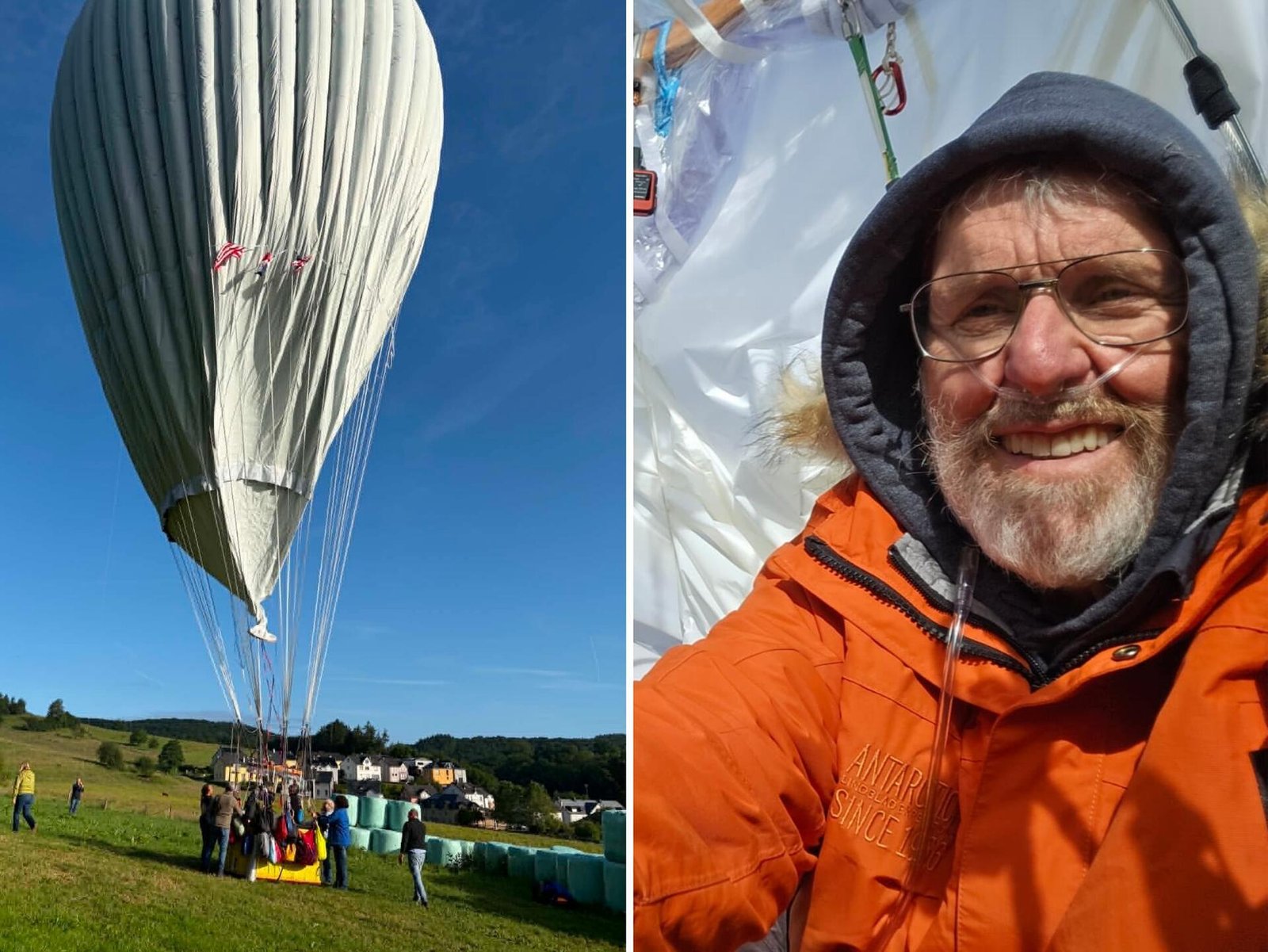
A meadow in the north of Luxembourg last Sunday. It was shortly before 8 a.m. when a strange flying object hovered silently. It’s a hydrogen balloon. And he has had a long journey. The three-person crew of the “Atlantic Explorer” covered 5,252 kilometers, from the north of the USA across the Atlantic to Europe. Now, at 7:58 a.m., the balloon touches down again on earth – on the meadow near Bastendorf in the municipality of Tandel. The Americans Bert Padelt and Peter Coneo and the British Alicia Hempleman-Adams have just completed a transatlantic flight – with a hydrogen balloon.
Premiere not just for Luxembourg
“No one has done that before,” says Claude Weber. The Luxembourger was there an hour after the “Atlantic Explorer” landed. Weber lives in Altrier, has been taking off in hot air balloons since 1990 and is president of the FAI’s Ballooning Commission, the Fédération aéronautique Internationale. The association is committed to promoting aviation and space-related activities. And to confirm world and continental records. One of these records came to an end with the hydrogen balloon ride in Luxembourg last Sunday.
“It is the first time that someone has driven this route purely with hydrogen and an open basket,” explains Claude Weber in an interview with Daily newspaper. “It’s quite a challenge – the fatigue, the altitude of up to 5,600 meters, at temperatures as low as minus 20 degrees.” To endure this for a few days, in a small basket under the balloon – “that is a human achievement”.
From Maine to Bastendorf
The balloonists Padelt, Cuneo and Hempleman-Adams were on the move for 70 hours and 11 minutes. They started on June 4th at 8 a.m. Luxembourg time in the town of Presque Isle in the US state of Maine. The crew first flew over the Canadian province of Nova Scotia, then over Newfoundland – and finally over the open Atlantic. “Without a landing site other than the sea,” as it says in a press release. The journey across the ocean took 36 hours. On Saturday evening the mainland was finally in sight again: the balloon flew over the French coastline near Cherbourg.

Balloonist Claude Weber Photo: private
“Hydrogen is the lightest element,” explains Claude Weber. 2,600 cubic meters of it fit into the record balloon, with a load capacity of around 2.9 tons. With helium it would have been a few hundred kilos less, says Weber. You can travel longer with hydrogen because you can transport more ballast. This is a critical factor on long balloon journeys. “At night you have to shed ballast because the shell cools down,” says Weber. “The other way around during the day, then let the gas out.” But even with a hydrogen balloon, the sand used for ballast will eventually run out. The ballast is the limit, says Weber.
Luxembourg, small country, sounds nice, we want to go there
Record balloonists before landing
It was not previously planned that the record-breaking balloonists would land in Luxembourg. “They first came overland in Normandy,” says Weber. It was evening and very windy. No option to land. That’s why they moved on. “With today’s navigation tools, you can tell where you are in the prevailing winds when the sun rises,” says Weber. However, the pilot still has to decide where he wants to land. “A balloon moves in a targeted manner for an experienced pilot – he can say: We’re going down here,” says Weber. “They decided: Luxembourg, a small country, we haven’t been there yet, that sounds nice, we want to go there.”
Ballooning in Luxembourg
“Anyone can do that,” says Claude Weber, who is also active in the Luxembourg balloon club “Cercle Luxembourgeois de l’Aérostation” (CLA). Members do not need their own balloon to ride, but can use one provided by the club. You can get your pilot’s license – similar to that for an airplane – at the CLA. Information is available at cla.lu.
The support team had already come to Europe on Saturday and followed the balloon by car. A quarter of an hour after landing they were there on the Bastendorfer Wiese. By the way, their owner had nothing wrong with the landing. He joined us after landing. “And was happy too.”
Claude Weber has also traveled with “gas balloons”. These are balloons that are filled with a gas other than air – and therefore do not require constant lighting. “Hydrogen is dangerous when you mix it with air,” explains Weber. A spark is enough to ignite the mixture. But a balloon is a dense shell. “If you’re careful, ballooning won’t be a problem.”

The hydrogen balloon took off from the US state of Maine on June 4th © Photo: Kim Vesely
/
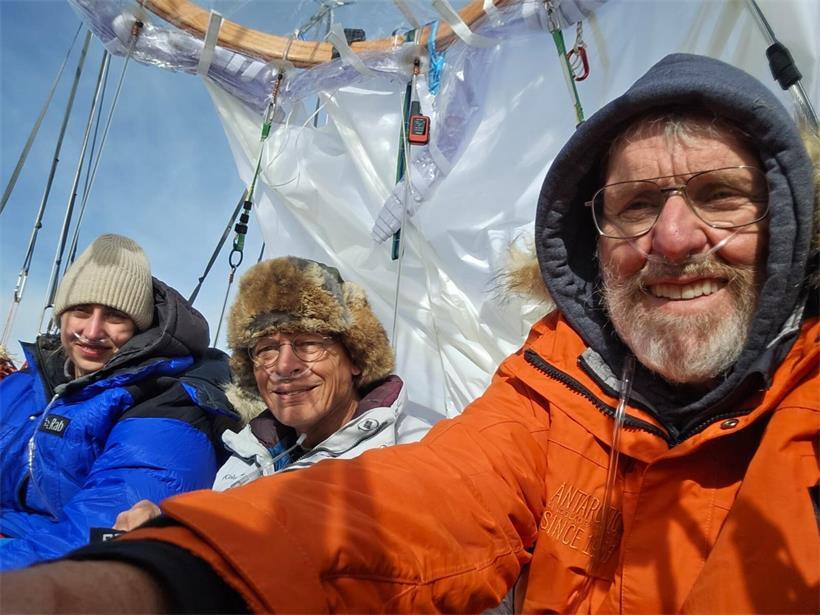
At icy heights: The record-breaking balloonists Alicia Hempleman-Adams, Bert Padelt and Peter Coneo (from left to right) © Photo: Peter Cuneo
/
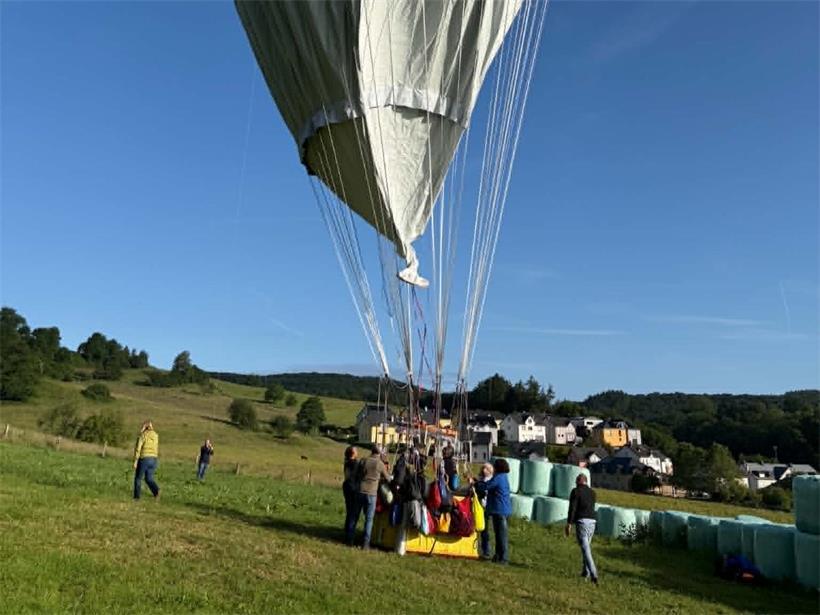
The balloon lands safely on the meadow near Bastendorf in the north of Luxembourg
/

The crew after landing in Luxembourg
/
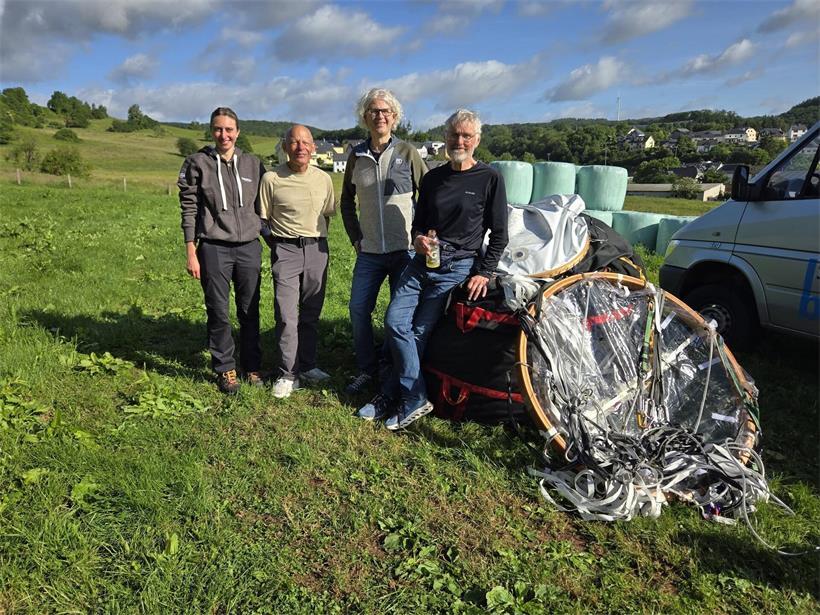
The record pilots with the Luxembourg balloon expert Claude Weber (second from right)
/

The hydrogen balloon crew and their “recovery” team © Photo: Alain Neuens
/