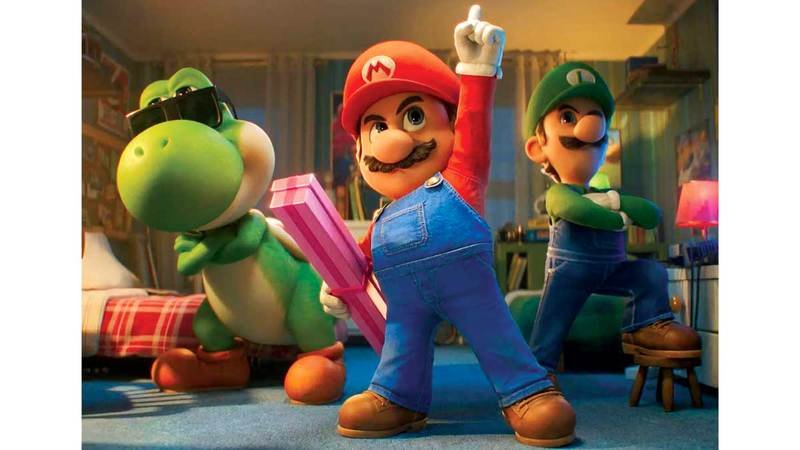
For years, Hollywood has no longer relied on new stories alone as much as it has relied on the power of nostalgia and collective memory, as the characters that accompanied the childhoods of entire generations have become one of the most important commercial weapons in the modern entertainment industry. In this context, the movie “The Super Mario Galaxy Movie” comes to confirm that recalling old memories is still capable of achieving huge successes, especially when it comes to a character like “Mario,” which is one of the most famous video game icons in the world. The movie did not bet on adventure and animation. Not only that, but it cleverly invested in the audience’s emotional connection to the Nintendo world, bringing back the classic music, characters, and visual details that generations have grown up with since the 1980s.
This investment in nostalgia was clear from the first moments of the film, as the makers were keen to create a familiar feeling for old viewers, while presenting the same experience in a modern way that suits today’s audience. Many parents who played “Super Mario” in their childhood found themselves today watching the film with their children, in a rare case that brings more than one generation together around the same characters, and here precisely lies the strength of the project, as it does not provide just an animated film for children, but rather an emotional and cultural experience linked to a global collective memory.
The film represents an extension of the success of the 2023 film “Super Mario Bros,” but this time it is heading towards a more ambitious and expansive space, inspired by the world of the famous “Super Mario Galaxy” series, which transported Mario to space adventures between planets and galaxies. Through this expansion, the work was able to combine the spirit of classic games with modern visual technologies, presenting a world full of colors, movement, and effects that made the experience closer to a journey within a live video game.
When it was released globally, the film quickly turned into a popular and commercial phenomenon, after its revenues approached the billion-dollar barrier (as of the date of publication of the report), topping the global box office and surpassing a number of the largest productions of the year. This success confirmed once again that electronic game films have today become one of the most attractive cinematic genres for the public, especially when they are able to preserve the spirit of the original game without losing the cinematic aspect.
What is noteworthy is that the film did not rely on visual effects or the character’s fame alone, but rather succeeded in creating a clear balance between simplicity and fun. Children found an adventure full of comedy and action, while older audiences felt that the film took them back to their childhood years, old Nintendo devices, and the days when Mario was part of the daily lives of millions of players around the world.
The visual aspect also played a fundamental role in the success of the work, especially with the design of planets and alien worlds in a way that gave the film a different character from traditional animated films, and the film makers benefited from modern display techniques, such as transforming viewing into a huge visual experience, which helped attract the audience to cinema halls, despite the strong competition from digital broadcasting platforms.
New strategy
In the background of the film’s success, Nintendo’s new strategy emerges, which seeks to transform its characters from mere game heroes into multi-platform global entertainment brands, including cinema, theme parks, and commercial merchandise. It seems that the Japanese company has succeeded in understanding what modern audiences want: a combination of nostalgia, visual pleasure, and familiar worlds that give the viewer a feeling of comfort and belonging.