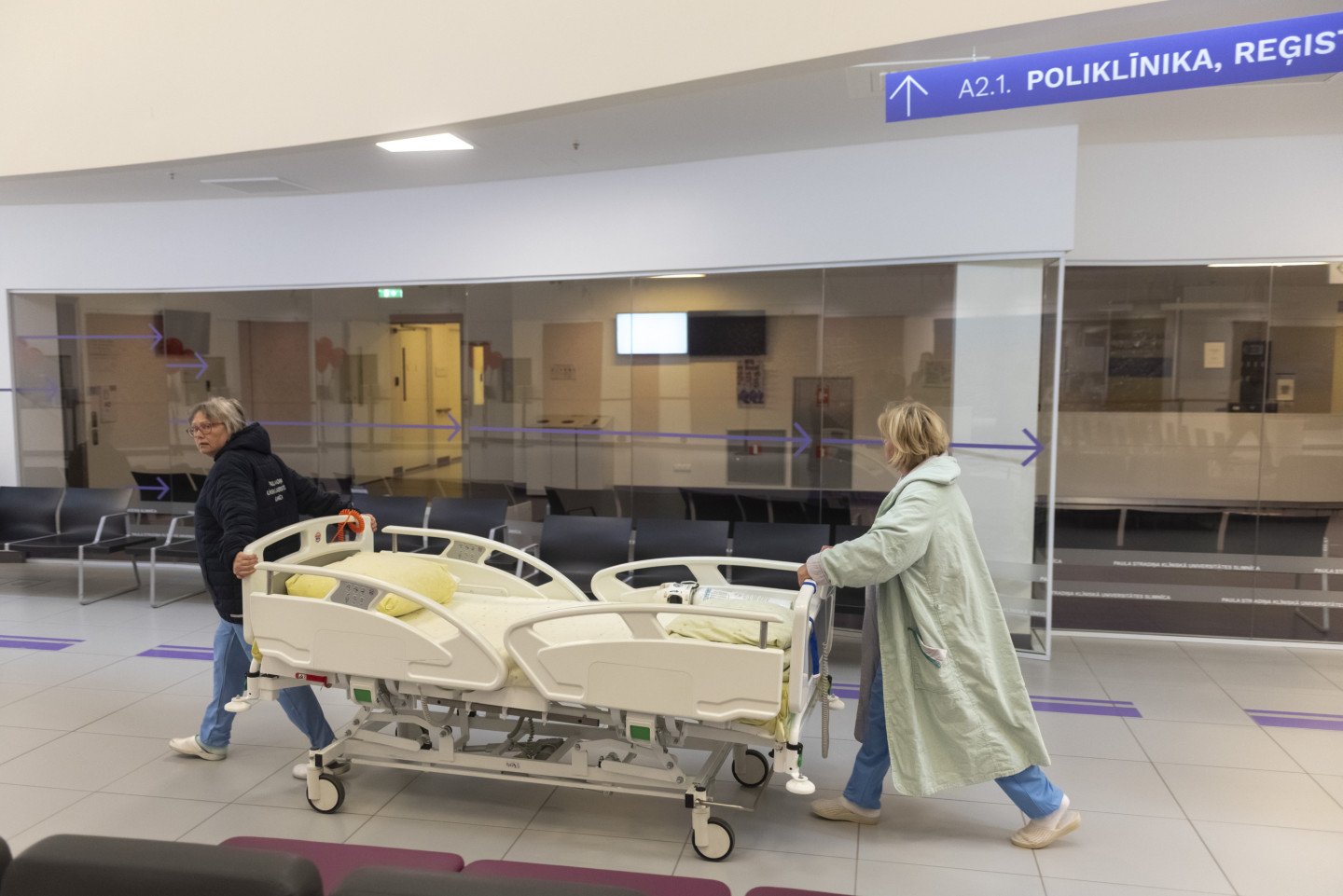
Patient flow challenges at the Paul Stradins Clinical University Hospital (PSKUS) Emergency Medicine Center are not only related to the work of the center, but also to the overall workload of the hospital, the number of available beds and the complexity of patient treatment, PSKUS representative Vineta Kļaviņa told LETA.
As Latvijas Televīzija reported on Tuesday, hours-long traffic jams of the Emergency Medical Service (EMS) crews tend to form at the PSKUS reception department. On Monday, a team had to wait almost two hours before handing over the patient. A similar situation had developed in March.
Klaviņa explains that in the Emergency Medicine Center the patient the flow is highly variable during the day. For example, there are periods when emergency medical teams do not arrive for several hours, but there are also situations when several teams arrive at the same time with patients who need emergency medical assistance.
Such a situation also arose on June 8, when within one hour at the PSKUS Emergency Medicine Center with EMS 12 patients were delivered to the brigades. The brigades arrived with an interval of a few minutes, in some cases there was only two to five minutes between taking the patients to the hospital.
The hospital does not consider such situations to be the norm, but in certain periods they are repeated, especially high loads and in the context of complex patient influx.
In the first five months of this year PSKUS Urgent 25,686 patients received help at the medical center, or an average of 170 patients per day, Kļaviņa says, emphasizing that the work of the hospital is characterized not only by the number of patients, but also by the complexity of their health condition. PSKUS receives patients with several serious illnesses at the same time, who require extensive diagnostics, the involvement of doctors of various specialties and often also treatment in intensive care conditions.
Transporting patients to medical institutions is organized by the EMS according to the hospitalization plan, the patient’s state of health and the required treatment profile. Kļaviņa points out that PSKUS, as a university hospital, provides a series of highly specialized services that are not available in other medical institutions, therefore in many cases taking patients directly to Stradiņa hospital is medically justified.
PSKUS regularly cooperates with the Ministry of Health and NMPD to improve the organization of patient flow at the level of the entire health care system.
Several measures are also currently being implemented to ensure that patients move from the Emergency Medical Center to the treatment departments as quickly as possible.
If necessary, patients are also placed outside the profile departments to make room for emergency patients. The hospital admits that this is not a perfect solution, but it allows for continuity of treatment in high-load situations.
In the long term, the development of the infrastructure, as well as the cooperation of the entire health care system, will play an important role in organizing the flow of patients, the hospital says.