Less or no more money for events and infrastructure, but investment in children and kept promises to the associations. The sports minister’s general sports funding falls to 74 million euros, while the state’s special funding increases again to 120 million euros.

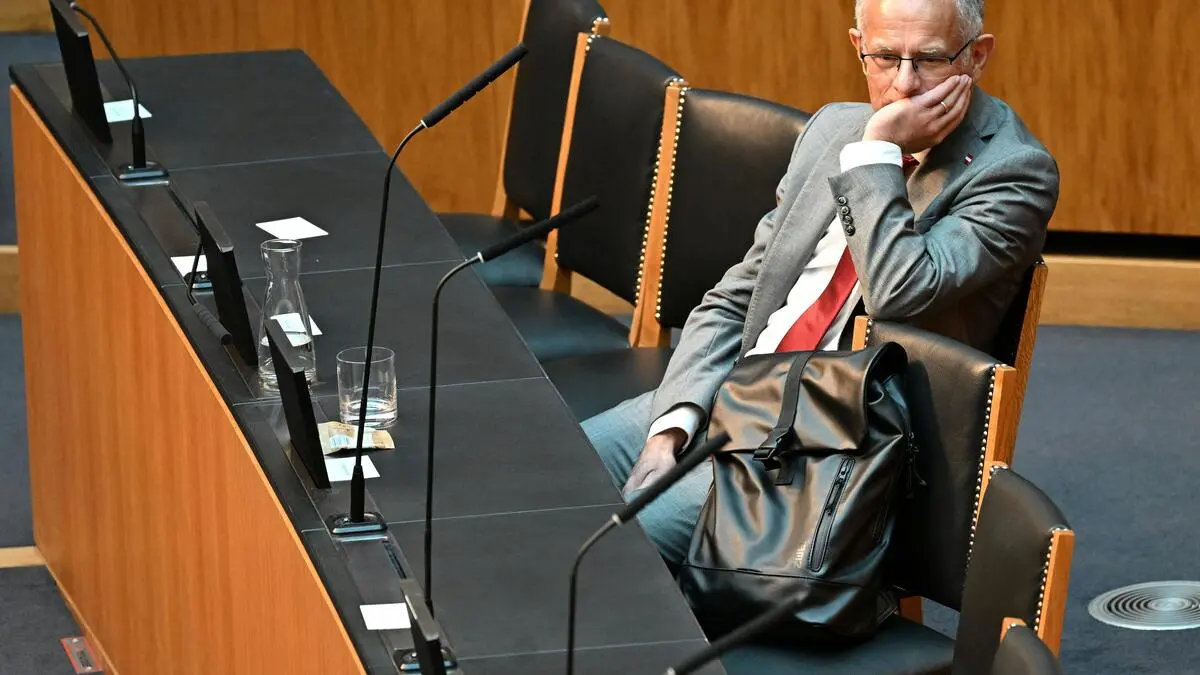
Finance Minister Markus Marterbauer APA / APA / Helmut Fohringer
The Austrian federal government’s general sports funding will be further reduced. According to the Finance Minister Markus Marterbauer (SPÖ) presented on Wednesday the double budget for 2027/28 is intended to save money on major events, infrastructure and comprehensive projects. The special sports funding, however, will be increased to 120 million euros as announced. The daily exercise unit for children and young people in kindergartens and schools will be increased.
The cut in general sports funding is noticeable. In 2023, for example, it was 95.9 million euros, in 2027 it will be reduced to 78 million euros and in 2028 by a further five percent to 74 million euros. “This can mean postponements in infrastructure projects,” said the sports ministry. Accordingly, projects in the area of “sport and society” outside the core area of the ministry will no longer be funded or will be funded to a lesser extent. Profit-oriented recurring sporting events organized by private organizers must therefore expect reductions or canceled funding.
The special sports funding for 2023 was increased for the first time since 2011, by 50 percent or to 120 million euros. The then sports minister Werner Kogler (Greens) had spoken of a minimum amount. But then came the austerity package and a reduction to 110 million euros as well as the outcry from many trade associations because funds had become scarce. The promise of repatriation of 120 million euros will now be fulfilled. According to the Vice Chancellor’s Ministry of Sports, they kept their word when it came to supporting the sports associations Andreas Babler (SPÖ).
25 instead of the previous 20 million euros per year are planned for the daily exercise unit. Therefore, 75,000 additional exercise units could be implemented. “Instead of over-promoting profit-oriented events with millions in prize money, we want to invest in the sporting future of our children and young people,” said Babler. Secretary of State for Sports Michaela Schmidt (SPÖ) added: “Active children are healthy children, and healthy children are happy children – with positive consequences for health, ability to concentrate and cohesion.”
“Although the funding for our sports associations will be increased again from 2027 to the level of 2024, i.e. to 120 million euros, after two years without index adjustment this means less money in real terms. At the same time, the funds for sports infrastructure, elite sports development, technology projects, major events and other important measures will be reduced from 85 million euros in 2026 to 78.3 million euros in 2027 to 74.2 million euros in 2028,” says Sport Austria President Hans Niessl. In principle, the increase in funding for the daily exercise unit by five million euros is positive. “However, this increase comes at the expense of other areas of the sports budget for elite and popular sports! That is why new sources of financing outside of the sports budget are absolutely needed for the daily exercise unit.” Postscript: “It is of course bitter that Austrian sport will have less money available to it in the future!”
Not least thanks to its 580,000 volunteers, sport would have the leverage to have an enormous impact on society as a whole with relatively little use of resources. “However, if fewer resources are made available to sport, it cannot develop this leverage effect to the extent that would be possible and necessary for health, the economy and society. Anyone who saves on sport ultimately also saves on prevention, quality of life, integration and economic value creation. This means one foregoes one of the most effective levers for achieving high social benefits with comparatively low investments.”