Of Federico Piana
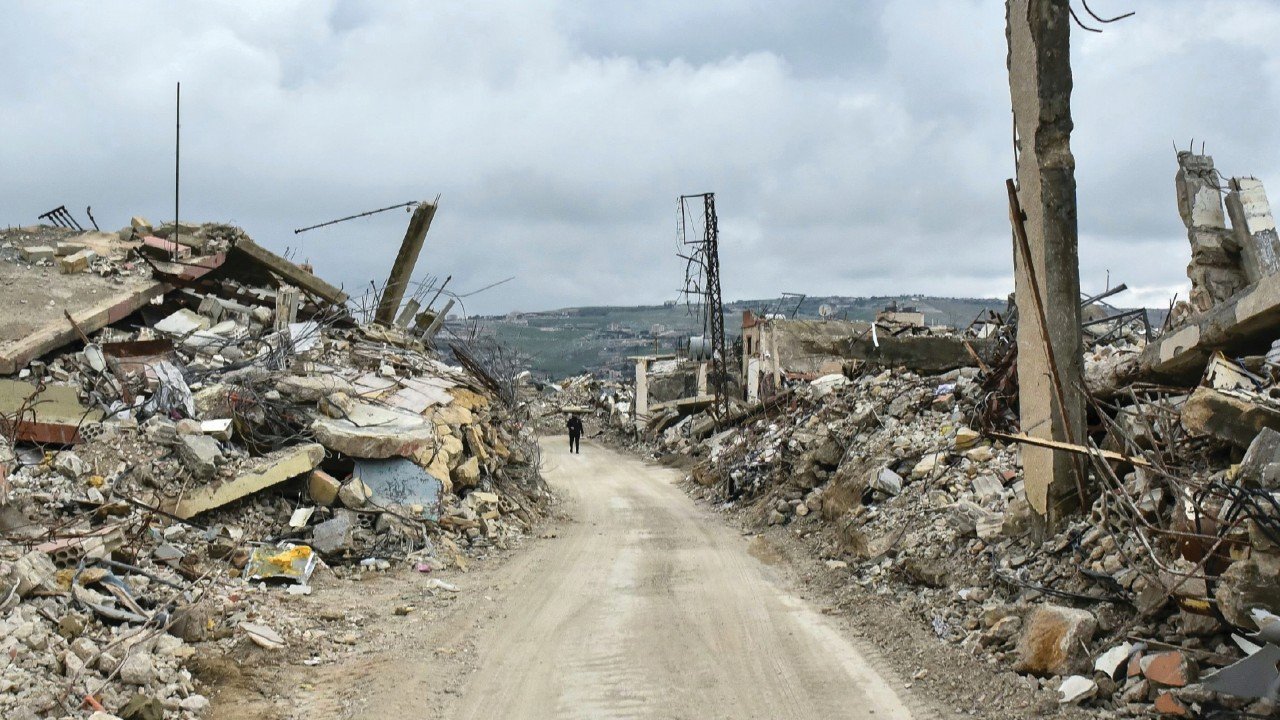
In the past few hours, Israeli bulldozers have torn down the Christian school of the Holy Savior in the village of Yaroun, in the Bent Jbail district, which also housed the homes of the nuns who cared about the spiritual and cultural growth of hundreds of students. Except that those mechanical shovels dedicated to destruction operated in a ghost village. Yaroun had been uninhabited and ruined for some time, ever since Israel partially razed it to the ground in the previous 2024 war against the Shiite Islamist armed group Hezbollah. And the population had already been forced to abandon their homes and lands.
As in the other villages in the south-east of the Country of the Cedars which are located along that yellow line – coinciding with the flow of the Litani river – drawn on the maps by the Israeli army to identify “a safe buffer zone free from the presence of Hezbollah militiamen” and which “our defense force will continue to maintain after having conquered and cleaned it” said the Israeli defense minister, Israel Katz, a few weeks ago.
And the “cleanup” always follows the same script. The population of the villages is ordered to evacuate and then bombed. Only at a later moment do the bulldozers come into action and level every house, everything. Every historical memory is erased. What remains is a ghostly, anonymous landscape, without a past.
There are already more than fifty villages like this on that yellow line. All empty, many are waiting to be demolished, others have already been.
Those who are lucky enough to live in one of those that have still been miraculously left standing say that every day they hear the incessant work of bulldozers and bulldozers in the distance.
A witness, reached by telephone by our newspaper and who wishes to remain anonymous, lives in one of the three still inhabited Christian villages of Debel, Ain Ebel and Rmesh: «Here, thank God, many structures have remained standing but we are completely surrounded, besieged. You can’t go out. What is starting to be missing are milk for children and medicines.”
There are those who, among these eyewitnesses, see similarities between the Lebanese “yellow line” and the “yellow line” of Gaza, which divides the Strip in two, with the eastern part under the control of the Israeli armed forces and closed to the civilian population.
Suggestions? Exaggerations? Perhaps. But what should we think if we listen to yesterday’s news which reported an Israeli bombing in the city of Habboush – in the south-east of the country – which cost the lives of six people, including a woman and a child?