Limited cinema distribution of the film “Nice evening, nice day” by the director and screenwriter Ivone Juke (“Ti mene nosiš”), reduced to only one Zagreb cinema, took place in September 2024. And it happened that the previously unscreened film quickly met the requirements of the American Film Academy so that it could be our candidate for the Oscar, for which it was nominated by the Croatian Society of Film Workers.
Therefore, more than a year and a half had to pass before “Nice evening, nice day” finally went into wider, regular cinema distribution. In the meantime, he failed to get on the Oscar “short list” for nomination in the international category, but he was at festivals from Europe to America and at some of them he was crowned with awards, such as the one in Cottbus, where he received the award for best film and excellent actor. Emir Hadžihafizbegović.
Perhaps such a long break occurred because of the hot, provocative topic of the film (gay partisans in the former Yugoslavia). It is also possible to forget that “Nice evening, nice day” was originally conceived as a story about an even hotter and more provocative topic (gay veterans), which resonated strongly with the public and led to the rewriting of the script.
Be that as it may, the film flew into the theaters somehow under the radar and did not raise any dust, although it was created to raise it already in the opening two scenes (gay sex, Ustashas vs. partisans). Rarely is a regional (e.g. “Klip”), let alone a Croatian, film this (s)explicit, all the more so because it is about scenes of same-sex (male) sex.
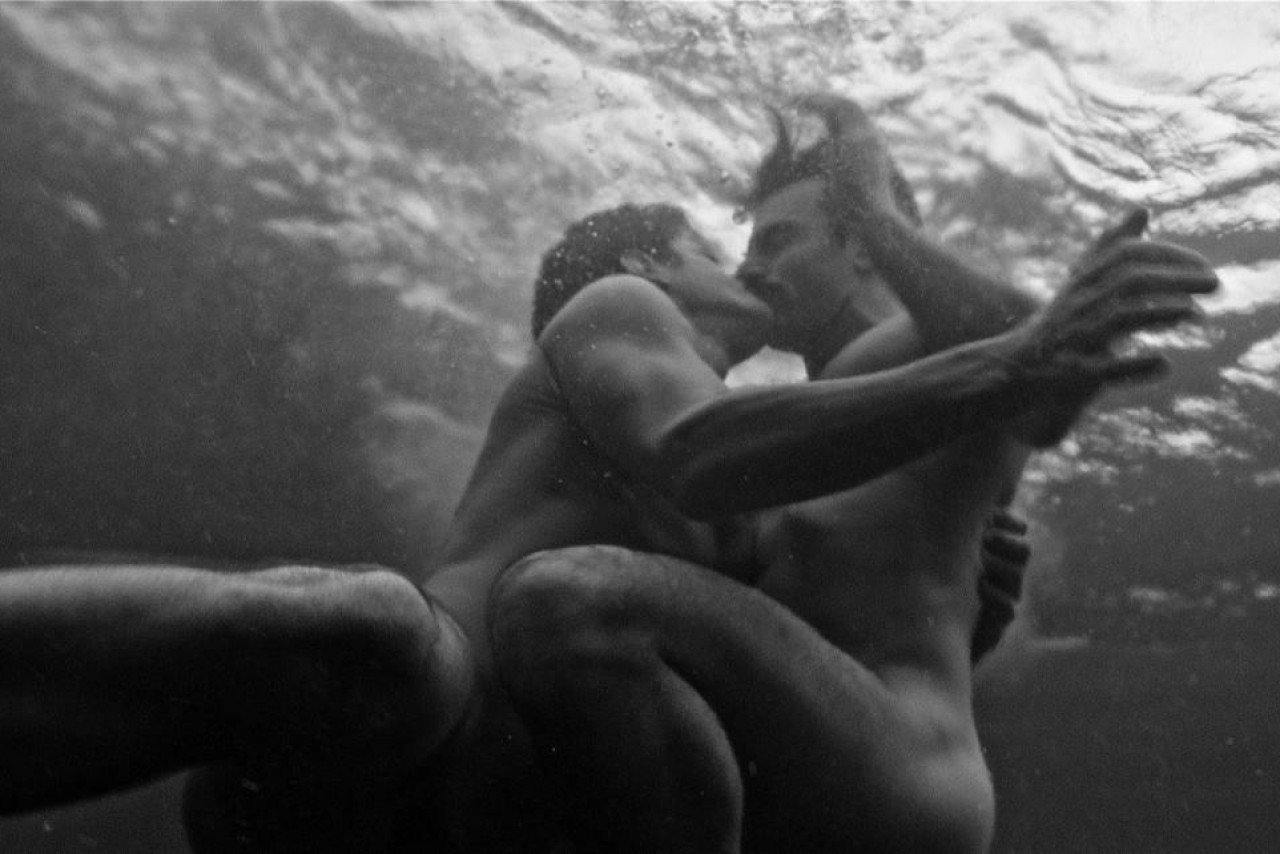
In the first scene, gay sex is practiced after a former partisan, Lovro Horvat (Dado Cosic), holding the “Communist Manifesto” in his hand Karl Marx and Friedrich Engels. When Lovro indulges in passion with Nenad (Đorđe Galić), erect penises will shine in the frame, because Juka does not direct the film as if it were Croatian, but European festival art, like “Stranger by the Lake”, and her actors also act, giving very brave roles.
The second scene takes the characters back to NDH 1941, where the Ustashas organize a roll call of Zagreb students and separate Jews and Serbs, after which Lovro, Nenad and their friends Stevan (Famous It came) and Ivan (Elmir Krivalić) lead the uprising in Juka’s response to the “Ninth Circle” France Stiglic and “Akciju Stadion” Dušan Vukotić.
The third scene predetermines the fate of the characters and suggests that “Nice evening, nice day” could exist in a “meta” way in politics and cinematography like “Eagles of the Republic” Tarik Saleh. Years later (1957), after as partisans they helped overthrow the Ustasha state and create Yugoslavia, former NOB comrades and national heroes Lovro, Stevan, Nenad and Ivan work as filmmakers.
We find them on the set filming a scene of a conversation between two partisans, one of whom is planning to escape to Italy. The scene is finely staged and at first it seems that we are still in the middle of World War II before the shot widens and we see that we are on the set of a film within a film. It is significant in the context of the sexual orientation of Lovra and the team that the partisans talk about a fish that can change sex and is never bored, but also that they emphasize that they were not fighting for “single-mindedness” but “freedom”.
However, the fact that they portray a partisan as a traitor (escape across the border) leads to censorship and a meeting with the commission, i.e. the decision that the UDBA hires former propagandist Emir (Hadžihafizbegović) on the directive of the director of the film studio to sabotage them, which pushes them deeper and deeper into the jaws of the regime and indirectly punishes them viciously for their orientation and the crime of “anti-natural fornication” while Tito in one scene on TV he mentions “various decadent phenomena” in art.
The punishment scenes are hard to watch. Nenad will receive torture treatment on the scale of James Bond in “Casino Royale” (hitting the scrotum with a rope), and Juko evokes a sadistic (evil) spirit in the brutal abuse and humiliation of him and his friends on Goli Otok with sexual and other violence Pasolini (“Fat or 120 days of Sodom”). Juka spares neither the Ustasha nor the partisans in order to tell a universal story about the fight for love/freedom against repression (Lovro and team), i.e. enlightenment (Emir).
In addition to provocation, the director knows how to show an eye for style, so the black and white photography of the cameraman fits the film nicely Dragan Ruljančić which becomes colorful in the finale. There is a lot of historical arbitrariness, unconvincingness (the muscles of the characters look as if they are from the 2020s, not 1957, and the film is more interested in their body than their psyche) and even exaggeration to the point of ideological manipulation in “Beautiful Evening, Beautiful Day”.
However, artistic freedom under the auspices of Tarantino’s revisionism seen in “Merciless Bastards” is also in force, when it comes to the Second World War. One “meta” moment is also orchestrated here in the finale in honor of the power of art/cinematography and the correction of history. Using a film lens, a ship with documents of the regime was set on fire.