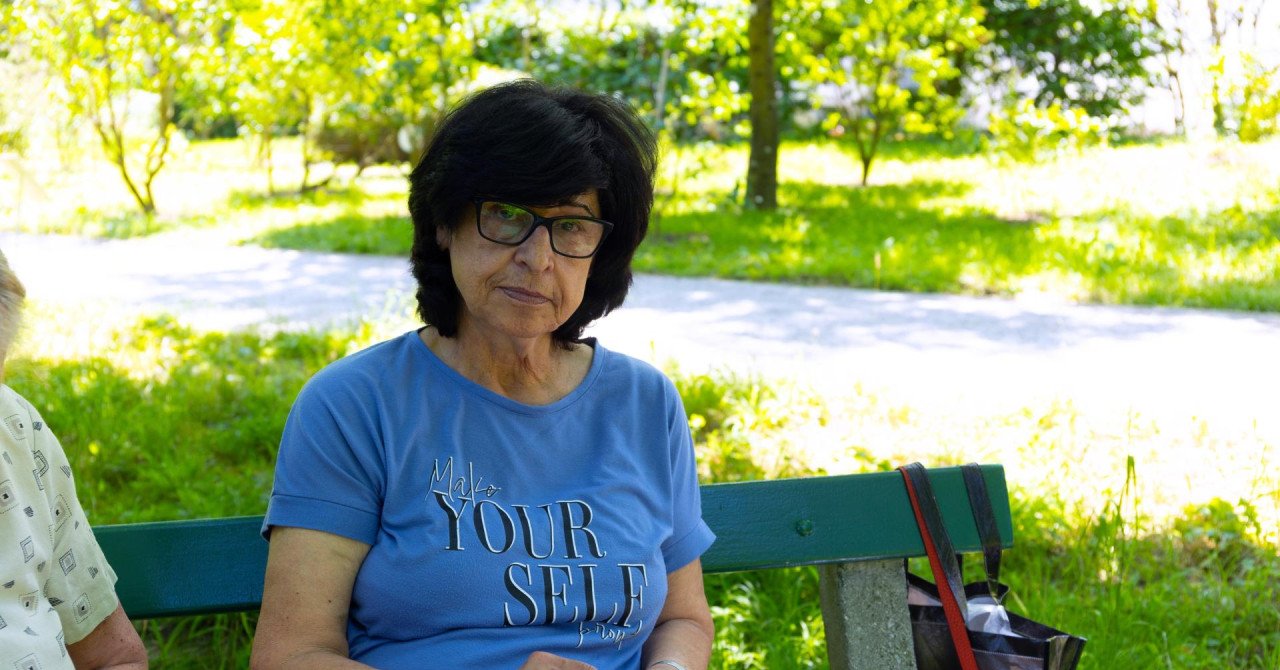
I have never drawn, but I was drawn to an art workshop because it is one of the ways to relax and socialize with people who share a similar experience. Since I am an oncology patient, through such relaxation I also heal my soul – says Jadranka, a pensioner from Zagreb, whom we found in the Botanical Garden last Monday at the first of eight planned art workshops.
The workshops were initiated by the Institute for Gastroenterological Tumors association to help oncology patients on the exhausting journey of cancer treatment.
– The diagnosis is a shock, but now I’m moving on. I entrusted myself to the doctors with full confidence, and I myself contribute as much as I can – with a positive attitude, perseverance, socializing and spending time in nature. All this relaxes me and helps me cope with the disease more easily – Jadranka reveals to us. He is going through chemotherapy and is now halfway through.
‘I don’t give up’
– I feel good, even though the disease is exhausting, but I don’t give up. I operated on colon cancer in March of last year, but metastases on the liver were soon discovered during regular check-ups, so I had to undergo another operation, after which chemotherapy was introduced. In total, I will receive eight cycles, with a break of three weeks between each therapy – says this pensioner and points out that she watches her diet, moves, maintains social contacts, likes to spend time with her son, sister and friends, likes to read books and tries to live as normally as possible.
– Nature and drawing are a wonderful experience. I met new people, drew some pictures of trees, relaxed with birdsong and that’s what makes life worthwhile. You don’t need to close yourself and four walls and lament over yourself. I love socializing, I love people and I love life – says Jadranka to the patients, encouraging them to try to find a similar path themselves.
There will be an opportunity for new friendships on June 1 and 2 at 7 p.m. in Park Ribnjak at a new free art workshop. Due to the summer heat, the workshops will then continue in the fall. Online pages IGET will publish information on the place and time of these and other workshops they organize – from nutrition education and psychological support to exercise, art therapy and stoma care.
Take the focus off the disease
Art workshops are led by Rodrigo Carneiro Queirós, a Portuguese visual artist, sculptor and founder of the gallery-studio Caldeiras in Porto, who is studying for a doctorate in Zagreb, and Apolonija Lučić, a student of painting and graphics at the Academy of Fine Arts in Zagreb.
– We all loved to draw as children, and for many it was a favorite activity that would occupy our thoughts for hours. We will try to give patients back that feeling of immersion in the creative process and the satisfaction it brings – says Apolonija Lučić.
– Creativity and art are proven to contribute to emotional recovery, reduce stress, anxiety and feelings of isolation and strengthen resilience, sense of control and quality of life, especially for people facing illness or long-term health challenges. Artistic activities encourage the expression of emotions, communication and a sense of connection, thus becoming an important part of preserving mental and general health. Continuity of such activities is crucial in order for their positive effects to become sustainable and accessible to the wider community. The support of the Ministry of Culture enables the development of pilot programs that connect art and health and the education of artists for responsible and adapted interaction with sensitive groups of users – said Dr. Iva Kirac, a specialist in surgical oncology and abdominal surgery at the KBC Tumor Clinic of the Sisters of Mercy and one of the key persons associated with the Institute for Gastroenterological Tumors (IGET).
Research confirms the benefit
Medical literature confirms that creative expression can be a valuable part of a holistic approach to the treatment and rehabilitation of cancer patients. Drawing and art therapy are associated with improving emotional health, reducing stress, anxiety and depression, and enhancing the quality of life of oncology patients. Although they are not a substitute for medical treatment of cancer, they represent a complementary method of rehabilitation which, along with psychological support, physiotherapy and medical care, can contribute to the complete recovery of the patient. Research published in the journal BMC Cancer showed that patients who participated in one-hour art therapy workshops during chemotherapy had a reduction in emotional distress, depression, anxiety and pain. After drawing and creative expression, participants reported a better emotional state and a greater sense of calm.
Less fatigue and psychological tension
Some research also shows that artistic activities can help reduce the fatigue associated with cancer treatment and increase the sense of social connection among patients. Drawing also acts as a form of non-verbal communication. Many patients use pictures to express fears, pain, anger or hope that they cannot easily describe in words. This reduces psychological tension and encourages emotional processing of the traumatic experience of the disease.