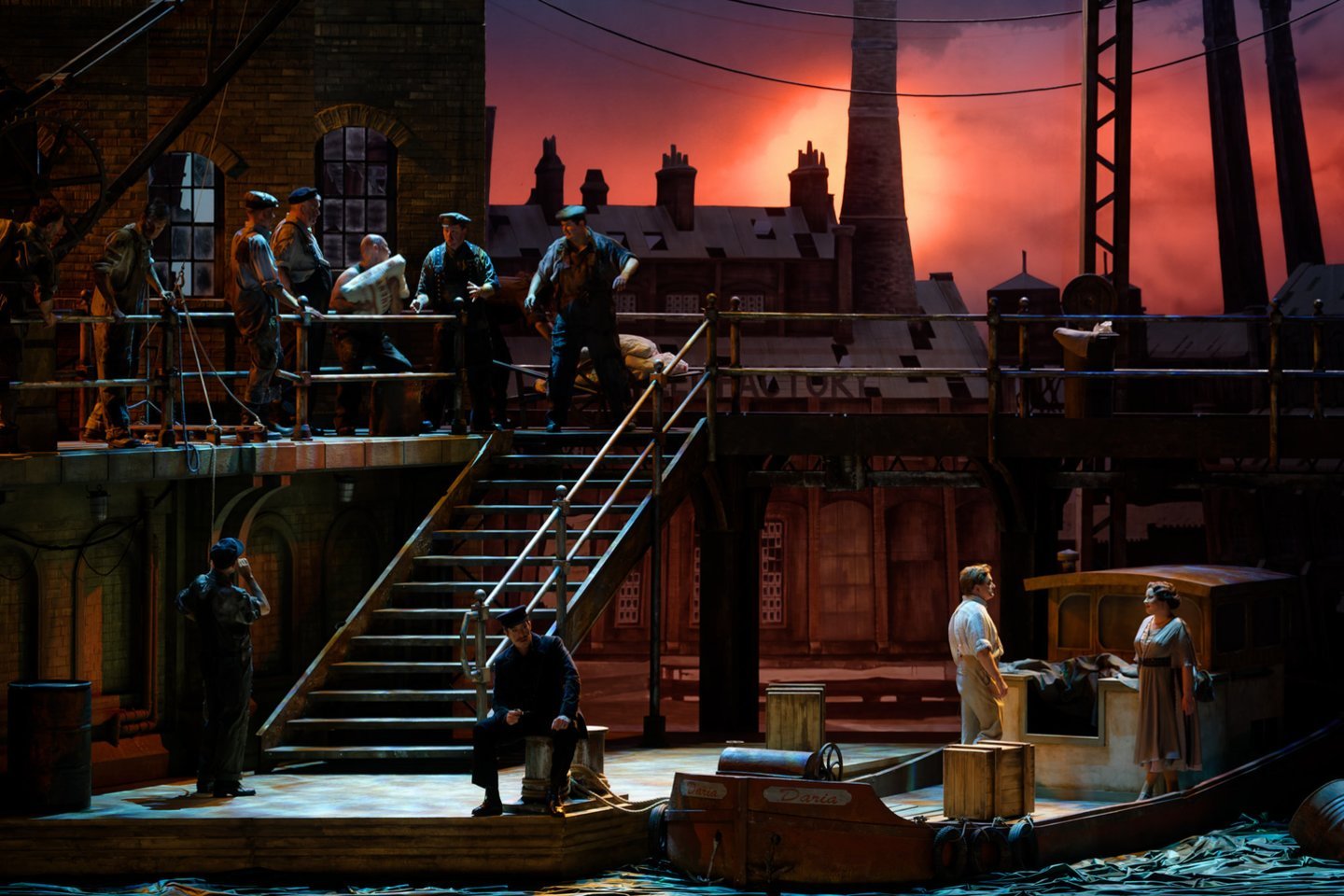
“Skraistė” is the darkest and most mysterious of G. Puccini’s triptych of one-act operas. And – the only one named after a character other than the main character, as if leaving the listener to decide who is the main character in this plot.
Giorgetta sings: “We are all covered with a veil, which sometimes hides joy, sometimes pain…” “And sometimes – a crime,” Mikelė retorts to her wife.
Lamentations in operas and in life
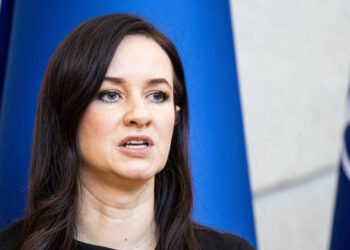
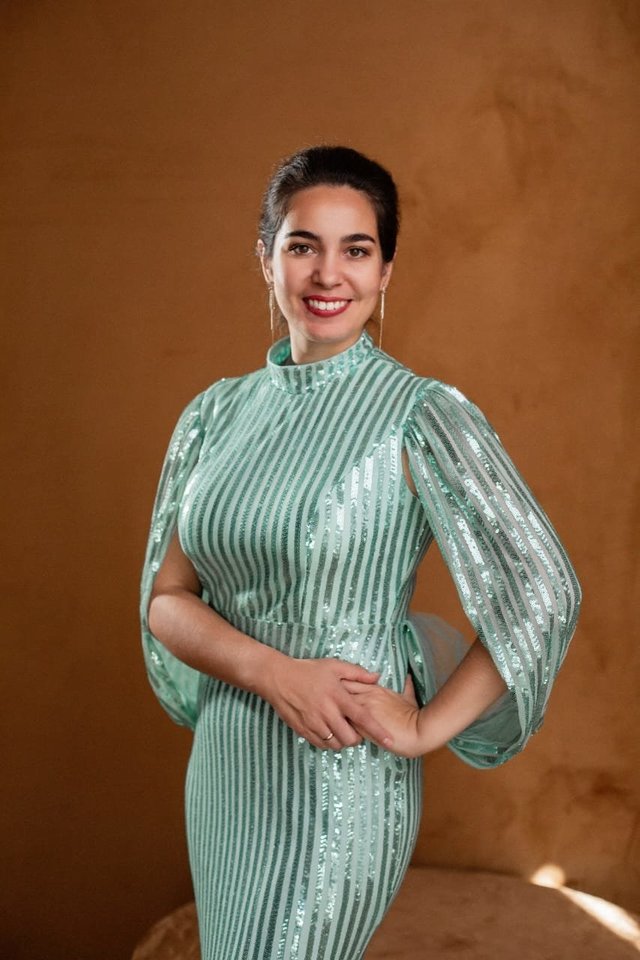
The part of Georgette will be performed for the first time by Ukrainian opera soloist K.Bakhritdinova, who came to Lithuania from Kyiv in 2022, after the war started there.
“This is my first acquaintance with “Skraiste”. But I feel that it is very timely: while learning the part of Georgette, I am developing those nuances of voice technique that I, as a soloist, need most now”, said the soprano, who previously sang in the Ukrainian National Opera.
The singer does not hide that she often has to portray noble and suffering opera characters on stage: “It’s easier for me with them. If, for example, I were to sing Angelica in another triptych opera “Sister Angelica”, I can already imagine how I could cry and suffer on stage!” And Giorgetta is completely different: while dreaming of a happier life and seducing Luigi, she herself causes suffering,” said K. Bakhritdinova.
The ending season was very intense for the soloist. In LNOBT performances, she already made her debut as Elizabeth in Don Karle, prepared for herself a new part of Elvyra in Don Juan, which she did not have a chance to present yet, because she sang Don Anna in the performances of this opera.
In the LVSO concert hall, K.Bakhritdinova presented Tosca’s part, she sang Violetta in “Traviata” of the Kaunas State Music Theater. In addition, she appeared as Donna Anna in the Bavarian State Opera’s production of Don Juan and voiced Zenta in the soundtrack of the musical cartoon The Flying Dutchman, which was recorded in Denmark.
“Of course, the film plays a shortened version of Richard Wagner’s opera for children. My six-year-old daughter Marija, who will start studying in the piano class of the National MKČiurlionis School of Arts in the fall, decided after watching this film that her mother’s voice was a bit too strong for Zenta, the fragile girl painted by the artists,” said the singer.
Marija also studies at a remote Ukrainian school, where classes for children of Ukrainian families scattered around Europe are conducted online in the evenings by an educator from Kyiv. Mother wanted her daughter, who learned to communicate in Lithuanian in Vilnius, not to abandon her national language.
“Just recently, after a nine-month hiatus, I visited our home in Kyiv. The sight is sad: the apartment was flooded in the winter, the walls were covered with fungus. I hired workers to fix it.
Last night I went through an intense drone attack. In the morning, when I was about to leave, my mother, who now lives in Germany, called me, having learned from the neighbors that a Russian rocket had attacked the boiler room near her apartment in Kyiv. I rushed there and found the windows broken by the blast wave,” said K. Bakhritdinova.
The Ukrainian woman plans to spend the summer with her family in Sweden, where she will sing the part of Mimi in the “Bohemus” performances at one of the opera festivals.
A caring man, but…
Together with K.Bakhritdinova in “Skraistė”, the part of Mikelė will be sung for the first time by baritone S.Zonys, who describes his character as follows: “Mikelė is a caring, dutiful man who sincerely loves Georgette, but is often gloomy and withdrawn. You probably wouldn’t call him a nice person.”
The soloist said that there are different interpretations of the characters of this enigmatic opera. Most of the time, it is believed that Mikelė took refuge in her barge with a woman who ran away from her previous husband with a child, whom she began to raise as her own son. Surviving the loss of a boy becomes extremely painful for both.
Why is “Skraistė” staged in theaters the least among all G. Puccini’s triptych operas? “I think it’s because her musical text is quite complex. Mikelė’s part requires a wide vocal range, a large dynamic and emotional spectrum. That’s why I don’t know many notable opera soloists who perform it. But I like dramatic roles – it’s more interesting to play them,” said S. Zonys.
The ending season was rarely active for the soloist: “Since I had many performances at LNOBT, I had to refuse offers from foreign theaters. You always choose what is more important. But the next season promises to be quieter – I will not participate in the premieres of “Inverted Reality” or “Macbeth.”
Žibuokle Martinaitytė’s opera does not have parts for a baritone at all, and it is too early for me to sing Macbeth. So I promise to accept the offer of the Israeli Opera to perform the Valentine’s part in “Fauste” – of course, on the condition that the military conflict in the Middle East will end by then,” S. Zonys explained.
This summer, the soloist will celebrate ten years of marriage with his wife Vladyslava. “On that occasion, we will fly to the Montenegrin coast to rest. And in the fall, our six-year-old daughter Patricija will start attending the Children’s Opera Studio at the theater. She already asks me every night if I will come to sing with her in “Zuikis Puikis”, – smiled the soloist. “Two-year-old Hektor is also very talkative and tries to repeat all the songs he hears at home.”
Debuts – in all triptych operas
There will be more debuts in the performances of the triptych of operas: Luigi in “Skraistė” will be sung for the first time by Italian tenor Oreste Cosimo, who we previously heard as Rinucci in the opera “Džanis Skikis”. Soloist Tomas Pavilionis will make his debut as Rinučis this time. German mezzo-soprano Sophia Maeno will sing the Duchess in the opera “Sister Angelika” and Zita in the opera “Džanis Skikis” for the first time.
The performances of G. Puccini’s triptych of operas will be conducted for the first time by the artistic director of the LNOBT Opera, Martynas Stakionis.