Varadero/Although the blue of its waters at the beginning of June becomes more intense and its fine white sand shines under the relentless tropical sun, walking through the streets of the tourist enclave of Varadero today is an ode to nostalgia. What was once the goose that laid the golden eggs of the Cuban economy, today survives as a desert of broken promises for the few visitors who arrive, the marginalized residents and workers mired in absolute precariousness.
The debacle is not new, but it has reached a point of no return. This is confirmed by a self-employed worker as she avoids potholes and moves her electric motorcycle taxi along the hot asphalt of the peninsula. “It’s been about ten years since everything has gotten worse,” he says, staring at the road. “First was the drop in the level of tourists. I know this well because I was a waitress at the Princesa del Mar hotel in Paradisus. In that golden era we had many Canadian clients, but also Europeans: Germans, French, Italians and, of course, Spanish. I learned that there are kind and generous tourists everywhere, but there are better markets than others for the worker’s pocket.”
As the woman explains, the change in the commercial strategy of the Ministry of Tourism marked the beginning of the end. “Then the Russians, Mexicans and Argentines arrived en masse, and with them the purchasing power of workers in the sector dropped drastically, because they left few tips. Later the Chinese arrived, and then we began to miss the Latin Americans,” he comments with a bitter smile. “It’s not that they are bad people, it’s that their tourism model is different; they practically don’t leave the hotel or consume outside.” Overnight, he says, craft fairs went from coveted jobs to the last card in the deck.

/ 14ymedio
Covid-19 ended up putting the final nail in the coffin. “After the pandemic, reality became unsustainable,” confesses the host. “When I saw that my income depended on the national market, I decided to leave. I worked as much as I could until the passenger transportation licenses were authorized and my daughter, from the United States, managed to buy me this electric motorcycle. That’s how I survive. When I transport current employees and listen to their problems, which are countless, I know that I took the right step.”
The situation described on the streets is reflected with mathematical accuracy within the hotel complexes themselves. Amed, a young man who until a few days ago worked at the Los Delfines hotel, confirms the operational collapse of tourism. “They asked me to become a custodian because they closed the hotel restaurant. Now they are only giving access to the pool and the lobbyand everything charged exclusively in dollars,” he explains, visibly frustrated.
The discontent of the employees lies in the disappearance of the black market and tips, the two historical pillars that compensated for the state’s poverty wages. “Everyone in Cuba knows that in tourism you live either from the tip or from the groceries that each person manages to sneak out to resell. Without clients in the facilities, there is neither one nor the other,” laments Amed. Furthermore, the dollarization imposed by the state marketing company ITH has closed the door to the Island’s own citizens: “ITH now only accepts dollars, so hotels cannot offer anything in pesos to the same Cuban who charges in that currency. So what national tourism is there going to be?”
/ 14ymedio
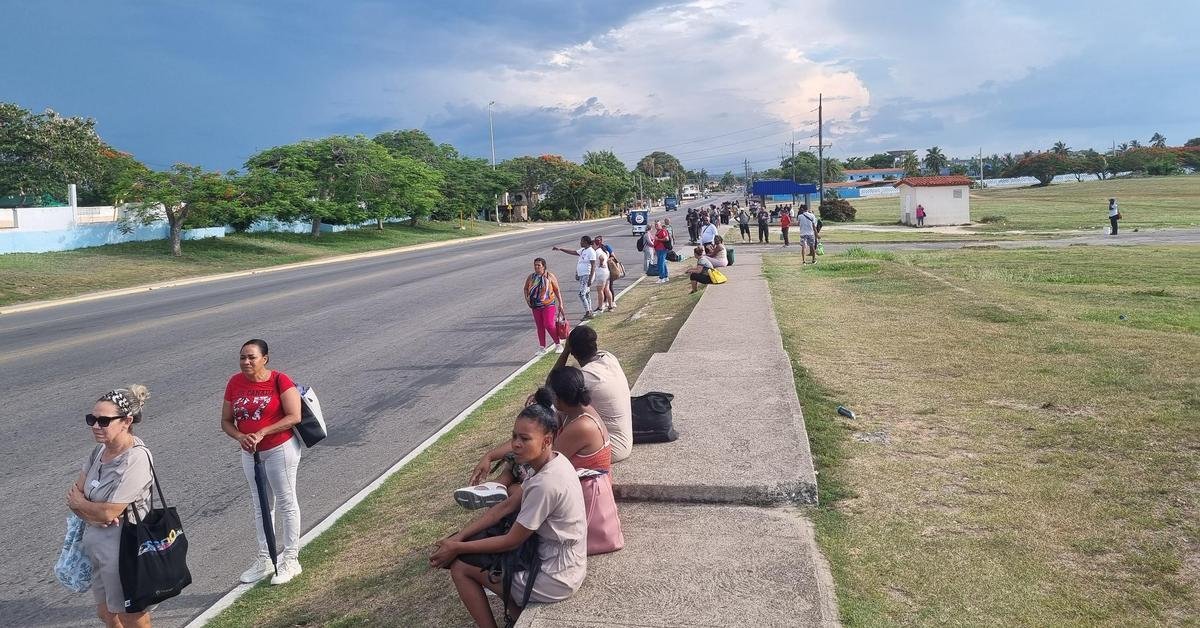
For the young man, the decision to leave the sector was a matter of pure survival. “Today is my last day of work. I did not accept the position of custodian. If the transport ticket to get here costs me a minimum of one thousand pesos a day round trip, and can go up to four thousand, how am I going to work to receive a state salary of just 4,800 pesos a month? There is no calculator in this world that accounts for that,” he exclaims before lowering his head and looking at the screen of his mobile phone.
This almost total paralysis of tourism has generated a devastating domino effect in the towns adjacent to the Hicacos peninsula, historically dependent on the economic activity of the resort. Entire communities that fed on the informal flow of resources and surpluses stolen from hotels are today completely stranded, in the middle of nowhere and punished by the generalized energy crisis that the country is suffering.
“Santa Marta is no longer even a shadow of what it was,” laments a neighbor of this town, located so close to Varadero that its inhabitants consider themselves an inseparable part of it. “Rental houses are closed due to lack of clients, private businesses that were once prosperous are falling further into decay every day, and food prices are skyrocketing because we are now forced to die in MSMEs.”
/ 14ymedio
The scarcity has even transformed family subsistence networks. “The little that the workers manage to get out of the hotels today is for the consumption of their own families, it is no longer sold,” details the neighbor, emphasizing her words with desperate gestures. “Entire generations of people have lived in Santa Marta who lived their entire lives reselling the rum and drinks that were given or facilitated by the employees of the fell (informal name that Matanzas residents give to Varadero). Now they have had to reinvent themselves, leave the country or simply go hungry. In Varadero and Santa Marta not all of us are rich; There are poor, extremely poor families.”
Added to the lack of income is the ordeal of blackouts. “The natural thing here has become to be without electricity for three consecutive days, followed by barely two hours with service, and then spend three days in the dark again. This destroys the few businesses that remain and destroys the quality of life of those who do not have thousands of dollars to buy solar panels. Today, Santa Marta is not very different from a country town in Las Tunas,” says the woman.
Despite this severe humanitarian and infrastructure crisis, the authorities insisted on maintaining the political-commercial entertainment agenda. Under the Resonance Musique label, on May 29, 30 and 31, the official opening of the summer in Varadero was celebrated. However, the festival ended up becoming a social powder keg.
The event was marked by absolute disorganization, an alarming lack of gastronomic offerings and, worse still, by serious episodes of physical violence between the exhausted workers of the Resonance hotel (formerly Fiesta Americana, Sandals) and dissatisfied customers. “It wasn’t worth it at all,” says Rangel, a Cuban citizen who traveled from the capital with his family. “For us it represents the sacrifice of a whole year saving money to be able to come. The party was a total disaster; the only redeemable thing is the beach and the tranquility, two things that we don’t have there in Central Havana.”
Rangel lists the logistical problems without hesitation: “We arrived at the hotel at 11:00 in the morning and they didn’t give us the room until 9:00 at night. The general service and the food were terrible. And the worst thing was the party: you try to have fun because you already spent the money, but the artists showed up to perform and the sound was terrible. At the beginning of the summer I never return.”