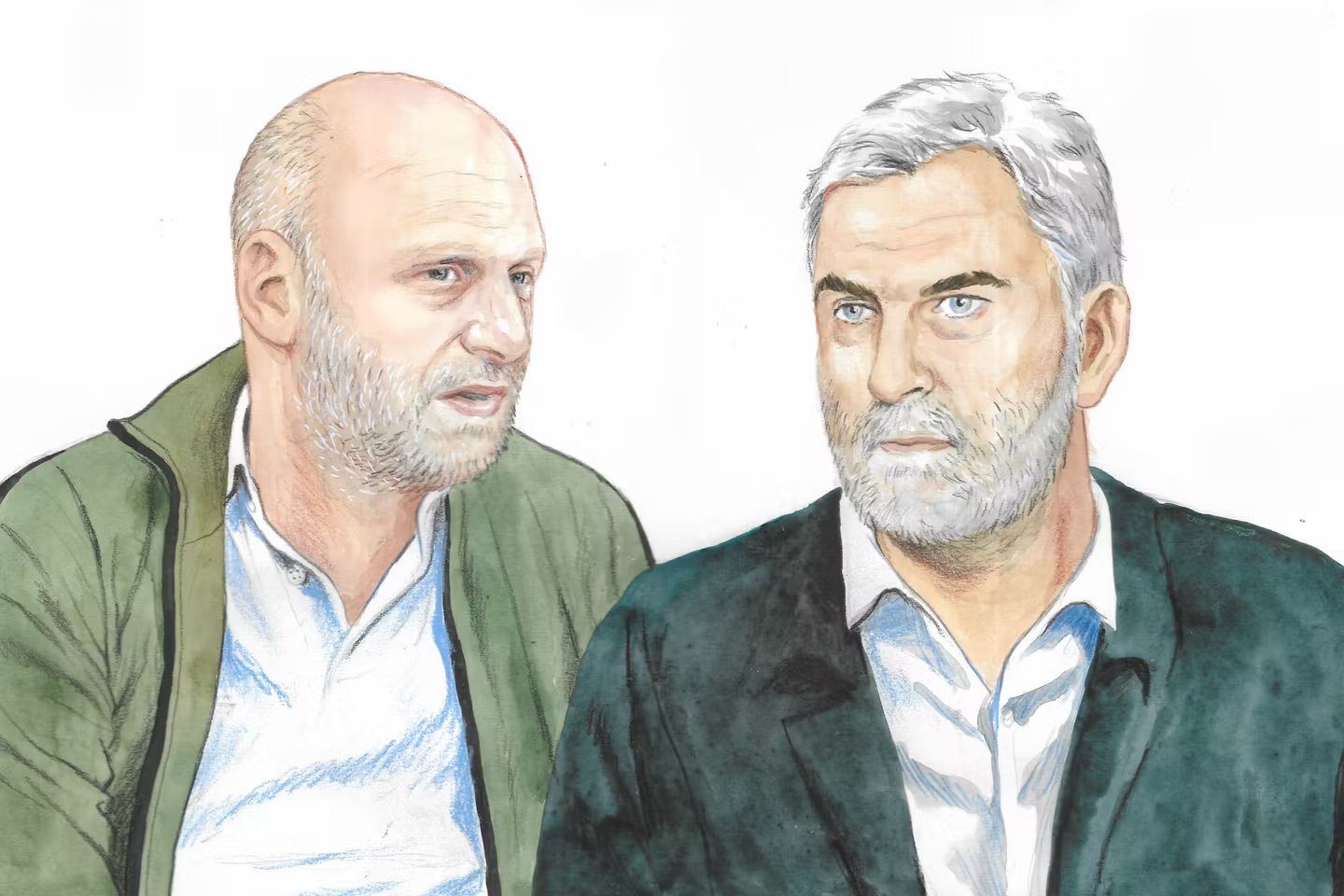
Since its release in France on March 18, Les Rayons et les Ombres (Rays and Shadows) has seen unexpectedly strong public success (about 800,000 tickets sold so far), especially for a film lasting three hours and 15 minutes and tackling such a sensitive subject on multiple levels. It tells the story of the collaborationist press magnate Jean Luchaire, who was originally on the left and advocated, in the 1930s, for French-German reconciliation. His pacifism-turned-blindness, his venality and cowardice, his moral and political corruption, and his opportunistic loyalty to his friend Otto Abetz, the ambassador of the Third Reich in Paris, led him into the depths of collaboration. Financed by the Nazis, his newspaper Les Nouveaux Temps was required to print whatever the Germans wanted written in it – and to keep silent about whatever they wanted omitted.
But Xavier Giannoli’s film also portrays Luchaire as a sick man (suffering from tuberculosis), a worried father (his daughter, Corinne, a young actress destined for success but drawn into his moral and political decline), and someone capable of occasionally offering help. A man of whom it is said “he sold himself, but never sold anyone else.” A depraved man who allows himself to be degraded by the course of history, rather than an ideologue motivated solely by antisemitism.
It is this ambivalence, praised by many critics, that has sparked debate. Several historians have expressed their unease with the liberties taken by the director – liberties that, they argue, encourage undue empathy with these characters. While the far right continues to blur the lines regarding the role of the Vichy regime – Eric Zemmour, for example, has argued that the regime “saved Jews” – the film is said to present a sanitized, both literally and figuratively, portrayal of Luchaire, played by Jean Dujardin.
You have 91.47% of this article left to read. The rest is for subscribers only.