
In 2011, Adeline had a dream that changed her life.
She was depressed and missing her mother, who had passed away three years earlier.
“Until one night she appeared in my dream,” says Adeline from Hong Kong, whose name has been changed.
“I remember saying, ‘Oh mom, I finally see you, how are you?’
“And she said, ‘I’m fine, but I want to tell you something – please go for an examination as soon as possible.'”
Adeline says she took that “very strong message” seriously and made an appointment with a doctor.
She was later diagnosed with stage one cancer, which was curable because it was detected in time.
“I’m very grateful,” says Adeline.
“Otherwise, I wouldn’t have forced myself to go for an examination.”
People from different cultures have been analyzing their dreams for millennia.
Ancient societies in ancient Egypt, ancient Greece and Babylon believed that dreams could be prophetic.
In Abrahamic religions, dreams sent by God are considered “visions”.
In some indigenous communities, dreams are perceived as encounters with spiritual helpers.
Adeline says she knew about the traditional Chinese belief that ancestors could send messages through dreams, but she never thought it could happen to her.
Today, the fascination with dreams has moved to the Internet.
Users of the Hong Kong-based DISCUSS forum share methods of dream interpretation, while hundreds of Reddit users describe using ChatGPT to analyze their dreams.
But what can dreams like Adele’s really tell us, and what do scientists and psychologists think about how much importance we should attach to them?
Why do we dream?
Our brain “likes” to dream.
We are almost certainly dreaming when we are in the rapid eye movement, or REM, sleep phase, says neuroscientist Abidemi Otaiku from Imperial College London.
This means that we could dream up to a third of the time we spend sleeping.
In fact, if we miss dreams due to lack of deep sleep, our brain will “make up” for us next time with more vivid dreams.
“The body really wants to dream and will make up for it when it gets the chance,” explains Otaiku.
Why exactly we sleep is still a scientific mystery.
Researchers generally believe that sleep helps the brain recover and gives it time to process memories from the previous day.
Brain scans show that during sleep the “settings” in the brain change, which affects how we experience dreams at that moment.
When we dream, the frontal lobes, the parts of the brain responsible for rational thinking, are “largely deactivated”.
At the same time, the limbic system, which participates in the processing of emotions, is very active.
“That’s one of the reasons our dreams are often so unusual and don’t make much sense,” says Otaiku.
Are dreams supposed to help us make decisions?
Research shows that what we dream can encourage us to make better decisions when we are awake.
In one study, ex-smokers who dreamed of smoking were less likely to resume the habit.
A similar effect was observed in divorced people – researchers found that those who dreamed of ex-partners were more mentally stable a year later.
“They’re actually processing something that’s emotionally difficult for them.”
“And it’s important that it doesn’t matter if what we dream is positive or negative,” says Dylan Selterman, a dream researcher and psychologist from the United States of America (USA).
In fact, both studies have shown that negative dreams can sometimes help people cope with problems more effectively than positive dreams.
“That way you process them and resolve them in a constructive way,” explains Selterman.
Dreams can also help us solve problems.
A study by Harvard University in the USA showed that participants who dreamed about how to get out of the maze achieved better results.
This may be due to a “powerful combination” of the extra time the brain has to process a problem and the ability of dreams to allow us to see it in a more creative way, Selterman says.
In everyday life, it can manifest as a sudden inspiration for something we were already thinking about while we were awake.
“Sleep just gives them a little nudge in that direction,” says Selterman.
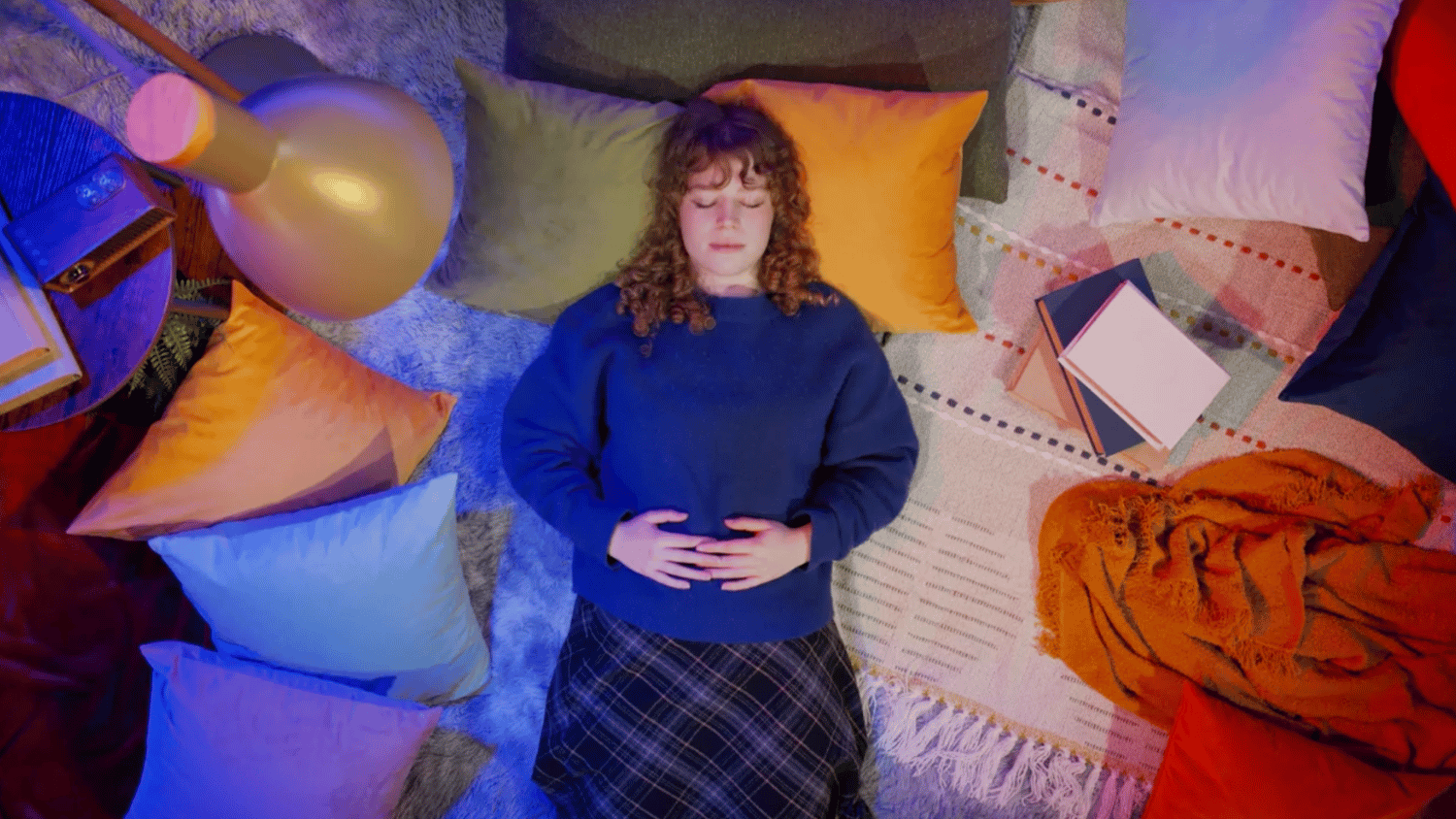
Do dreams reveal our true feelings?
This does not mean, however, that dreams reveal hidden or true feelings, but only that your brain is still dealing with topics that are important to you when you are awake.
Selterman says that he has witnessed situations in which research participants ended relationships because of dreams, but that these people had previously reported problems in their relationships.
“It gave them that little extra push that they needed, they felt like they were gaining a deeper insight into themselves, but it was consistent with what they already believed,” he explains.
So, should we be concerned when we dream of someone unexpected?
“If you’re in an otherwise happy, fulfilling, stable relationship, and one night you dream you’re making out with someone else, that’s okay, that’s normal,” says Selterman.
“You don’t have to feel guilty about it, it’s not necessarily a sign of something,” he adds.
Can our dreams predict the future?
Our brains are wired to notice when dreams seem to predict the future, and to remember instances when they coincide with actual events.
“All those situations where dreams have nothing to do with reality, you just forget about them,” says neuroscientist Otaiku.
But there may be another explanation why dreams sometimes act as prophecies.
One theory links this to an ability of the brain called “interoception”.
“Some call it our sixth sense.
“Basically, it’s the brain’s ability to perceive the internal state of the body,” explains Otaiku.
The parts of the brain involved in interoception often overlap with those active during dreaming, and some researchers suggest that this may explain why dreams sometimes seem to portend illness.
“It seems to be a somewhat plausible mechanism that could explain these phenomena,” adds Otaiku.

How much attention should we pay to nightmares?
More and more research by neuroscientists, including Otaiku, indicates that our dreams can be an indicator of the risk of developing certain brain disorders.
“The more frequently you have nightmares, it can be an indicator of a higher risk of developing dementia and Parkinson’s disease,” he says.
He presents three possible theories:
Nightmares can be an early sign of these diseases, nightmares can impair health, or both nightmares and diseases can have another common cause, such as genetics.
More research is needed to determine if any of these theories are correct.
Otaiku emphasizes that these findings should not discourage us, but represent a good opportunity to improve our health.
Reducing stress, getting quality sleep and avoiding horror movies before bed can be helpful.
There are also additional therapeutic options for more severe cases.
The technique of rehearsing images and images helps patients change the ending of recurring nightmares, while the high blood pressure drug prazosin can block nightmares while enabling normal dreams.
“It is very likely that treating nightmares would have momentary, but possibly even long-term, benefits for our health,” adds Otaiku.
Should we analyze our dreams?
Looking for fixed, symbolic meanings in dreams can be problematic because it ignores personal context, warns Selterman.
“Shark probably has a different meaning to a marine biologist than it does to a dentist,” he explains.
However, he says that recognizing themes in dreams can help us understand ourselves better.
“You may frequently dream of a loved one who has passed away, or a job you’d like to have in the future, or your friends and partner,” he says.
Following such topics can give us a deeper insight into ourselves and our relationships – exactly the topic we most often dream about, he adds.
“If dreams have any meaning, it most likely has to do with our social life,” says Selterman.
Adeline says she now pays special attention to her dreams and uses them as a reminder to check in with her feelings.
“We should trust our own intuition about what that message might mean.”
“If you look deep within yourself, you can find the answer,” she says.
BBC is in Serbian from now on and on YouTube, follow us HERE.
Follow us on Facebook, Twitter, Instagram, YouTube and Viber. If you have a topic suggestion for us, please contact bbcnasrpskom@bbc.co.uk
Download the application and follow the news


FOLLOW US ON

News