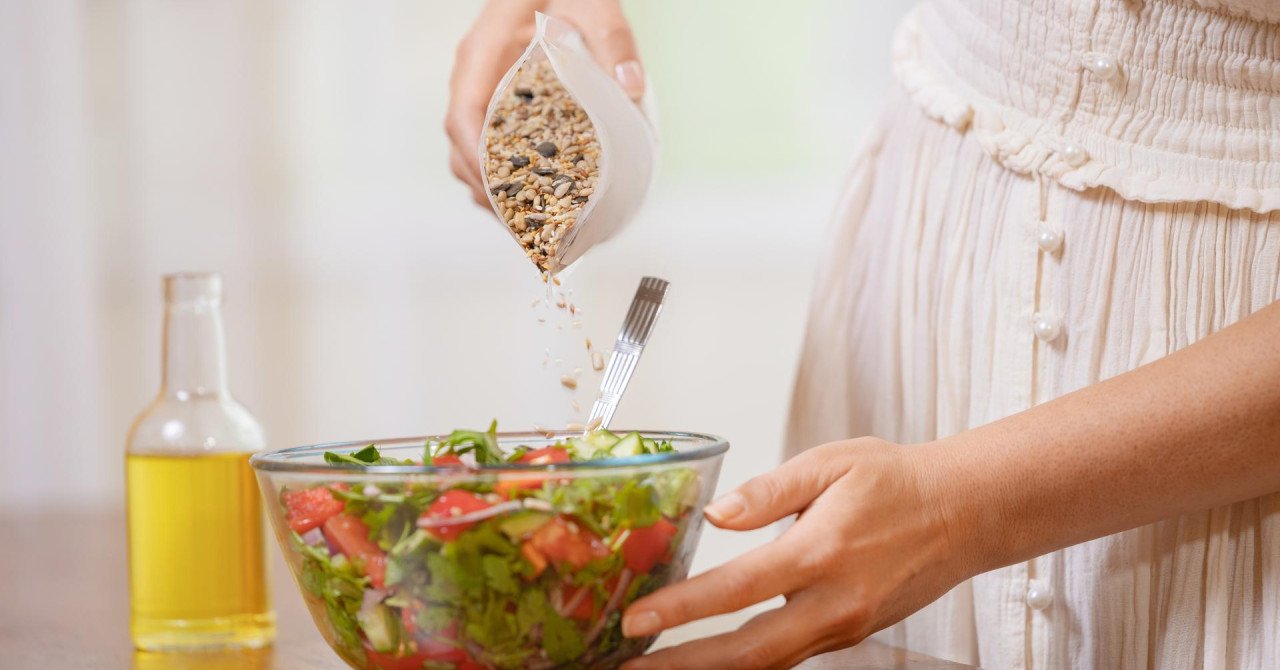
In recent years, seed rotation, also known as the seed cycle, has been increasingly discussed. It is a simple, natural dietary practice that is increasingly popular among those who want to consciously support their hormonal balance. The reason is clear because the female body is not linear, but deeply cyclical. During the month, estrogen and progesterone fluctuate physiologically, affecting not only the menstrual cycle, but also energy, appetite, mood, sleep quality, bloating, water retention and general well-being. In this context, the idea of modulating the diet based on the different phases of the moon seems less “alternative” than it seems at first glance.
Seed rotation is based on this very principle: alternating certain seeds during the two main phases of the cycle, thus providing the body with different nutrients at the time when they can be most beneficial. It is not medical therapy, does not replace clinical assessment and does not promise miracles. However, if incorporated into a balanced lifestyle, it can be an interesting nutritional strategy for many women.
How it works
The rotation involves eating four specific types of seeds during the month: flax seeds, pumpkin seeds, sesame seeds and sunflower seeds. The form is very simple. During the first half of the cyclethat is, from the first day of menstruation until ovulation, flax seeds and pumpkin seeds are consumed. In the second half of the cyclefrom ovulation until the arrival of the next menstruation, sesame and sunflower seeds are consumed instead. The basic idea is that these seeds, thanks to their content of lignans, unsaturated fats, fibers, minerals and vitamins, can offer different nutritional support during different phases of the month. It is important to say that seed rotation does not regulate hormones in a pharmacological sense. It can be considered a way of supporting the female body through functional nutrients, from the perspective of intelligent nutrition, rather than miraculous promises.
Why different seeds in each stage
During follicular phasefrom the beginning of menstruation until ovulation, flax and pumpkin seeds are used. Flaxseeds are of particular interest for their content of lignans, plant compounds that are being studied for their possible role in estrogen metabolism, as well as their omega-3 and fiber content. Pumpkin seeds, on the other hand, provide zinc, a mineral essential for many functions in the female body, from skin health to supporting various metabolic and hormonal processes.
During luteal phasefrom ovulation to the next cycle, sesame seeds and sunflower seeds are used. Sesame seeds provide lignans, but also calcium, magnesium and copper, while sunflower seeds are a good source of vitamin E and selenium, nutrients often associated with antioxidant support and general health benefits, especially in the days before menstruation.
How to rotate properly
Oil plant rotation is very simple. The most commonly used regimen includes a total two spoons a daythat is, one tablespoon for each type of seed that is taken in that phase of the cycle. In the first half of the cycle, consume a tablespoon of flax seeds and a tablespoon of pumpkin seeds. In the second half, switch to a tablespoon of sesame seeds and a tablespoon of sunflower seeds. Flaxseeds should be freshly ground as whole seeds are often difficult to absorb. Other seeds can be eaten whole, ground or added to soft preparations. In order for this practice to be sustainable, it is ideal to include them in foods that are already present in your daily routine, such as yogurt, porridge, smoothies, soups, salads or pancakes. As is often the case with nutrition, consistency is what makes the difference.
Benefit of rotation
Seed rotation is not a magic formula, but a simple, consistent and engaging nutritional practice for those who want to naturally support their hormonal health. For some women, this may mean improved nutrition, more regular stools, or easier management of the premenstrual phase. For others, it can become, first of all, a different way of listening to your body, respecting its rhythms instead of fighting against them. And perhaps this is the true value of seed rotation: a reminder that women’s health does not require extreme solutions, but small, intelligent and consistently implemented gestures.