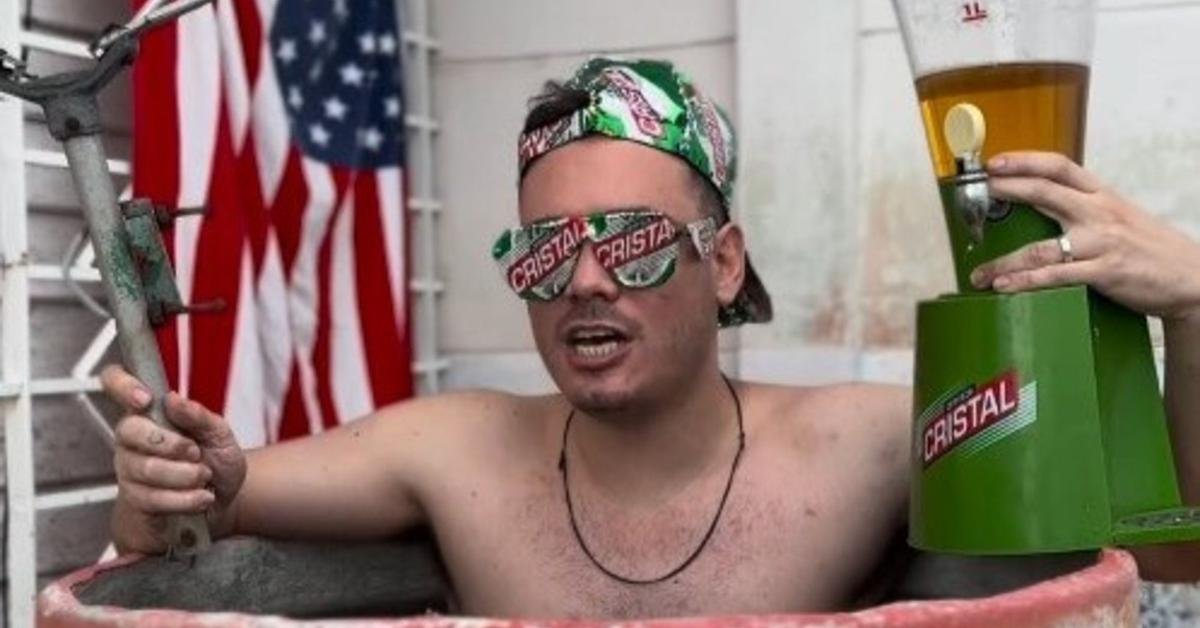
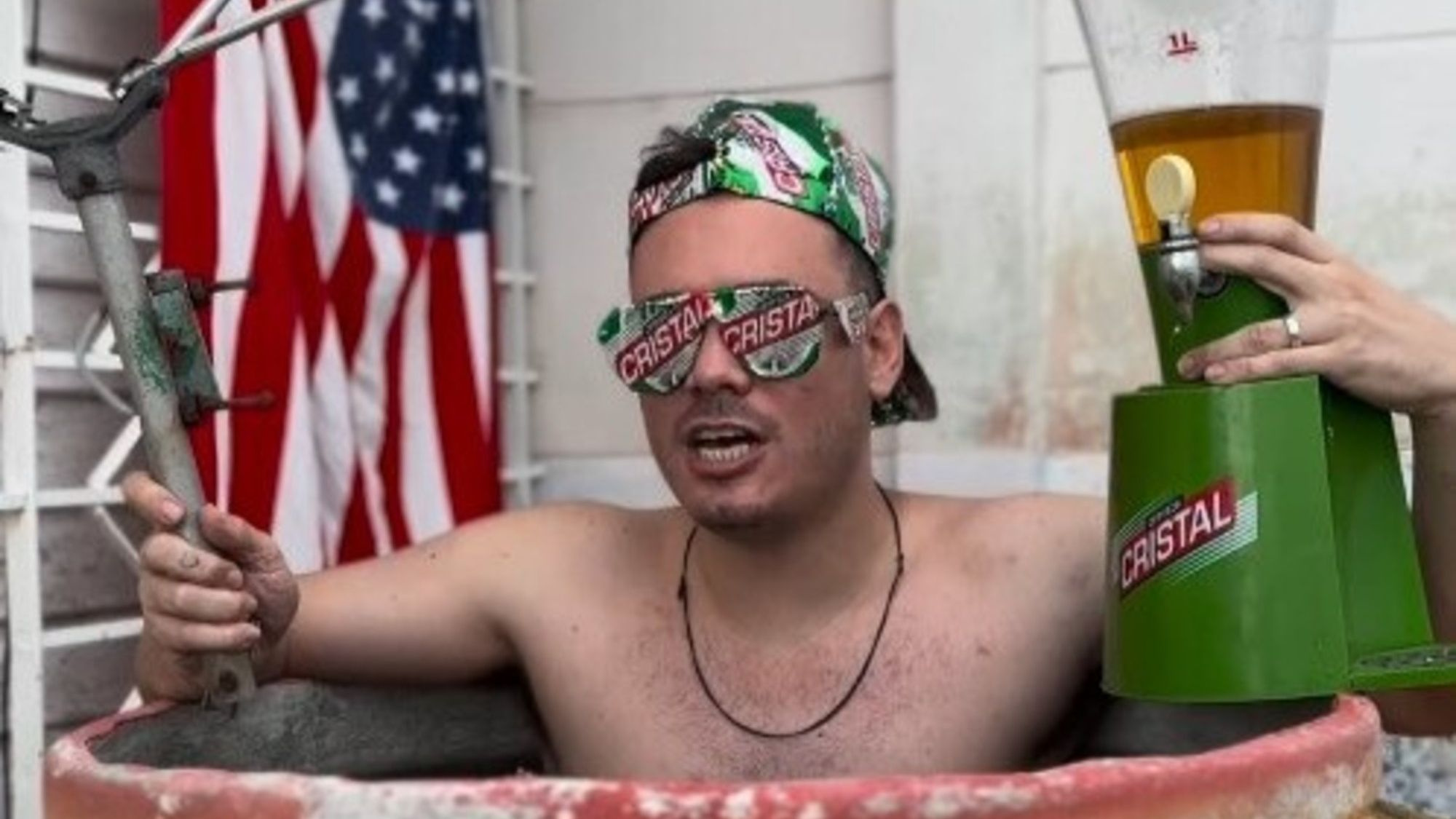
Houston/The media emergence of Sandro Castro, grandson of the deceased historical leader of the Cuban regime, cannot be interpreted as an isolated or anecdotal phenomenon. His figure, lacking intellectual density and discursive consistency, nevertheless appears at a particularly delicate moment for the political system he inherited. And therein lies the key: he is not the center of the problem, but what his presence reveals.
Cuba is going through a deep structural crisis. The collapsed economy, the mass exodus of citizens, the loss of faith in the official discourse and the exhaustion of a model incapable of renewal have eroded the very bases of power. In this context, the appearance of a character like Sandro Castro, light, erratic and provocative, generates more questions than answers.
Do you act on your own? It is difficult to sustain this hypothesis without reservations. In a system where political and social control has historically been ironclad, where open dissent carries real consequences, thinking that a member of the Castro family acts without any calculation seems, at the very least, naive. However, a disturbing variable cannot be completely ruled out: lack of control.
Are we facing a calculated maneuver to gauge social reactions and channel tensions, or are we facing a symptom of internal decomposition where even the heirs of power have lost their way?
His public behavior, his improvised interventions and his apparent frivolity do not respond to a coherent political strategy. There is not in him the training or discipline that characterized, for better or worse, previous generations of power. This opens an interpretative crack: are we facing a calculated maneuver to measure social reactions and channel tensions, or a symptom of internal decomposition where even the heirs of power have lost their way?
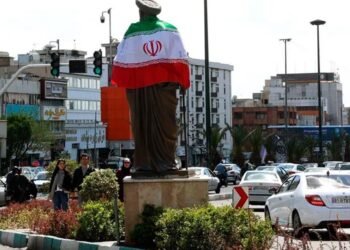
The image that shows him wrapped in the Cuban flag, in a gesture of dubious symbolism under the figure of the Christ of Havana, reinforces that ambiguity. It is not only an aesthetic or political provocation: it is, in a certain way, an involuntary metaphor for the degradation of the revolutionary narrative. The flag, national symbol, converted into an accessory, and the symbolic space; the Christ, used as a scene of banality.
His criticism, although superficial, points in a dangerous direction: questioning the Government and its president. In any other context, this could be interpreted as an exercise of individual freedom; in Cuba, however, it implies a real risk. That is why the doubt persists: does he truly assume that risk or does he act under tacit protection? Is it dissidence or simulation?
If the phenomenon has escaped all control, then we would be facing something more serious: the evidence that even within the core of power there is no longer cohesion or clear direction.
Here the central thesis emerges: Sandro Castro could be both an actor out of control and a piece in a larger game that has begun to fail. Both hypotheses are not excluded; On the contrary, they can coexist. A system in crisis usually generates fissures where the unforeseeable mixes with the planned.
If it is a maneuver, it could be aimed at creating an illusion of opening, a controlled escape valve. But if the phenomenon has escaped all control, then we would be facing something more serious: evidence that even within the core of power there is no longer cohesion or clear direction.
In short, Sandro Castro is not the cause, but the symptom. A loud, uncomfortable and revealing symptom. The revolution that sought to mold the new man seems today incapable of even forming its own heirs. And in that contrast, perhaps, is one of the most eloquent proofs of its historical failure.
The outcome of this episode has yet to be written. But one thing seems clear: when symbols become empty and actors lose control, real or apparent, systems enter a phase where uncertainty stops being an exception and becomes the norm.