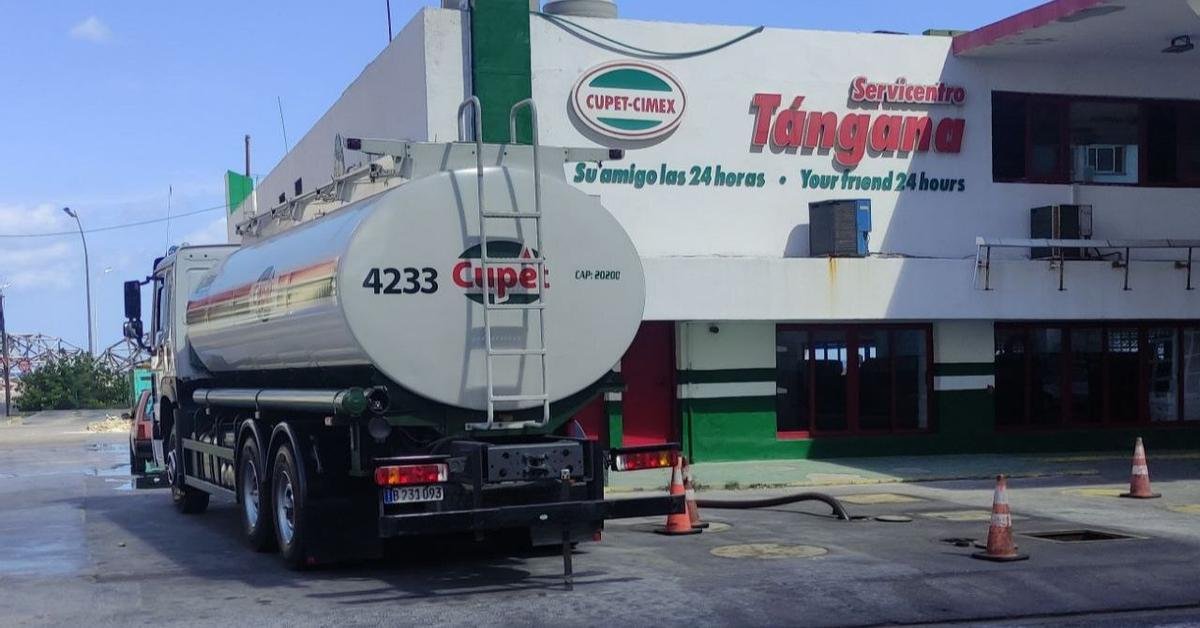
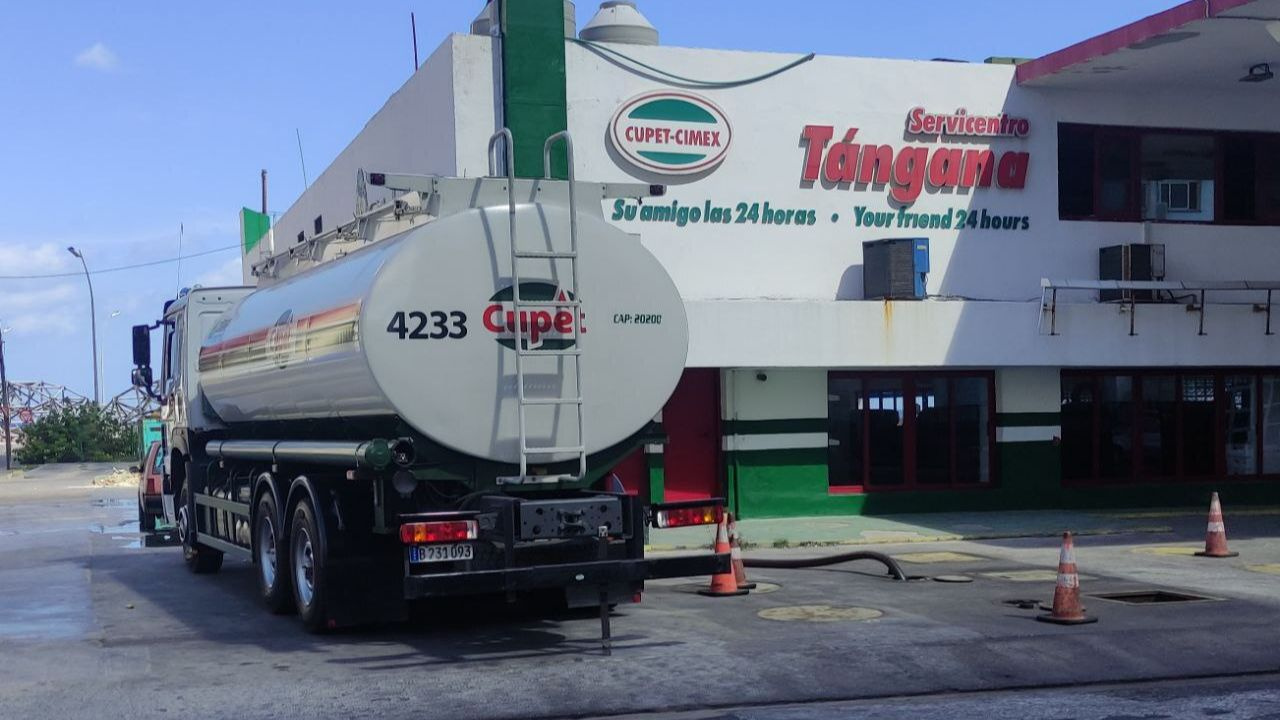
Havana/The United States Government sanctioned this Thursday the Cuba-Petroleum Union (Cupet), the state company that controls the fuel chain on the Island. The announcement was made by the Secretary of State, Marco Rubio, who accused the regime of converting energy into an instrument of social control and benefit for the elites.
“Today I sanction Cuba’s state energy company, Unión Cuba-Petróleo, Cupet, under President Trump’s Executive Order 14404,” Rubio wrote. on the social network X, referring to the norm signed by the American president on May 1. In his message, the Secretary of State stated that “Cuba’s communist elites have turned energy into a weapon of social control and kleptocratic profit.”
The announcement comes two days after an agreement by Vanguard Energy, a company based in Coral Gables, Florida, to ship to Cuba 250,000 barrels of diesel and gasoline. According to that operation, the fuel would be destined for the private sector, but the scheme contemplated the use of Cupet facilities for storage and distribution under the supervision of the American company.
With Cupet now listed as a sanctioned entity, any contract involving tank rental, logistics services, payments or direct coordination with the Cuban state oil company faces serious obstacles. The design of the Vanguard agreement sought to open a path to supply MSMEs, private actors and potential non-state clients, but it depended on an infrastructure controlled by the company now designated by Washington.
Rubio maintained that the regime has “stolen and hoarded” the available fuel for decades, allocating it to the “Castros’ private jet.”
The measure is part of the Donald Trump Administration’s offensive against the Cuban regime, after the White House expanded the sanctions framework under the aforementioned executive order in May. This provision allows the blocking of assets and interests of people or entities linked to strategic sectors of the Cuban economy, including energy, defense, mining, financial services and security.
Rubio maintained that the regime has “stolen and hoarded” the available fuel for decades, allocating it to the “Castros’ private jet”, to the security forces, to tourist hotels and to transport people to political events, while the population suffers blackouts and long waits to fill the tanks of their vehicles.
The decision comes in the midst of a sustained crisis in electricity generation, lack of fuel and paralysis of transportation. In recent months, the Electric Union units have once again recorded daily deficits close to 2,000 megawatts, while authorities attribute the situation to breakdowns, lack of maintenance and problems with fuel supply.
Rubio affirmed that the US president wants “a new future for the Cuban people with greater freedom and economic and political opportunity.”
The sanction has also generated concern among exile sectors favorable to opening economic spaces for private actors within the Island. Ricardo Herrero, executive director of the Cuba Study Group, questioned the inclusion of Cupet in the measure announced by Rubio and warned that the decision could hit precisely the channels that Washington said it wanted to protect. “How are private importers supposed to store diesel and put it in vehicles without using Cupet facilities?” wrote in X.
In his opinion, the measure “undermines what, until this morning, had been a humanitarian priority for the United States,” unless there is “something much bigger” underway or politics has entered a phase of “indiscriminate cruelty.”
For the Trump Administration, the measure is part of a broader strategy aimed at limiting the regime’s financial and operational capacity. Rubio stated that the US president wants “a new future for the Cuban people with greater freedom and economic and political opportunity.” Until then, he added, Washington will continue to target the regime’s ability to use energy trade to “advance its corrupt agenda” and repress the population.