Madrid/The Cuban Minister of Energy and Mines, Vicente de la O Levy, flatly denied any link between the Government and the diesel shipments seized by US authoritiesin an interview published this Monday by Reuters.
The US Department of Homeland Security announced last week in Miami the seizure of 90 fuel shipments to the Island that were destined for the Cuban state-owned Enetec SA, dependent on the Cuban Ministry of Foreign Trade and which is included on the black list of the US Office of Asset Control (Ofac) since last july.
At the same press conference, one of the US special agents confirmed that Enetec was also “in some way related” to the ships. Grace and Jaira Provider what were intercepted by the coast guard Americans in Caribbean waters while loading fuel bound for Cuba.
De la O Levy told Reuters he was not aware of any such shipments. Furthermore, he stressed: “We can assure you that there was no contract of any kind with Enetec,” and insisted that “no Cuban state company has managed to obtain a fuel contract, whether for small or large quantities.”
“No Cuban state company has managed to obtain a fuel contract, whether for small or large quantities”
No other response could be expected from the minister, since US sanctions expressly prohibit the sale of fuel to any company or organization linked to the Cuban State. The suspicions of the US authorities actually point to the use of front men to discreetly deliver the diesel to the final consumer: Enetec and any other state client.
Since February of this year, Washington allows exports of fuel to the Cuban private sector, but excludes Cuban government institutions from these operations. The regulations also require that subsequent transactions do not directly or indirectly benefit the excluded recipients.
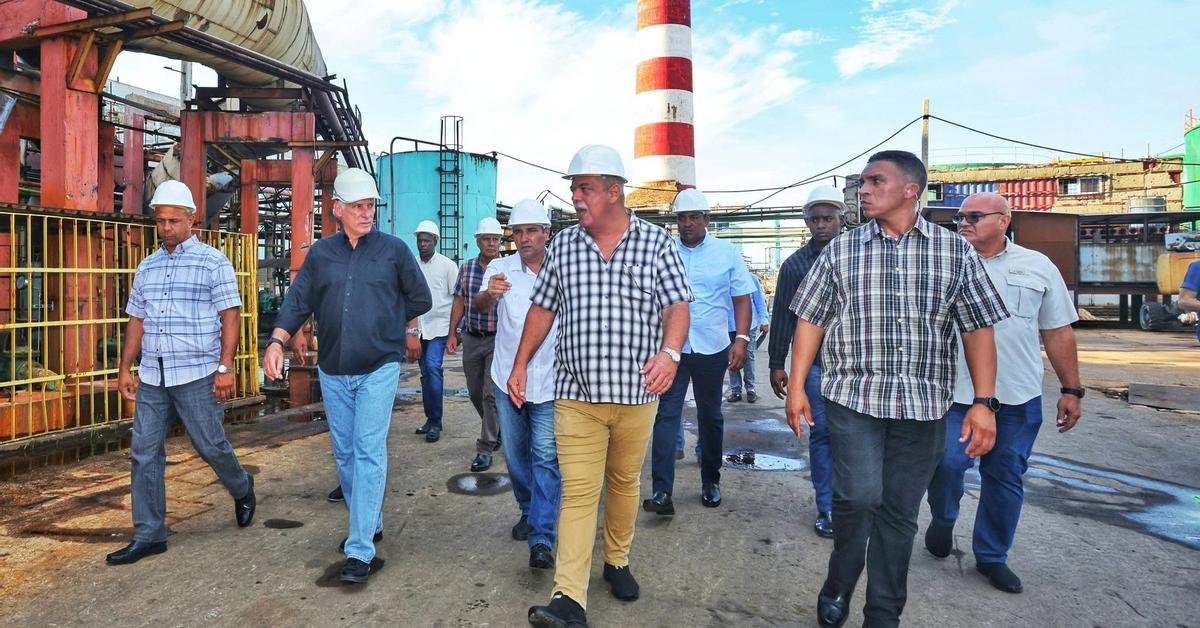
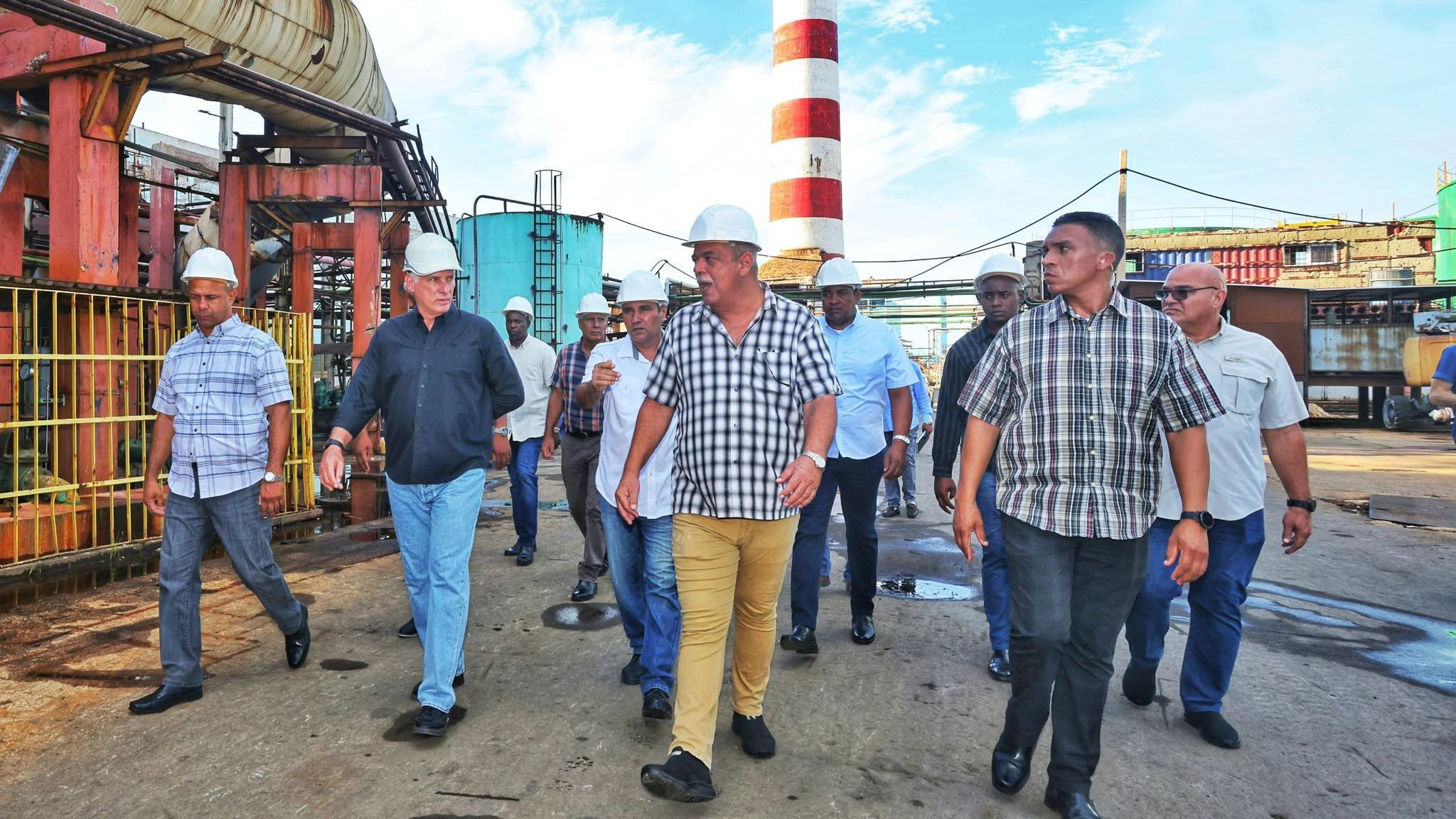
The way in which Cuban state companies have benefited of fuel imports from the US carried out by MSMEs has been documented more than once by 14ymedio. This Sunday, an incident occurred again highlight this link: a fire in a fuel tank at the Azutecnia company, a subsidiary of the state-owned Azcuba, in Granma. Although there is no evidence that the burned fuel from the state company was imported from the United States or supplied by an MSME, Cuba does not have the conditions to produce refined fuel from national crude oil.
Fuel imports from the US have skyrocketed in recent months and have reached levels not seen since 1959, reaching even exceed deliveries of Venezuela in the times of Hugo Chávez, and increasing increasingly: In the first eight months of the year, the accumulated oil products exported to the Island amounted to 231.74 million dollars.
These specific data did not prevent De la O Levy from stating in the interview with Reuters about these imports: “I would dare to say that the amount that enters the country does not even cover 3% of its fuel needs.”
“We have always made it clear that what the American company would buy are shares of Sherritt, not the joint venture”
The minister was also questioned about the situation of the Canadian mining company Sherritt International, sanctioned by the United States, which was forced to interrupt the operations of its joint venture with the Cuban Government in the Moa mine, Holguín, this year. The company Canadian signed an agreement non-binding agreement in May with Gillon Capital – a US company whose vice president is Ray Washburne, a former Trump Administration official – to sell a stake in its business. The entry of US capital would allow Sherritt to obtain authorization from Ofac to continue its operations in Cuba.
On this matter, the Cuban official responded that Cuba would be willing to continue operating under the existing rules of the joint venture if an agreement is reached. “We have always made it clear that what the American company would buy are shares of Sherritt, not the joint venture,” he said, emphasizing: “The Canadian company is publicly traded and any investor has the right to buy its shares.”
“But any restart would require discussions about how to supply fuel and spare parts, and also how to handle payments for exports and production inputs,” he said, referring to sanctions from Washington as an obstacle to business. “If the intention is to resume nickel production, all those problems would need to be resolved.”
“We are moving forward with our solutions little by little, although not as quickly as we would like”
De la O Levy also spoke about renewable energy installations in the national electrical system. He assured that 144 solar parks produce a combined capacity of 1,418 megawatts (MW), “which guarantees basic daytime electricity generation.”
Regarding national crude oil production, he said that “it remains stable” and that it is almost entirely destined for thermoelectric power plants: around 40% of Cuba’s electricity comes from that national oil.
“We are moving forward with our solutions little by little, although not as quickly as we would like,” admitted the minister.