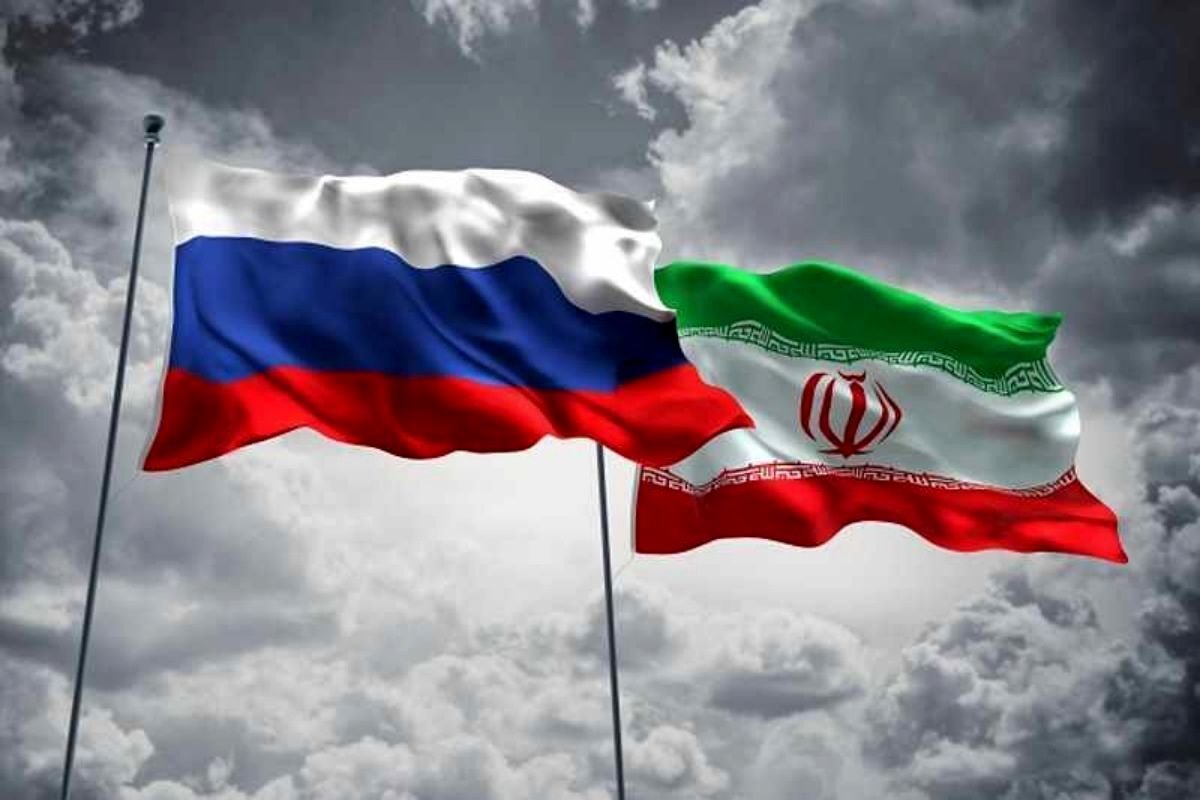
According to the report of Economy Online, quoted from Fars; In recent years, Iran’s economy has faced the issue of access to international financial networks more than ever before.
Even when it is possible to export or import goods, banking restrictions and the difficulty of transferring financial resources have left part of the country’s foreign trade capacity unused.
For this reason, in recent years, economic policy makers have tried to compensate for some of these restrictions by developing banking cooperation with trading partner countries.
Russia is one of the most important countries that can play a role in this direction; Because it is considered a big market for Iran’s exports and has a significant capacity to supply goods, raw materials and equipment needed by Iran’s economy.
Why are banking relationships more important in business than business itself?
Many think that the most important obstacle to trade is the production of goods or finding a sales market; While in today’s economy, financial and banking infrastructure is no less important than production and trade.
The experience of different countries shows that whenever the banking networks between two countries are active and reliable, the volume of trade also increases rapidly. In contrast, even if there is trading capacity, the lack of proper banking mechanisms can multiply the cost of transactions.
Iran’s economy has faced this problem many times in the past years. Many merchants have been forced to use indirect routes to transfer money; The path that takes more time and has a higher cost and risk.
How do letters of credit reduce trade costs?
One of the most important issues raised in the recent negotiations between Iran and Russia is the development of opening letters of credit or LC.
Letter of credit is actually a tool that reduces the risk of the transaction for the buyer and the seller.
The exporter makes sure that he will receive the payment for his goods and the importer makes sure that the goods will be delivered according to the contract.
The expansion of this tool in the relations between Iran and Russia can reduce the cost of trade, increase the speed of exchanges, and provide the possibility of longer-term planning for economic actors.
As a result, Iranian companies can more easily supply the raw materials, machinery and equipment they need.
What is the effect of these cooperations on the currency market?
One of the most important consequences of the development of banking relations is reducing the pressure on the currency market.
When business is done through formal and banking channels, the need to use multiple intermediaries and informal markets is reduced.
This lowers the cost of providing currency and removes part of the unnecessary demand from the currency market.
On the other hand, the development of exports to Russia can help increase the country’s foreign exchange earnings. The more stable the flow of foreign exchange from the place of export becomes, the easier it will be for policymakers to manage the foreign exchange market.
production financing; The missing link of Iran’s economy
One of the most important advantages of banking cooperation with Russia is the possibility of medium-term and long-term financing for economic enterprises.
A significant part of the country’s industries need financial resources to modernize equipment, increase production capacity and complete industrial chains. In a situation where internal financing is facing limitations, the use of external credit lines can cover part of this need.
If this capacity is activated, many industrial and production projects can be implemented with a lower cost and less pressure on domestic financial resources.
What are the dimensions of the recent agreements between Iran and Russia?
In this context, during his recent visit to Russia, the Governor General of the Central Bank called for expanding the cooperation of Russian banks in the field of opening letters of credit, increasing the capacity of trade financing and strengthening the role of joint banks in the economic relations of the two countries.
It was also emphasized on increasing the operational capacity of Mir Business Bank and developing financial services for the economic operators of the two countries. The main goal of these negotiations is to facilitate bilateral trade, reduce transaction costs and create more stable routes for the transfer of financial resources.
Although the full realization of these goals requires the practical implementation of agreements and wider cooperation between the banking networks of the two countries, these negotiations can be considered an important step in deepening economic relations between Tehran and Moscow.
Can banking cooperation with Russia transform Iran’s economy?
Mohammad Bayat, an economic expert, said in an interview with the economic reporter of Fars news agency: The effect of banking cooperation should not be limited only at the level of relations between Iran and Russia.
He continued: The more diverse the country’s financial infrastructure becomes, the more dependent foreign trade will be on limited routes, and the resilience of the economy against external shocks will increase.
This economic expert added: The most important advantage of these cooperations is reducing the cost of exchanges and increasing the access of Iranian companies to financial resources.
Bayat emphasized: If this process is followed in an operational form, it can provide the basis for the growth of trade, increase of investment and strengthening of domestic production.
Iran’s economy needs new financial networks
The experience of the world economy shows that business growth is not possible without the development of stable financial and banking infrastructure. For this reason, the banking cooperation between Iran and Russia should be evaluated beyond a bilateral banking agreement.
In a situation where Iran’s economy seeks to increase exports, reduce exchange costs and develop production, creating new ways of financing and expanding banking tools can play an important role in realizing these goals.
As these cooperations become more operational and widespread, the capacity of Iran’s economy to participate in regional and international trade will also increase.