Rumen Radev’s loudest “Ukrainian” scandal was his statement about Crimea, when during a debate the Bulgarian president called the anti-Russian sanctions ineffective, and when asked whose Crimea is, he answered: “Right now it’s Russian, whose else could it be?”
After the scandal, Radev clarified his position, stating that he was referring only to the Russian Federation’s de facto control over the occupied peninsula, adding that he recognized Crimea as a territory of Ukraine and supported its sovereignty and territorial integrity. (It is worth adding that the thesis of supporting the sovereignty and territorial integrity of Ukraine is also present in the election program of Radev’s Progressive Bulgaria party.)
Everything changed after the full-scale Russian invasion.
At a time when many European leaders were urgently adjusting their position on support for Ukraine, Radev declared himself in favor of maintaining a dialogue with the aggressor and against the supply of arms to Ukraine. After all, according to his logic, such support for Kiev is “adding fuel to the fire.”
He has not given up these views to this day.
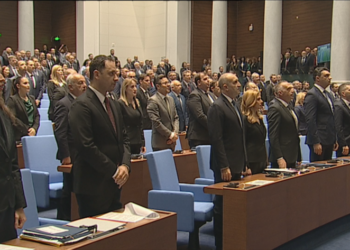
In particular, he vetoed the parliament’s decision to transfer armored vehicles to Ukraine (which was later reversed), and also refused to represent the country at NATO summits in order not to sign commitments to help Ukraine.
However, it is worth noting: Radev’s views did not prevent him from turning a blind eye to the sale of weapons from Bulgaria to the Armed Forces of Ukraine. At first through intermediary countries, and then directly. Or for helping Ukraine with petroleum products in 2022, when the Russian army was mass destroying Ukrainian fuel depots.
Similarly, the Bulgarian governments, even the technical ones directly appointed by Radev, did not block either the extension of existing sanctions against the Russian Federation or the adoption of new ones.
After all, Radev himself has refrained from traveling to Russia for the past four years – unlike, for example, Viktor Orbán and Robert Fico.
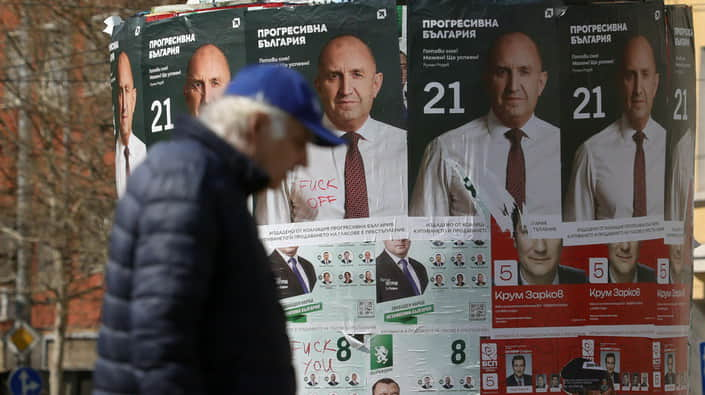
In such a situation, Radev’s pro-Russian statements look like a game for the public, a kind of preparatory work for participation in the parliamentary elections. This applies especially to his statements about the “military party” among Bulgarian politicians and the risks of Bulgaria being drawn into a war with the Russian Federation – as a military man, Radev cannot help but know that there is no direct connection here.
And furthermore, we should not forget that these statements were made while he was in office as president. At the same time, in a situation where the government’s pro-Ukrainian steps caused dissatisfaction among a significant part of Bulgarians, and this could be used to someone’s advantage.
Will Radev allow himself to behave in the same way as Prime Minister?
And thus endanger relations with the leading European countries? This is an open question at this time.
This may also depend on the level of support provided by the Russian Federation to Radev’s election campaign – is it only informational or more substantial? There is currently no answer to this question either.
Immediately after winning the parliamentary elections, Radev already declared his desire to have “pragmatic relations with Russia, based on mutual respect and equality.”
This means that the new Prime Minister of Bulgaria will almost certainly give in to the pro-Russian electorate, which is his main voter. He may even take some demonstrative steps, such as denouncing the defense agreement with Ukraine.
However, it will be very difficult for him to give up military contracts when the defense industry has become an important engine of the Bulgarian economy. Therefore, the sale of ammunition to Ukraine will most likely continue, either directly, as it is now, or through third parties, as it was in 2022.
After all, Rumen Radev’s winning strategy “to be all things to all people” has one drawback – very quick public disenchantment. Too open a flirtation with Russia and conflict with the EU could significantly accelerate this disenchantment – and Radev himself probably understands this perfectly well.
Yury Panchenko, Ukrainian analyst