Exit polls point to Democratic Party victories in at least 11 of 16 races for chiefs of municipalities, with tight races in four
The ruling Democratic Party of Korea is projected to take at least 11 of the 16 posts for metropolitan cities and provinces that were at stake, exit polls showed Wednesday.
Only one People Power Party incumbent was clearly projected to be reelected in the key municipalities.
Nationwide exit polls put the ruling party candidates ahead of conservative rivals in the mayoral races for Daejeon, Gwangju, Incheon, Seoul, Sejong and Ulsan.
For gubernatorial elections, the Democratic Party was also tipped to win in the most populous Gyeonggi Province; the South and North Chungcheong provinces, which are home to swing voters; and South Gyeongsang Province and Jeju Island.
The exit polls indicated races too close to call in Busan, Daegu, Gangwon Province and North Jeolla Province as of press time on Wednesday.
Exit polls showed Democratic Party candidates on pace for narrow wins in Busan, Gangwon Province and North Jeolla Province, though within the margin of error.
The conservative party looked set to win in North Gyeongsang Province and Daegu, in the southwestern conservative stronghold. However, the candidate’s lead in Daegu was within the margin of error, at 0.8 percentage point.
Notably, the Democratic Party was expecting to reclaim mayoral seats in the two most populous cities of Seoul and Busan, having lost both in mayoral by-elections in 2021.
According to exit polls, Seoul mayoral candidate Chong Won-o, who served as the chief of Seongdong-gu District Office for 12 years, was expected to prevail with 51.4 percent of the vote. The 57-year-old led by 5.4 percentage points over conservative incumbent Oh Se-hoon, who was running for an unprecedented fifth term.
Chun Jae-soo, a former oceans minister who was a three-term lawmaker for the ruling Democratic Party, was also projected to overcome right-wing incumbent Park Heong-joon. Chun, 55, was ahead of Park at 50.2 percent, up by 1.9 percentage points.
Choo Mi-ae, a liberal heavyweight who served six terms in the National Assembly, was also on course to beat the People Power Party’s Yang Hyang-ja and minor conservative Reform Party’s Cho Eung-cheon, with 60.4 percent of votes, according to exit polls.
The exit polls were run by the Korea Election Pool, a body comprising representatives of the Korean Broadcasters Association and TV networks KBS, MBC and SBS. Exit polls were conducted with nearly 110,000 voters at select polling stations and via telephone opinion polls. Its margin of error varies from plus or minus 1.7 percentage points to plus or minus 4.1 percentage points, depending on the election jurisdiction, with a confidence level of 95 percent.
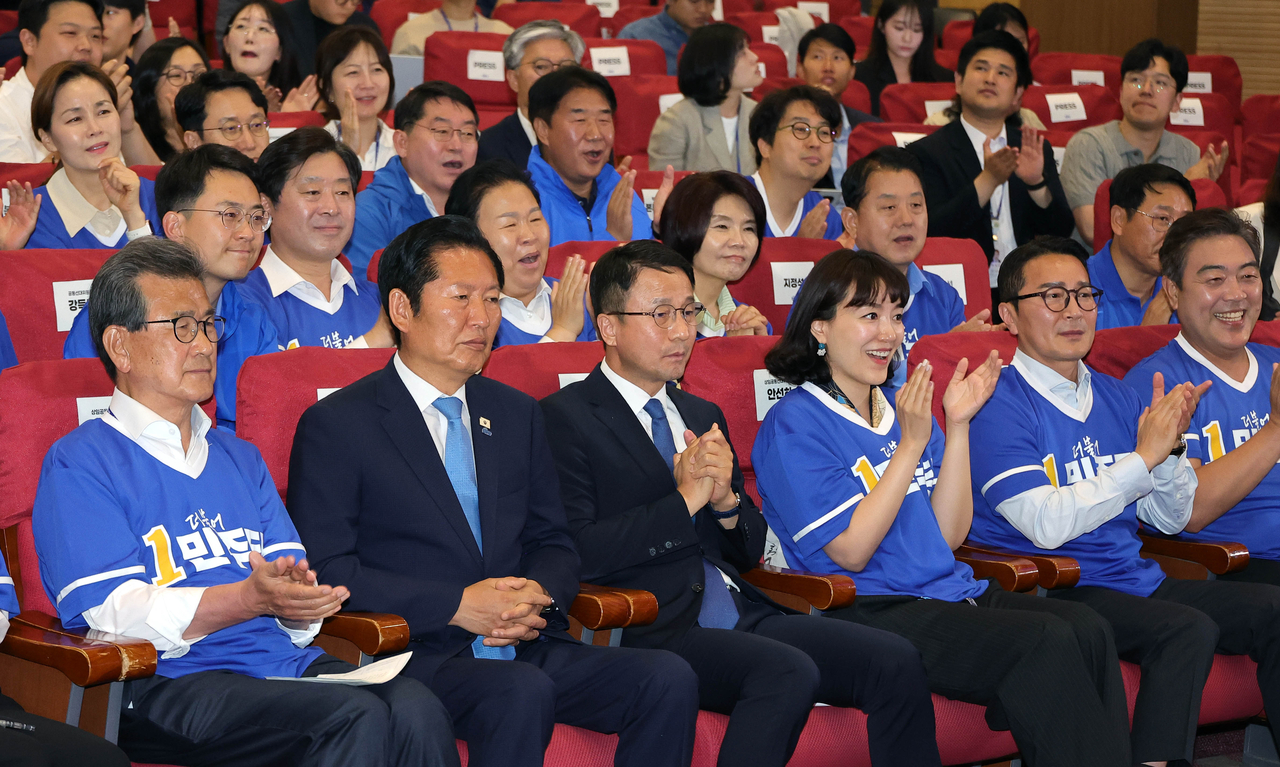
The Democratic Party hailed the outcome of exit polls but remained cautious as the vote count began at around 6:10 p.m. Wednesday.
“I assess that this outcome confirms public sentiment that lends support to the stability of state affairs under President Lee Jae Myung,” Rep. Lee Yeon-hee of the Democratic Party told reporters after the exit polls broadcast.
An expert said that this year’s elections effectively serve as an early referendum on Lee’s first year in office.
“This election is not only about political symbolism, but also about setting the practical boundaries of policy competition and legislative bargaining going forward,” said Hannah Kim, an associate professor of political science at the Graduate School of International Studies at Sogang University.
Although the newly elected leaders themselves might not immediately change South Korea’s political landscape, the outcome itself could serve as a barometer for voter sentiment toward the liberal bloc.
A landslide victory for the ruling party can “significantly shape the strategic environment for policymaking over the next several years,” she said, adding the ruling camp is “likely to interpret the result as a mandate to move forward more decisively on its policy agenda.”
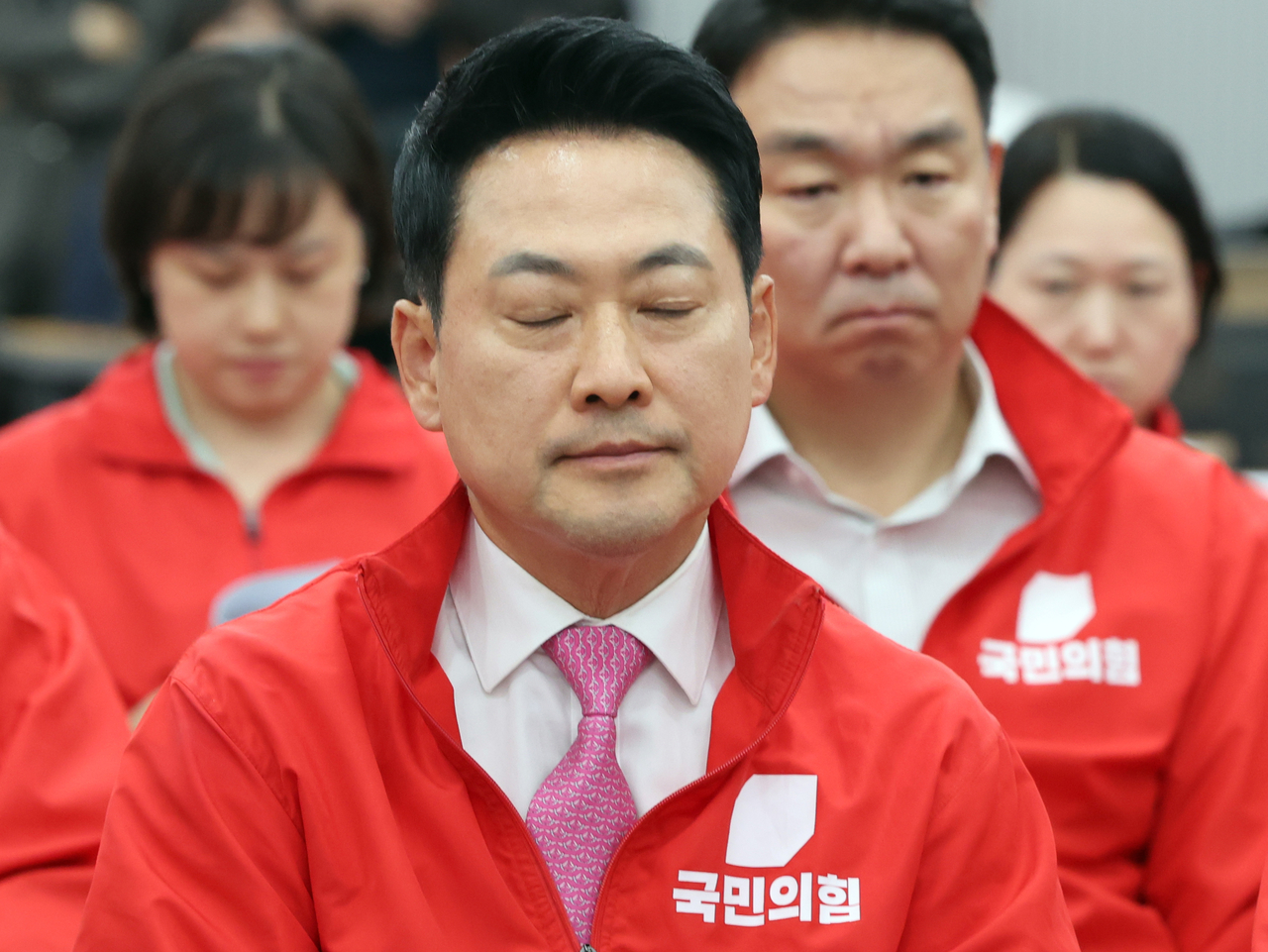
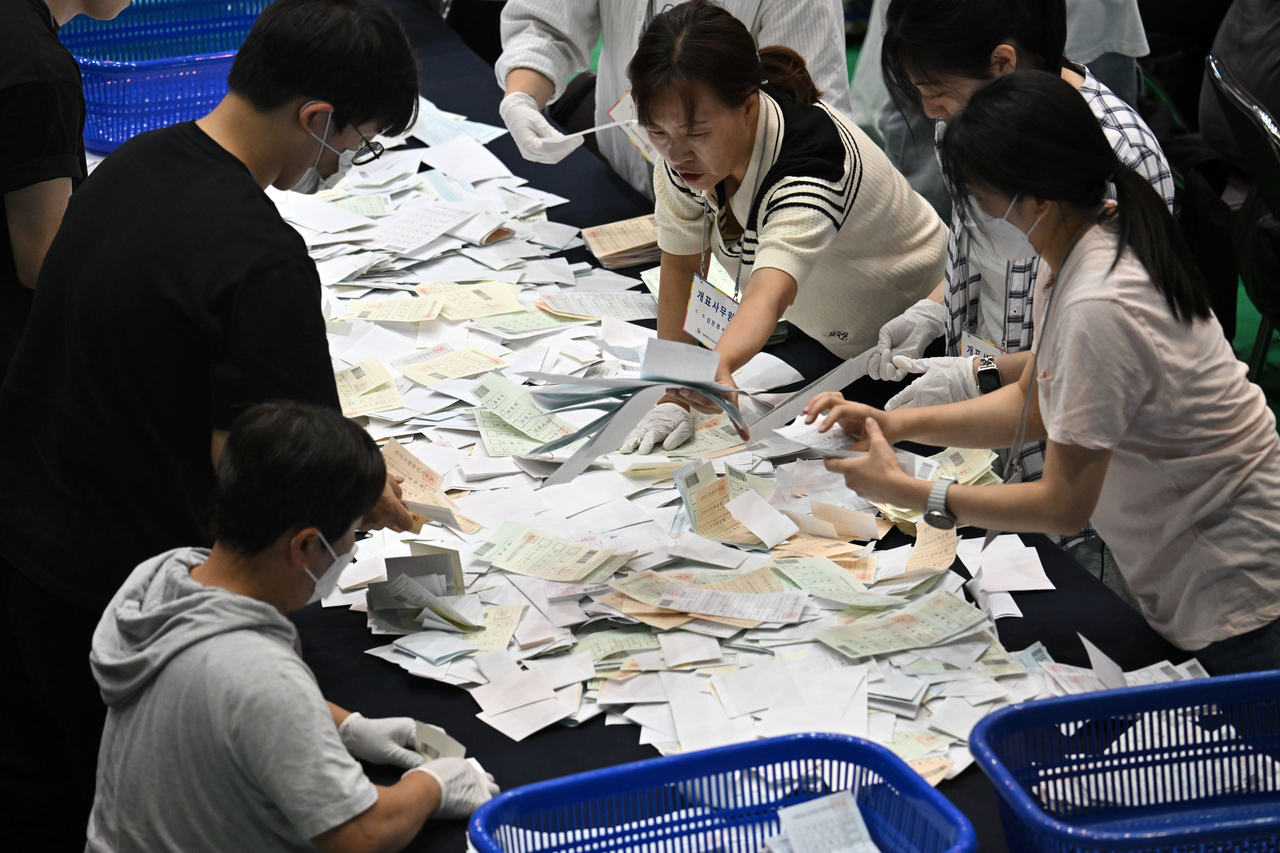
However, ballot shortages in over a dozen polling stations across the Greater Seoul area have delayed polls from closing, affecting the process of counting ballots and estimating voter turnout.
The nationwide voter turnout for this year’s election was unavailable as of press time late Wednesday evening, while 13.19 percent of votes had been counted for 16 key municipalities as of 10 p.m.
People Power Party chair Rep. Jang Dong-hyeok demanded late at night that South Korea stop the vote counting process and redo the elections from the beginning. Minor Reform Party’s chair Rep. Lee Jun-seok echoed the call, urging the election authorities to halt the ballot counting and hold an emergency meeting. But Rep. Jo Seoung-lae of the Democratic Party told reporters that the opposition rivals’ demand “is not worth considering.”
This year’s local elections to elect autonomous governments, councilors and local education chiefs and to fill 14 lawmaker posts through parliamentary by-elections are the first nationwide polls since the presidential election in June 2025.
A total of 4,241 posts are up for grabs. According to the National Election Commission, 7,767 people registered as candidates.
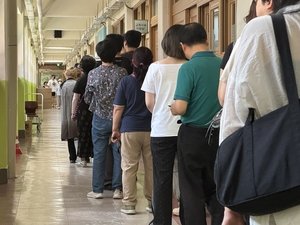
Among 44.64 million registered voters, over 10 million had already cast their votes during the early voting period on Friday and Saturday.
About 150,000 foreign nationals who meet requirements, including holding three years of permanent residency status, were also eligible to vote in Wednesday’s local elections.
consnow@heraldcorp.com