Tuesday, May 5, 2026
    The GeoStrategic Consensus
    No Result
    View All Result
    • Login
    • HOME
    • AMERICAS
      • Argentina
      • Brazil
      • Canada
      • Chile
      • Colombia
      • Costa Rica
      • Cuba
      • Dominican Republic
      • Ecuador
      • El Salvador
      • Greenland
      • Guatemala
      • Honduras
      • Mexico
      • Nicaragua
      • Panama
      • Paraguay
      • Peru
      • United States
      • Uruguay
      • Venezuela
    • ASIA-PACIFIC
      • Australia
      • Brunei Darussalam
      • Cambodia
      • China
      • Federated States of Micronesia
      • Fiji
      • Indonesia
      • Japan
      • Kiribati
      • Laos
      • Malaysia
      • Marshall Islands
      • Mongolia
      • Myanmar
      • Nauru
      • New Zealand
      • North Korea
      • Palau
      • Papua New Guinea
      • Philippines
      • Samoa
      • Singapore
      • Solomon Islands
      • South Korea
      • Taiwan
      • Thailand
      • Timor-Leste
      • Tonga
      • Tuvalu
      • Vanuatu
      • Vietnam
    • CARICOM
      • CARICOM – Non-English
        • Haiti
        • Suriname
      • CARICOM Associates
        • Anguilla
        • Bermuda
        • British-Virgin-Islands
        • Cayman-Islands
        • Curacao
        • Turks-and-Caicos
      • CARICOM English
        • Antigua and Barbuda
        • Barbados
        • Belize
        • Dominica
        • Grenada
        • Guyana
        • Jamaica
        • Montserrat
        • Saint Kitts and Nevis
        • Saint Lucia
        • Saint Vincent and the Grenadines
        • The Bahamas
        • Trinidad and Tobago
    • EURASIA
      • Armenia
      • Azerbaijan
      • Balarus
      • Georgia
      • Kazakhstan
      • Kyrgyzstan
      • Moldova
      • Russia
      • Tajikistan
      • Turkmenistan
      • Ukraine
      • Uzbekistan
    • EUROPE
      • Albania
      • Andorra
      • Austria
      • Bosnia and Herzegovina
      • Bulgaria
      • Croatia
      • Cyprus
      • Czech Republic
      • Denmark
      • Estonia
      • Finland
      • France
      • Germany
      • Greece
      • Holy See
      • Hungary
      • Iceland
      • Ireland
      • Italy
      • Kosovo
      • Latvia
      • Liechtenstein
      • Lithuania
      • Luxembourg
      • Malta
      • Monaco
      • Montenegro
      • Netherlands
      • North Macedonia
      • Norway
      • Poland
      • Portugal
      • Romania
      • San Marino
      • Serbia
      • Slovakia
      • Slovenia
      • Spain
      • Sweden
      • Switzerland
      • United Kingdom
    • MIDDLE EAST AND NORTH AFRICA
      • Algeria
      • Bahrain
      • Egypt
      • Iran
      • Iraq
      • Israel
      • Jordan
      • Kuwait
      • Lebanon
      • Lybia
      • Morocco
      • Oman
      • Palestinian Territories
      • Qatar
      • Saudi Arabia
      • Syria
      • Tunisia
      • Turkey
      • United Arab Emirates
      • Western Sahara
      • Yemen
    • SOUTH ASIA
      • Afghanistan
      • Bangladesh
      • Bhutan
      • India
      • Maldives
      • Nepal
      • Pakistan
      • Sri Lanka
    • SUB-SAHARAN AFRICA
      • Angola
      • Benin
      • Botswana
      • Burkina Faso
      • Burundi
      • Cabo Verde
      • Cameroon
      • Central African Republic
      • Chad
      • Comoros
      • Cote d’Ivoire
      • Democratic Republic of the Congo
      • Djibouti
      • Equatorial Guinea
      • Eritrea
      • Eswatini
      • Ethiopia
      • Gabon
      • Gambia
      • Ghana
      • Guinea
      • Guinea Bissau
      • Kenya
      • Lesotho
      • Liberia
      • Madagascar
      • Malawi
      • Mali
      • Mauritania
      • Mauritius
      • Mozambique
      • Namibia
      • Niger
      • Nigeria
      • Republic of the Congo
      • Rwanda
      • Sao Tome and Principe
      • Senegal
      • Seychelles
      • Sierra Leone
      • Somalia
      • South Africa
      • South Sudan
      • Sudan
      • Tanzania
      • Togo
      • Uganda
      • Zambia
      • Zimbabwe
    • HOME
    • AMERICAS
      • Argentina
      • Brazil
      • Canada
      • Chile
      • Colombia
      • Costa Rica
      • Cuba
      • Dominican Republic
      • Ecuador
      • El Salvador
      • Greenland
      • Guatemala
      • Honduras
      • Mexico
      • Nicaragua
      • Panama
      • Paraguay
      • Peru
      • United States
      • Uruguay
      • Venezuela
    • ASIA-PACIFIC
      • Australia
      • Brunei Darussalam
      • Cambodia
      • China
      • Federated States of Micronesia
      • Fiji
      • Indonesia
      • Japan
      • Kiribati
      • Laos
      • Malaysia
      • Marshall Islands
      • Mongolia
      • Myanmar
      • Nauru
      • New Zealand
      • North Korea
      • Palau
      • Papua New Guinea
      • Philippines
      • Samoa
      • Singapore
      • Solomon Islands
      • South Korea
      • Taiwan
      • Thailand
      • Timor-Leste
      • Tonga
      • Tuvalu
      • Vanuatu
      • Vietnam
    • CARICOM
      • CARICOM – Non-English
        • Haiti
        • Suriname
      • CARICOM Associates
        • Anguilla
        • Bermuda
        • British-Virgin-Islands
        • Cayman-Islands
        • Curacao
        • Turks-and-Caicos
      • CARICOM English
        • Antigua and Barbuda
        • Barbados
        • Belize
        • Dominica
        • Grenada
        • Guyana
        • Jamaica
        • Montserrat
        • Saint Kitts and Nevis
        • Saint Lucia
        • Saint Vincent and the Grenadines
        • The Bahamas
        • Trinidad and Tobago
    • EURASIA
      • Armenia
      • Azerbaijan
      • Balarus
      • Georgia
      • Kazakhstan
      • Kyrgyzstan
      • Moldova
      • Russia
      • Tajikistan
      • Turkmenistan
      • Ukraine
      • Uzbekistan
    • EUROPE
      • Albania
      • Andorra
      • Austria
      • Bosnia and Herzegovina
      • Bulgaria
      • Croatia
      • Cyprus
      • Czech Republic
      • Denmark
      • Estonia
      • Finland
      • France
      • Germany
      • Greece
      • Holy See
      • Hungary
      • Iceland
      • Ireland
      • Italy
      • Kosovo
      • Latvia
      • Liechtenstein
      • Lithuania
      • Luxembourg
      • Malta
      • Monaco
      • Montenegro
      • Netherlands
      • North Macedonia
      • Norway
      • Poland
      • Portugal
      • Romania
      • San Marino
      • Serbia
      • Slovakia
      • Slovenia
      • Spain
      • Sweden
      • Switzerland
      • United Kingdom
    • MIDDLE EAST AND NORTH AFRICA
      • Algeria
      • Bahrain
      • Egypt
      • Iran
      • Iraq
      • Israel
      • Jordan
      • Kuwait
      • Lebanon
      • Lybia
      • Morocco
      • Oman
      • Palestinian Territories
      • Qatar
      • Saudi Arabia
      • Syria
      • Tunisia
      • Turkey
      • United Arab Emirates
      • Western Sahara
      • Yemen
    • SOUTH ASIA
      • Afghanistan
      • Bangladesh
      • Bhutan
      • India
      • Maldives
      • Nepal
      • Pakistan
      • Sri Lanka
    • SUB-SAHARAN AFRICA
      • Angola
      • Benin
      • Botswana
      • Burkina Faso
      • Burundi
      • Cabo Verde
      • Cameroon
      • Central African Republic
      • Chad
      • Comoros
      • Cote d’Ivoire
      • Democratic Republic of the Congo
      • Djibouti
      • Equatorial Guinea
      • Eritrea
      • Eswatini
      • Ethiopia
      • Gabon
      • Gambia
      • Ghana
      • Guinea
      • Guinea Bissau
      • Kenya
      • Lesotho
      • Liberia
      • Madagascar
      • Malawi
      • Mali
      • Mauritania
      • Mauritius
      • Mozambique
      • Namibia
      • Niger
      • Nigeria
      • Republic of the Congo
      • Rwanda
      • Sao Tome and Principe
      • Senegal
      • Seychelles
      • Sierra Leone
      • Somalia
      • South Africa
      • South Sudan
      • Sudan
      • Tanzania
      • Togo
      • Uganda
      • Zambia
      • Zimbabwe
    No Result
    View All Result
    Agentially
    No Result
    View All Result
    Home AMERICAS Brazil

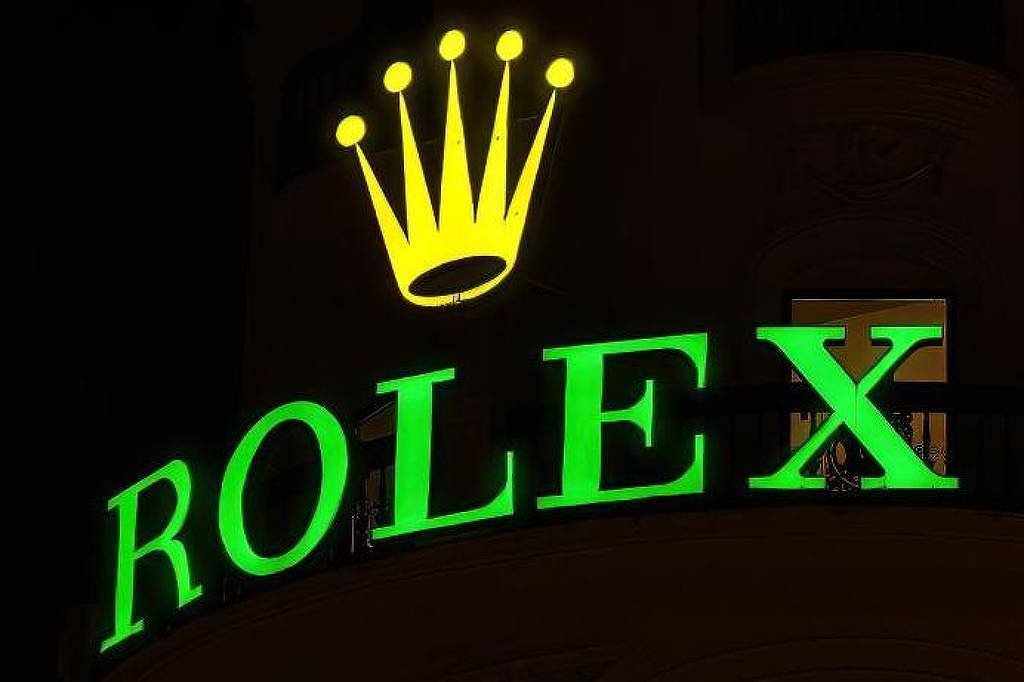
    Rolex: the luxury company that doesn’t belong to billionaires – 04/12/2026 – Economy

    The Analyst by The Analyst
    April 13, 2026
    in Brazil
    Rolex: the luxury company that doesn’t belong to billionaires – 04/12/2026 – Economy


    When Shakira wanted to express in a song his pain over a betrayal in love, he resorted to a comparison that needed no explanation: “You exchanged a Rolex for one Casio“.

    READ ALSO

    Gilmar quotes Master and that targeting only the STF is ‘myopia’ – 05/04/2026 – Politics

    It unfolds: understand the 4 modalities of the program – 05/04/2026 – Economy

    The second brand could perhaps have been another, but the first could only be this: it was enough to invoke it for its global audience to immediately understand it as synonymous with the most valuable thing someone can own… And lose.

    Few brands in history have achieved this level of cultural penetration.

    Whether it’s a large, robust Rolex wristwatch in polished gold and studded with diamonds —which proclaims success from the rooftops— or a more discreet model that whispers refinement, they all speak the same language.

    And although there are other pieces of watchmaking on the market luxury who keep time with precision backed by highly sophisticated engineering, Rolex has been the undisputed leader for more than half a century.

    The latest Swiss Watcher 2025 report from Morgan Stanley and LuxeConsult, which examined the top 50 brands, confirms this.

    Rolex appears at the top, with an implied retail market share of 33%; the second place on the list — Richemont, with its Cartier watches — has 9%.

    The report estimates that around 1.15 million Rolex watches were sold last year, which translates into estimated revenues of around US$14.8 billion (R$74 billion) — a figure that is difficult to imagine and, in this case, difficult to confirm, as the centuries-old watchmaking industry is unique.

    Rolex is not owned by any billionaire, is not publicly traded, and does not respond to shareholders.

    It is owned by a foundation.

    This unusual structure, which its admirers — from enthusiasts and collectors to specialized sellers — present as an almost virtuous model of capitalism with a conscience, is complex and intriguing.

    Behind her is a man named Hans Wilsdorf.

    How has he driven the brand’s success and ensured it endures?

    Wilsdorf was born in 1881 in Bavaria, Germany, and, after losing his mother as a child and his father when he was 12, his uncles sold the family business and sent him to boarding school.

    With a solid education and the ability to speak three languages ​​— German, French and English — Wilsdorf arrived in Switzerland at the age of 19 to work in a pocket watch exporting company.


    In 1905, at the age of 24, he founded the company Wilsdorf & Davis, in London, with his brother-in-law, Alfred Davis, importing Swiss watch mechanisms. Three years later, he registered the Rolex brand, an invented word that was easy to pronounce in any language and short enough to fit on a dial.

    It emerged at a time when the industry was betting on the wristwatch, and Wilsdorf joined this trend with a particular obsession: demonstrating that these small objects strapped to the wrist could achieve the precision of large marine chronometers, the highest standard of accuracy at the time.

    Like Omega, Longines and Zenith, Rolex participated in chronometry competitions because precision was not just a technical attribute: it was the main selling point.

    But more was needed to stand out.

    In the succession of innovations that transformed watchmaking, Rolex was not always the first to conceive an idea, but it was often the first to bring it to its definitive form and engrave it in the collective memory.

    In 1926, he launched the Oyster, the first hermetically sealed, water-resistant wristwatch.

    To prove this, Wilsdorf didn’t just say anything: he convinced British swimmer Mercedes Gleitze to wear an Oyster around her neck during her “claim swim” across the English Channel, between France and the United Kingdom.

    Gleitze had been the first person to cross the Channel, but another woman claimed to have done it in less time — a claim that turned out to be a hoax, but which forced Gleitze to repeat the crossing to claim her feat.

    The controversy guaranteed free media coverage.

    Although Gleitze was forced to abandon swimming due to the extreme cold, the watch worked perfectly, as reported by the British newspaper The Times.

    A month later, Rolex would buy the entire cover of the Daily Mail newspaper with the headline: “The watch that defied the Channel.”

    Legendary auction house Sotheby’s would describe this collaboration, nearly a century later, as “the birth of modern sports sponsorship”: the first time an athlete’s physical endurance was used to validate a product’s engineering.

    In the 1950s, Rolex and its advertising agency, J. Walter Thompson, carried out a bold marketing coup in an event that kept the world in suspense: the conquest of Mount Everest.

    British watchmaker Smiths, a historic supplier to the Royal Navy and the royal family, was the official sponsor of the expedition that achieved the feat in 1953, and when Edmund Hillary reached the summit, he was wearing a Smiths De Luxe on his wrist.

    But this did not stop Rolex from appropriating the story: it had also provided watches to the members of the expedition and, upon return, in Calcutta, India, the local distributor presented Edmund Hillary with an engraved Explorer prototype, in addition to distributing watches to the team.

    When the climbers arrived in London, they were already official Rolex ambassadors, and little was said about Smiths watches.

    In 1960, instead of competing for the heights, the company tested itself in the depths: an experimental Rolex watch was attached to the outside of the bathyscaphe Trieste during its descent to the bottom of the Mariana Trench.

    Jacques Piccard, the oceanographer who commanded the descent, sent a telegram to Geneva, Switzerland, the company’s headquarters: “Happy to announce that your watch works as well at 11,000 meters as it does on the surface.”

    Each achievement resulted in an advertisement, reinforcing the slogan associated with the brand: “A crown for every success”.

    The line between advertising and actual demonstrations of performance was blurred, and the strategy paid off: since 1953, Rolex has grown at an average rate of 8% per year for nearly four decades.

    Marketing was only half the equation. The other was summarized by Wilsdorf in a letter about his early years: “It is not with low prices, but, on the contrary, with higher quality that we can not only sustain the market, but expand it.”

    A TIME-PROOF SYMBOL

    Wilsdorf died in 1960, but Rolex’s most radical transformation was yet to come: from precision watch to global status symbol.

    With the support of the same advertising agency that had helped cement the link between Rolex and the human achievement of the impossible on Everest, J. Walter Thompson, the strategy evolved with surgical precision over the decades.

    Ads were already focusing not on the watches themselves, but on the powerful men who wore them: Rolex was a symbol of personal success.

    “The men who guide the destiny of the world wear Rolex watches,” said a 1959 ad.

    When society stopped admiring world or military leaders, and athletes, adventurers and entrepreneurs became the new heroes, Rolex partnered with elite professionals.

    The “quartz crisis” of the 1970s — when Japanese battery-powered watches threatened to make Swiss mechanical movements obsolete — which for many brands was a lethal blow, for Rolex represented an opportunity.

    While competitors like Omega made cheap quartz watches, Rolex reframed its mechanical movement as a virtue: not ancient technology, but timeless craftsmanship.

    The decision cemented its position as the luxury watch par excellence, which it has maintained for more than half a century.

    In the 1980s, as status symbols became culturally dominant, Rolex turned to opulence: the Day-Date model became “the presidential watch,” worn by world leaders.

    The result was what branding experts call a perfect aspirational trap: an object that those who can’t have it want, and that those who can have it need to signal that they’ve gotten there.

    The constant message, as historian Pierre‑Yves Donzé observes in the book “The factory of excellence: history of Rolex (The factory of excellence: history of Rolex)it was distilled, simple and powerful: Rolex is an exceptional product, developed by an exceptional entrepreneur (Hans Wilsdorf) for exceptional people.

    This rigor and clarity of vision are largely due to the Hans Wilsdorf Foundation — which takes us back to its creator.

    THE CROWN AND ITS SHADOWS

    After his wife’s death in 1945, Wilsdorf created the foundation that bears his name and, upon his death, bequeathed all his shares to her. The couple had no children.

    Its main objective —according to its statutes— is “to guarantee the safeguarding, maintenance and profitability of the assets entrusted to it”.

    “If possible”, they add, support social, educational, cultural and humanitarian initiatives, mainly in Geneva, as well as contribute to the protection of animals and the environment on a global level.

    All of this, without a doubt, was accomplished — although there are no precise records about it.


    Although its philanthropic purposes are subject to the availability of surplus resources, these resources have allowed it to benefit so many people and projects that it is impossible to list them.

    In the Swiss city, the foundation’s presence is omnipresent: from the preservation and reinvention of the historic Le Plaza cinema to supporting the modernization of the Geneva Professional School, from the renovation of the Champel nursing home to the restoration of the city’s library and the conservation of the Botanical Gardens, there are many projects that might not have seen the light of day without Rolex’s support.

    Beyond what is visible, the foundation focuses on supporting individuals, forgiving debts, helping pay rent or providing scholarships.

    And there are reports that the thousands of requests they receive are analyzed quickly and without excessive bureaucracy.

    All of this gives it such vast power that, in Geneva, some describe it as a “State within a State”, as writer Dan Crivello notes on the Coronet blog, which specializes in Rolex.

    The model that makes this possible, however, is not exclusive to Rolex.

    Rolex is not the only company with this structure.

    Danish brewer Carlsberg, German engineering multinational Bosch, German media conglomerate Bertelsmann, Danish pharmaceutical company Novo Nordisk and Swedish furniture company Ikea, among others, also belong to foundations.

    But Rolex has two peculiarities: its foundation holds 100% of the shares, in a structure that Swiss legislation makes permanent — that is, no one can sell it, open it on the stock exchange or transfer it to private hands.

    And it operates in the luxury industry, where most of its competitors are owned by publicly listed conglomerates or shareholder families. In this universe, Rolex is an anomaly.

    This makes Rolex not only unusual, but the most visible and profitable example of this model — and the most debated.

    Its advantages are real: without pressure from shareholders, decisions can be more long-term focused; Without listing on the stock exchange, the company is immune to speculative fluctuations; With a foundation as owner, part of the profits go to social causes.

    Historian Donzé argues that this structure was fundamental for Rolex to maintain its independence and the coherence of its brand for more than a century.

    But the shadows are also real.

    Rolex does not publish detailed results, is not accountable to investors and offers little visibility into the true scope of its philanthropic activity.

    Industry analysts and historians point out that this opacity is not an accessory trait, but a structural one: it makes it possible to accumulate capital, make very long-term decisions and exercise significant influence without the usual supervisory mechanisms.

    The result is not so much an ethical anomaly as an institutional one: an organization that, without breaking the rules, operates largely outside them.

    Yet none of this has obscured what Rolex represents to the world: those shadows rarely reach the storefront.

    Shakira didn’t sing about a foundation. He sang about a clock. But for decades this watch has been much more than an object: it is the result of a deliberate, intelligent, sometimes opaque construction of what success means.

    And the company that manufactures it has achieved something that very few achieve: making it so that no one has to explain what it means when they say its name.



    Source link

    Related Posts

    Gilmar quotes Master and that targeting only the STF is ‘myopia’ – 05/04/2026 – Politics
    Brazil

    Gilmar quotes Master and that targeting only the STF is ‘myopia’ – 05/04/2026 – Politics

    May 5, 2026
    It unfolds: understand the 4 modalities of the program – 05/04/2026 – Economy
    Brazil

    It unfolds: understand the 4 modalities of the program – 05/04/2026 – Economy

    May 5, 2026
    Moraes seeks Lula’s allies and denies that he was against Messias – 05/04/2026 – Mônica Bergamo
    Brazil

    Moraes seeks Lula’s allies and denies that he was against Messias – 05/04/2026 – Mônica Bergamo

    May 5, 2026
    PM discovers ‘bomb house’ in the Paraisópolis favela – 05/04/2026 – Daily Life
    Brazil

    PM discovers ‘bomb house’ in the Paraisópolis favela – 05/04/2026 – Daily Life

    May 4, 2026
    IA e outras rupturas que dissolveram nossa visão de mundo – 02/05/2026 – Ilustríssima
    Brazil

    IA e outras rupturas que dissolveram nossa visão de mundo – 02/05/2026 – Ilustríssima

    May 4, 2026
    Milei adopts policy against irregular migrants and generates fear – 05/02/2026 – World
    Brazil

    Milei adopts policy against irregular migrants and generates fear – 05/02/2026 – World

    May 4, 2026
    Next Post

    After Chaotic Election Day, Peru Orders 2nd Day of Voting for Some Areas

    POPULAR NEWS

    Justin Bieber fans flood Coachella festival for headlining show – Entertainment

    Justin Bieber fans flood Coachella festival for headlining show – Entertainment

    April 20, 2026

    Over 600 flee homes as Army, NPA clash in Negros Occidental

    April 21, 2026

    Ex-DPWH exec recalls P800-M ‘delivery’ to Zaldy Co 

    April 20, 2026

    Former PM Paluckas suspends party membership, to waive immunity over criminal probe

    April 24, 2026
    Pres. Ali challenges CARICOM to transform into health research powerhouse

    Pres. Ali challenges CARICOM to transform into health research powerhouse

    April 23, 2026

    EDITOR'S PICK

    Gulf News | Nasser bin Hamad: Betraying the homeland or sympathizing with its enemies is a moral and national crime that has no place among honorable people

    Gulf News | Nasser bin Hamad: Betraying the homeland or sympathizing with its enemies is a moral and national crime that has no place among honorable people

    May 4, 2026
    There’s a silver lining in the Iran war ceasefire for Canada’s oil and gas industry

    There’s a silver lining in the Iran war ceasefire for Canada’s oil and gas industry

    April 12, 2026
    The labor market is sidelining older workers in Europe and in the United States

    The labor market is sidelining older workers in Europe and in the United States

    May 2, 2026
    Today, In Short – The New York Times

    Today, In Short – The New York Times

    April 20, 2026

    Recent Posts

    • Luchas de poder, avaricia, guerra y ‘tecnofascismo’: la IA se quita la careta
    • Kimi Antonelli: Time might be on his side, but the F1 prodigy is in a hurry to win now
    • Así se hace “periodismo en el exilio” en Nicaragua, Cuba, Venezuela y El Salvador
    • CMC journalist dies after prolonged illness – iWitness News

      © 2026 Agentially - Navigating shifting sovereignties and global risk .

      Welcome Back!

      Login to your account below

      Forgotten Password?

      Retrieve your password

      Please enter your username or email address to reset your password.

      Log In
      No Result
      View All Result

        © 2026 Agentially - Navigating shifting sovereignties and global risk .

        This website uses cookies. By continuing to use this website you are giving consent to cookies being used. Visit our Privacy and Cookie Policy.