The president of the Legislative Assembly, Rodrigo Arias, established a date to discuss the sanction of the head of the New Republic faction, Fabricio Alvarado, for alleged sexual abuse.
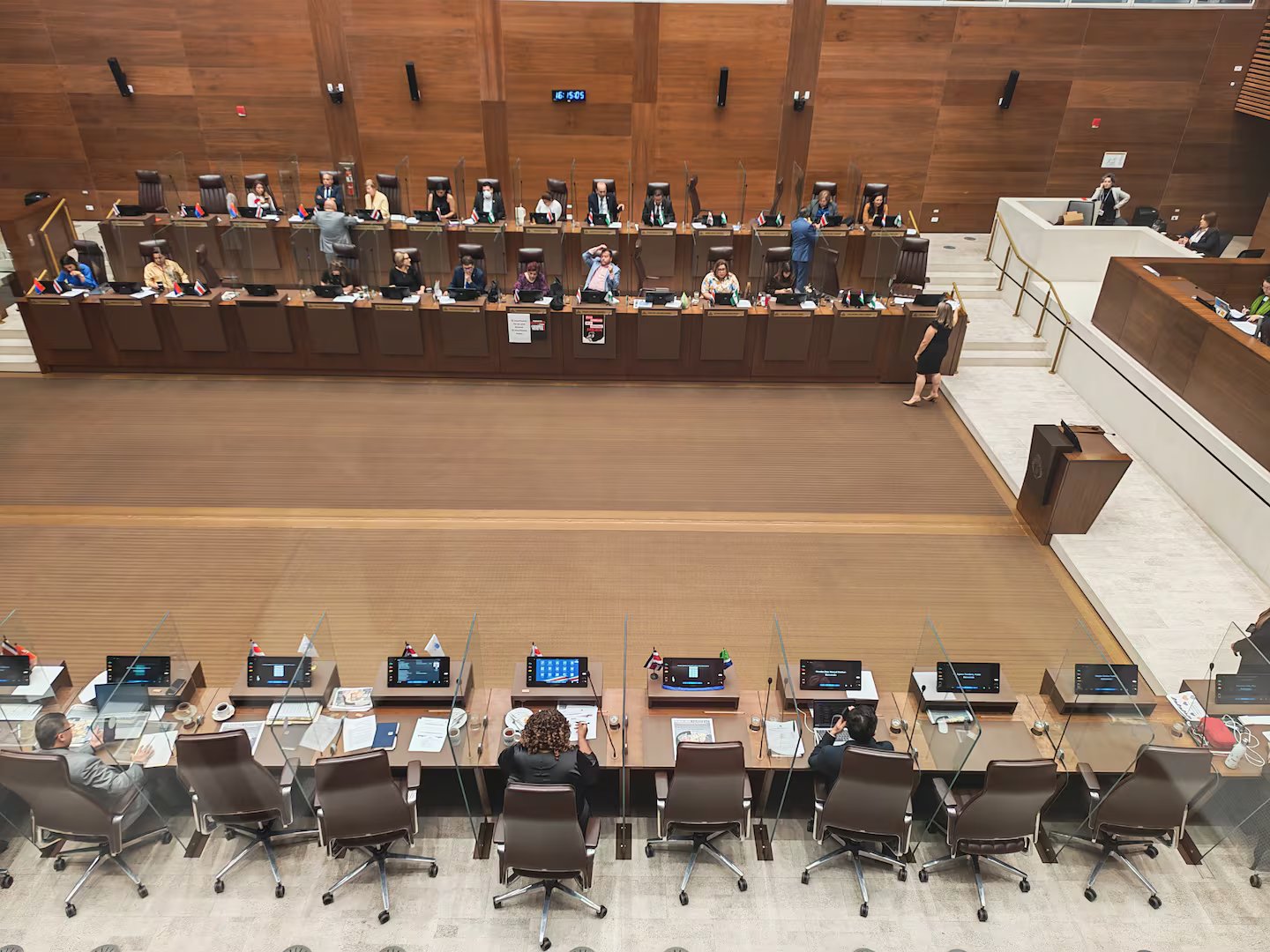
In the plenary session this Thursday, Arias read a resolution in which it establishes that the reports on the process of sexual harassment carried out against the evangelical legislator will be known next Monday, in the ordinary session of the plenary, starting at 3 pm
Chavista deputies and allies
Furthermore, the president of Congress indicated that said session will be publicunless a qualified majority of legislators, that is, 38 votes, decide to hold the debate privately.
To make that qualified decision, the exception to the principles of publicity and transparency must be justified.
Arias also determined that each deputation may refer to the topic for up to 15 minutes, but indicated that, by a vote of 38 congressmen, a regulated debate could be established, with a proportional distribution of time for each fraction.
In his resolution, the president clarified that, according to the Regulations against sexual harassment in the Legislative Assembly for deputies, this matter will be considered discussed at 7 pm on Monday and will be put to the vote immediately.
The commission that investigated the complaint against Fabricio Alvarado for alleged sexual harassment issued three reports, two of which recommend issuing a public ethical reprimand to the head of New Republic for alleged sexual harassment.
A report signed by the manufacturer Olga Morera and the Chavista deputy Waldo Agüero recommends not sanctioning the congressman reported for sexual abuse.
On the other hand, the report by Alejandro Pacheco, president of the commission that investigated the complaint, did recommend the sanction, as well as the one presented by the independent Johana Obando.
Chavistas and manufacturers try to block sanctions
Once Rodrigo Arias issued his resolution, deputies Rosalía Brown and José Pablo Sibaja appealed, arguing that President Arias “overrode” the legislative regulations regarding the time to discuss the matter.
Sibaja and David Segura argued that the issue could well be discussed on Tuesday, and not on Monday, as established by the Congress leader.
This appeal had to be argued and put to a vote, but only 14 people were in favor, while another 35 congressmen voted against.
There were six Chavistas and their five New Republic allies, an independent, a liberationist and a Unidad deputy who voted against Arias’ resolution.
José Pablo Sibaja argued that Arias, National Liberation and the Frente Amplio are very urgent to discuss the sanction against Fabricio Alvarado, and that they like to feel like “judges of the Republic as if they had discretion” and alleged that the case is already judicialized.
The criteria of the Legal Advisory and Technical Services of the Assembly had already determined that the administrative process against a deputy reported for sexual abuse is not exclusive of the established criminal process.
Segura, for his part, argued that Arias’ decision is an outrage against Fabricio Alvarado. “I don’t know if it’s cruelty or a joke because of what happened with the magistrates,” he said.
In response to the appeal, Rodrigo Arias stated that among the guiding principles of the Regulation against harassment are, among others, the right to a life without violence, the principle of equality before the law and non-discrimination.
Furthermore, he pointed out that when the accused deputy is about to lose his status as a legislator, or has already lost it, a decision must be made as soon as possible, in advance.
“So that the Assembly can hear the matter beforehand, before ending the constitutional period to which they have been elected, the legislative presidency can facilitate the processing of the file so that the matter is known and definitively resolved,” said Arias.
The president added that the fundamental reason is to be able to exercise the will on said file before the end of the legislative period and acknowledged that he was almost forced to set a date and have it put to a vote, so that it does not remain unpunished.