3 amendments to the 2027 Finance Bill are adhered to by its owners
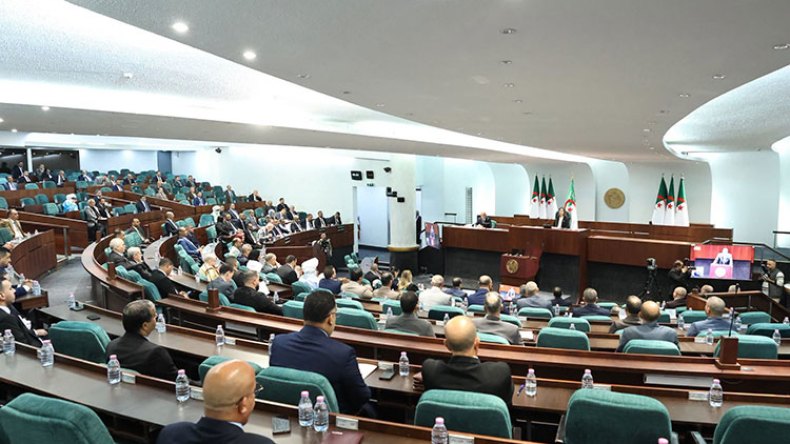
The Finance and Budget Committee of the National People’s Assembly has completed the preparation of the supplementary report on the draft finance law for the year 2027, in preparation for submitting it to a vote in the plenary session scheduled for next Monday, after studying five amendments referred by the Council’s office and listening to their owners, as the committee adhered to its amended version of Article 218 related to reviewing fuel prices, which had previously proposed subjecting any review of prices to the approval of Parliament.
On the other hand, the author of the amendment insisted on dropping the article completely, despite the committee’s rejection of his proposal, so that it would be referred to the representatives to decide on it by vote, while the committee rejected other amendments, including the proposal to raise the wealth tax from 1 to 2 percent, and the amendment to cancel the increase in stamp rights imposed on renewing biometric passports remotely for the benefit of members of the national community abroad.
According to what Al-Shorouk learned from the committee, the latter held a meeting devoted to studying the five amendments referred by the Council’s office to the draft finance law for the year 2027, where it listened to those who proposed and discussed the justifications presented for them, before deciding on the fate of each amendment, whether by convincing its owners to withdraw or reject it, or to keep it and include it in the supplementary report to be presented to the representatives during the voting session.
At the forefront of the amendments that dominated the discussion was Article 218 related to reviewing fuel prices, which witnessed the submission of two different proposals. The first called for setting the increase at 2 percent and linking it to the price of a barrel of oil. However, its author withdrew his amendment after being convinced by the justifications and clarifications provided by the committee, while the author of the second amendment adhered to the proposal to completely cancel the article, despite the committee’s rejection of it, which means including it in the supplementary report and referring it to the plenary session to decide on it by voting.
On the other hand, the committee discussed a proposal related to adding a new Article 37 bis, which includes the introduction of an increase of 500 Algerian dinars in the right of the stamp applied to renew the biometric passport remotely, for the benefit of members of the national community residing abroad, as a representative of the community called for dropping this measure, but the committee rejected the proposal, basing its position on the provisions of Article 147 of the Constitution, which prohibits the acceptance of proposals for laws and amendments that would reduce public resources or increase public expenditures, unless They are accompanied by compensatory measures that ensure the provision of alternative revenues or cover additional burdens.
The rejection was not limited to the amendment related to stamp rights, as the committee also dropped a proposal aiming to raise the wealth tax rate from 1 percent to 2 percent, as it justified its position that approving an additional increase in this tax might lead, according to its assessment, to expanding the scope of tax evasion, instead of achieving the desired increase in tax revenues, making maintaining the current rate the option adopted by the committee.
In a related context, the voting session on the draft Finance Law for the year 2027, scheduled for Monday, November 16, is expected to determine the application of the provisions of Article 97 of Organic Law No. 16-12, relating to the organization and work of the National People’s Assembly and the National Assembly, and the functional relations between them and the government, in accordance with the relevant provisions contained in the internal regulations of the National People’s Assembly.
This mechanism stipulates that priority is given, during the voting process, to the amendment of the relevant committee, whether contained in its preliminary or supplementary report, in the event that there is no amendment submitted by the government, the author of the law proposal, or the representative of the authors of the law proposal. This is the procedure that will determine the order of voting on the proposed amendments, and the committee’s proposal is given priority in the cases specified by the legal text.