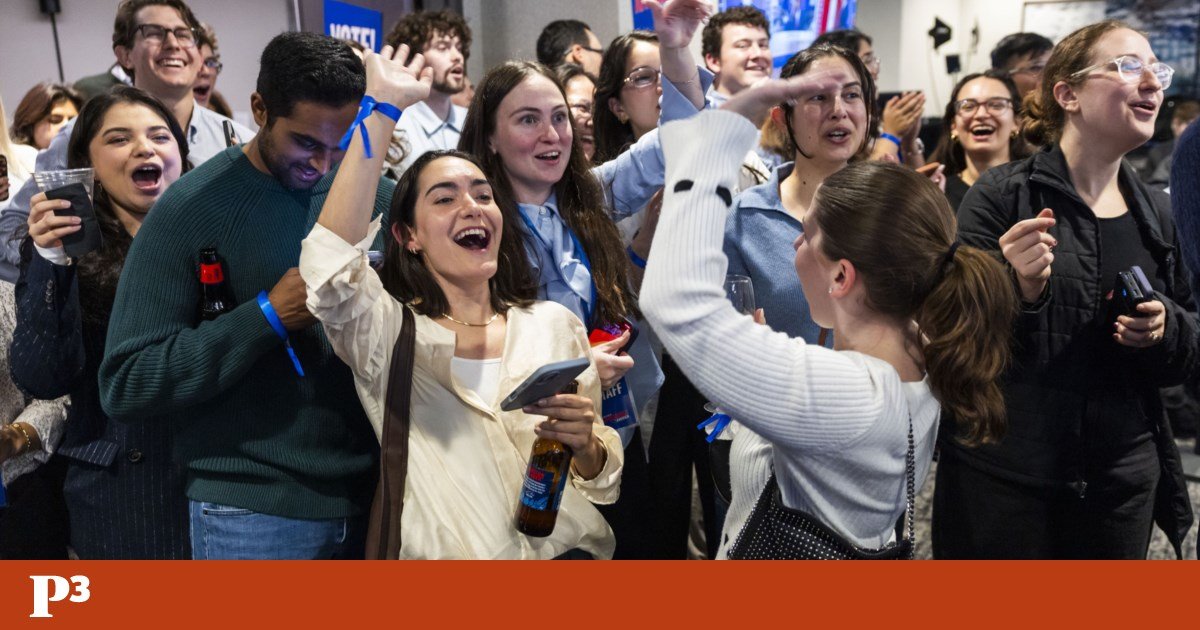
The “blue wave” which covered the United States this Tuesday, November 3, and gave a significant victory to the Democrats, included voters of different age groups, but it was among younger people that there was a more pronounced shift to the left.
According to preliminary data collected by The New York Times70% of voters under 30 opted for the Democratic Party, while only 28% voted Republican.
The change is surprising, since, in the elections two years ago, which brought Donald Trump to the White House for the second time, younger people had moved around 23 percentage points towards the Republican Party, with special emphasis on men (40%) — who, in these interim periods, made a significant shift to the left. Of men aged 18 to 44, 59% voted for a Democratic candidate.
Regarding ethnicity, 60% of young white people (white voters are Donald Trump’s support base) voted for the Democratic Party, compared to 38% who preferred the Republican Party.
Looking back: in 2020, Joe Biden received the majority of votes from this group, but, in 2024, Donald Trump captured more support among young voters than any Republican presidential candidate in the last two decades, placing him in a very close position with Kamala Harris.
In these elections, the change of camp among young white people exceeded 30 percentage points. The group of young Latinos was where there was the greatest shift: 79% voted for the Democratic Party.
Furthermore, around seven in ten voters between the ages of 18 and 29 say they supported the Democratic Party candidate in their respective constituency, according to a poll by the Associated Press (AP). And the problem really seems to be Trump: around six in ten voters under the age of 30 said that one of the reasons they voted blue was to express opposition to the current President.
Around half of young voters said they felt “angry” with the direction the country was taking — and that’s nothing new: last March, 70% of young people between the ages of 18 and 29 disapproved of the way Donald Trump was holding the presidencyaccording to a survey by the washington Post/ABC/Ipsos.
Black men also deviated (more) from the Republican Party. Only one in ten black men voted for a Republican candidate, a drop from the 2024 presidential election, when around a quarter supported Donald Trump.