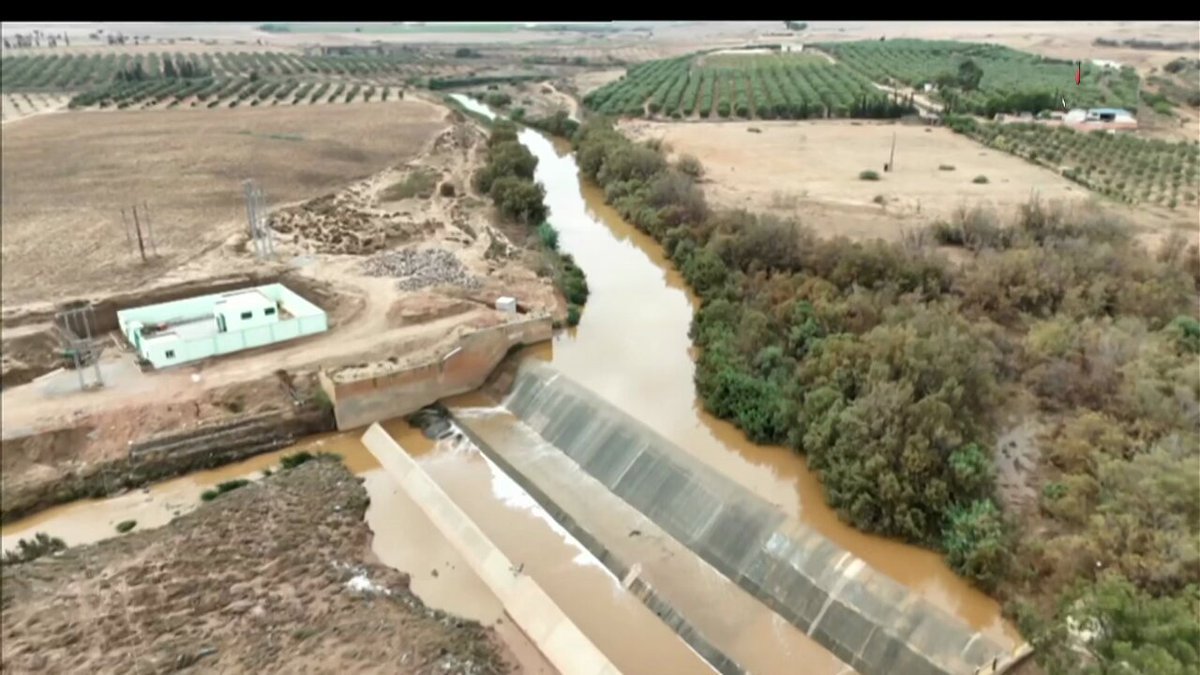
The central inspector at the Ministry of Environment and Quality of Life, Mohamed Mawali, warned of the seriousness of pollution recorded at the level of Wadi Muweileh in the state of Tlemcen, considering it a cross-border threat that affects human and animal health and environmental balance, and calling for the establishment of a permanent system for early warning and environmental monitoring.
Mwale explained, while hosting a program on Wednesday “Morning guest” To the first radio channel, laboratory analyzes carried out by the competent authorities since 2021 revealed the presence of heavy metals, chemicals and pharmaceuticals in the water coming from Morocco, warning of their potential repercussions on public health, biodiversity and water resources.
He added, “We are following up.” Environmental situation At the level of the Wadi Muwaileh region, close to the Moroccan border, for years through a periodic monitoring program supervised by the interests of the Ministry of Environment and Quality of Life, in coordination with the National Observatory for Environment and Sustainable Development, the regional environmental monitoring station in Maghnia is responsible for taking water samples and subjecting them to laboratory analysis, according to a periodic program of up to four operations annually, with the results compared to the standards specified in Algerian legislation, especially the regulatory texts issued in 2019.
Within this context, Mawali pointed out that the competent authorities relied during the monitoring and follow-up operations on a number of indicators, including those related to both the chemical demand for oxygen (DCO) and the biological demand for oxygen during a period of five days (DBO5), in addition to suspended materials in the water. Some results of analyzes on the chemical demand for oxygen showed high levels of values, while in some cases they exceeded 1000 mg/L, compared to a reference value of 30 mg/L, considering that these large differences represent an indicator. It is evident that there are high chemical loads in the water.
Heavy metals and pharmaceutical materials threaten the environment
Speaking about the nature of the pollutants discovered, Mawali stated that the analyzes revealed the presence of indicators linked to heavy metals, most notably cadmium and lead, which are substances that can pose health and environmental risks given their toxic properties and the possibility of their accumulation in natural environments.
In light of this, the speaker warned that exposure to these metals, depending on the nature of the substance, its concentration and the duration of exposure, may result in serious health effects, including disorders affecting the kidneys and nervous system, as well as the risk of bioaccumulation within living organisms and the food chain.
He continued, saying, “Indicators were also monitored related to the presence of pharmaceutical substances in the water, and he warned that such pollutants’ potential effects are not limited to humans, but can extend to biological diversity, and also affect aquatic organisms, plants, and the natural balance of the ecosystem. He added that chemical and pharmaceutical pollution in aquatic environments represents an increasing environmental challenge, especially when it comes to transboundary waterways.”
The phenomenon of eutrophication threatens aquatic life in the Boughrara Dam
Among the environmental phenomena recorded by the competent authorities, Mawali spoke of the emergence of indicators of eutrophication, especially at the level of Burj Hamam in Gharara, as a result of the high concentration of some nutrients, especially ammonium and phosphorus.
He explained that the accumulation of these elements in stagnant or slow-flowing water leads to excessive growth of algae and plant materials, causing the formation of layers that impede the penetration of light into the water and affects the process of photosynthesis.
He added that this phenomenon leads to a disturbance in the biological balance and a decrease in dissolved oxygen in the water, which may cause fish suffocation and death, as well as a deterioration in water quality. He considered the emergence of the phenomenon of eutrophication one of the dangerous indicators of the deterioration of aquatic systems, given its multiple repercussions on biological life and the quality of water resources.
Field indicators of deteriorating water quality
In response to a question about whether the pollution is intermittent or continuous, Mawali confirmed that the recorded indicators indicate the presence of continuous pollution in light of the Moroccan side’s intention to build a wastewater treatment plant in the Oujda region located on the border with Algeria, wondering at the same time about the effectiveness of this treatment and the extent of its compliance with internationally applicable environmental standards, before discharging the water into waterways crossing Algerian territory.
In this context, he also spoke about the existence of field evidence, including field inspections, laboratory results, and satellite images taken during the inspections, showing the discoloration of the water and the presence of foam and solid waste, including cans and consumer products, considering that these indicators require in-depth environmental investigations to determine the nature of the sources of pollution and responsibilities, and they can provide an important information base for documenting the environmental situation and determining its developments.
Measures to protect Boughrara Dam and water resources
Given the strategic importance of the Bougarara Dam to the region, Mawali stressed the need to take preventive measures to protect water resources, especially since the continued arrival of polluted water may lead to the transfer of some pollutants into the natural environment, including groundwater due to the phenomenon of filtration and leakage.
He explained that the relevant authorities are working to complete water treatment projects, including a wastewater treatment plant in Wadi Muwaileh, in addition to other projects related to improving water quality and reducing the effects of pollution.
He also pointed out that treating water intended for human consumption requires the adoption of advanced technologies and precise filtration stages, which may include the use of activated carbon and specialized treatment techniques, to ensure the removal of pollutants that traditional treatment methods cannot get rid of with the required effectiveness.
He stressed that protecting the population, farmers and water resources requires strengthening investments in treatment and monitoring facilities, with the need to adopt a permanent and independent system to monitor water quality in various border areas.
1,200 farmers affected by Bashar
In the context of his talk about the challenges associated with cross-border water, the Central Inspector touched on the situation of the Bashar region, noting the impact of water flow control measures at the level of the soil erosion dam, and the repercussions that may result from it on agricultural activity and threatening the livelihood of approximately 1,200 farmers in the region.
He stated that the region depends on important water resources for farmers and investors in the agricultural sector, especially in the Abadla area, which includes extensive agricultural activity, which makes any decline in water flow have potential economic and social repercussions, considering that these data highlight the importance of establishing effective cooperation and monitoring mechanisms for shared waters, ensuring that the rights of the riparian countries and the populations concerned are not harmed.
Resorting to the legal path to document damages
Regarding the possibility of resorting to international justice, Mawali stressed that laboratory data, technical reports, and field inspections represent essential elements in documenting environmental damage and determining responsibilities.
He explained that dealing with transboundary pollution issues should not be limited to the technical aspect, but should also include legal responsibility for damage to the natural environment of the affected country.
He pointed out that the concept of the natural environment does not stop at water alone, but also includes soil, sediments and living organisms, which, according to him, requires identifying the damage to these various components and evaluating the costs of treating and rehabilitating them.
He stressed the importance of adopting laboratory analyzes in accordance with recognized international standards, in addition to national legislation, to provide scientific evidence that can be relied upon in any possible legal path.
He also considered that protecting shared watercourses falls within the international responsibilities of states, given the cross-border nature of environmental systems, stressing that pollution affecting a watercourse in a particular country may have its effects extend to other countries and shared marine areas.