Miami/I feel very happy with the return to Venezuela of María Corina Machado, an exemplary citizen that many of us admire and to whom this phrase of the Liberator about women fits perfectly: “You are more sublime in your generous patriotism, you have taken up the spear; you have placed yourselves in the ranks and ask to die for the country.”
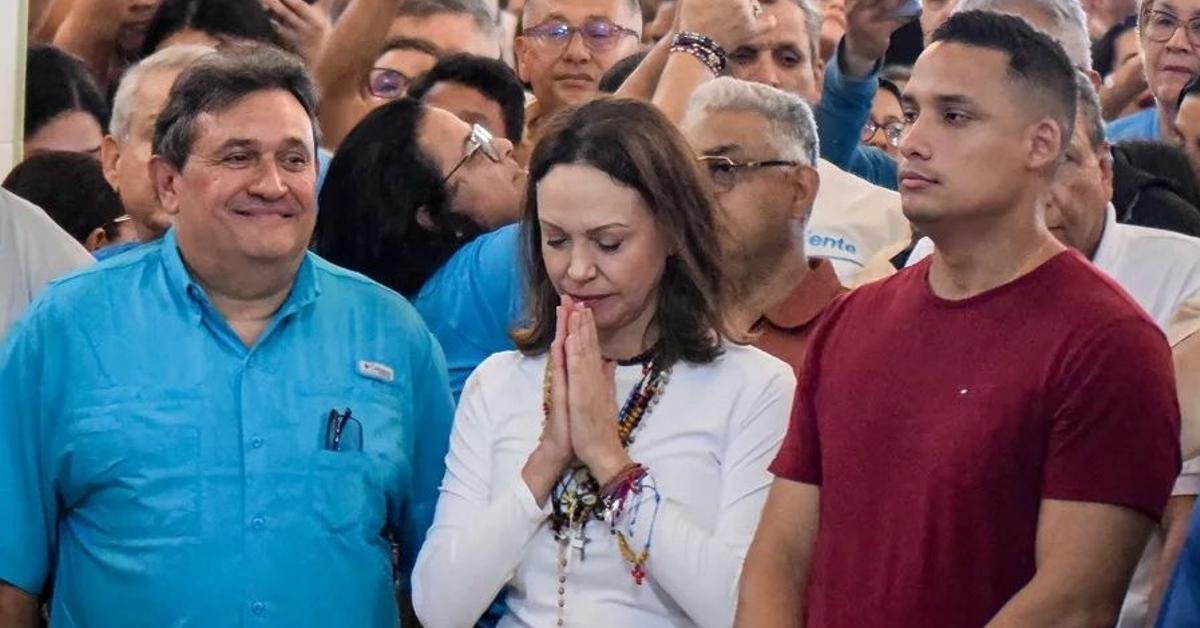
The reception that the people gave him was more than deserved. Thousands of people waited for her with cries of freedom! The best protection he could hope for was that confidence and the reborn popular hope that change was at the door.
This lady’s life work is admirable. His willingness to give everything at the altar of the Homeland is moving; He has been the inspiration of the Venezuelan people for his tenacity and willingness to take whatever risks are necessary. It is the example that Caracas gave, to which the Venezuelan national anthem alludes.
I have commented on more than one occasion that the Venezuelan journalist and dear friend Alexis Ortiz said during a conference – at that time she was being persecuted by Hugo Chávez –: “María Corina will be the president of all Venezuelans by popular election at some point in our future.” A prediction that I have no doubt will come true, because every day this lady gains more respect and admiration from everyone.
The leader’s speech, contrary to that of the enemies of Venezuelan democracy, does not incite hatred or revenge
It is to be hoped that the presence of María Corina in Venezuela – the adjective “Iron Lady” is too small for her – will accelerate the process towards democracy. Her willingness to talk with President Delcy Rodríguez about the situation of the nation reaffirms her historical behavior that, for her country, she is willing to do whatever is necessary.
For her part, Mrs. Rodríguez, an ally of Nicolás Maduro, has referred to Machado’s return with disdain, saying that the show of his arrival, while questioning his eventual participation in the dialogue that his regime maintains with the opposition by saying: “Dialogue is something very serious and requires a lot of experience.” As if she were a promoter of dialogue and understanding, when in reality she has behaved all along like the autocrat that she is.
The leader’s speech, contrary to that of the enemies of Venezuelan democracy, does not incite hatred or revenge, it praises love for the family, vehemently demands the reunification of the country, distinguishes the citizens who do not cease to demand that their rights be respected, is in favor of healthy understanding, pays tribute to political prisoners and promotes the return of exiles, particularly the youth, the quarry that guarantees survival.
These last two aspects are sometimes minimized by political leaders who fight within the borders of their country. Apparently, the urgency of the fight surrounds them and they believe that prisoners and exile are out of the game, a grave mistake.
I hope it will once again be the country of tolerance, understanding and public debates in which political opponents ended their discussions by drinking a coffee or something stronger.
The prison is a forge of conscience. Most prisoners, when they leave prison, are better citizens, more committed to the cause and better prepared to face the demands that arise. For their part, the exiles – those who endure the temptations of a life without risks, who are not seduced by a soft mattress, who only find the beaches of exile beautiful when they say goodbye – show a commitment that has overcome numerous temptations.
I am certain that, under the leadership of María Corina Machado and the collaboration of her followers, the homeland of Simón Bolívar will recover the best of its past. I hope it will once again be the country of tolerance, understanding and public debates in which political opponents ended their discussions by drinking a coffee or something stronger; a country where prosperity rules and becomes the land ready to receive everyone, as was my experience.
In Venezuela I met refugees from numerous countries, exiles motivated by different, sometimes antagonistic, causes. We were countless musiú (foreigners), but I never felt discriminated against, although I had numerous discussions because there were no shortage of nationals and refugees from other countries who defended Castroism as if it were a panacea, until Hugo Chávez arrived, then they realized the great scam they had defended.