The 48th Moscow International Film Festival summed up its results last week, presenting a total of 10 awards, two of which were for documentaries. Although there were much more noteworthy works, including the experimental film by Alexander Sokurov, the new film by Valeria Gai Germanika and others. Weekend talks about the loudest of them.
The Silver Saint George award for best documentary this year was awarded to the Chinese film “The Long Way Home,” directed by Xuisong Zheng, about the struggle of the indigenous Kashaya Pomo tribe for their ancestral lands on the northern coast of California. A special mention in the documentary film competition went to “Mashenka” by Valeria Gai Germanika, about the chronicle of an impossible love between a documentary producer and a homeless man. The winners were chosen by filmmakers whose works had previously participated or won at the Moscow festival. The chairman of the jury was the Italian director Daniele Cini, whose film “The Traveling Orchestra” participated in the MIFF last year. The jury also included Chinese documentarian Pan Zhiqi, whose film “Auntie Hu and Her Garden of Eden” won the MIFF competition last year and also received the prize for best documentary at the Shanghai Film Festival. The third member of the jury was Russian director Vladimir Golovnev. However, in addition to the winners, other documentaries of the festival were discussed almost more than the gaming competition.
“The Director’s Notebook”, director Alexander Sokurov
Perhaps the loudest story after the announcement of the results of the MIFF was the fact that Alexander Sokurov was not awarded a special prize “For Contribution to World Cinema,” which, based on an official letter signed by Nikita Mikhalkov, should have been awarded to him at the closing ceremony of the festival. The seventy-four-year-old director, winner of the Venice Golden Lion and the European Film Academy Award for creativity in general, has already stated that he did not refuse the award. At the same time, he noted that the letter from the President of the MIFF with a message about the award against the backdrop of the impossibility of showing his films in Russia (not a single film by the director over the past four years has been allowed to be shown) surprised him extremely. Although Sokurov expected that the delivery might be cancelled, he does not know the reasons for this decision. “At the MIFF ceremony, during the presentation of our film “The Director’s Notebook,” I handed over to the MIFF program director I.A. Kudryavtsev letter addressed to N.S. Mikhalkov, with a proposal to pay attention to the situation in Russian cinema. On the eve of the premiere of our film, I received confirmation of my assumptions – the award ceremony is cancelled,” the director wrote in the “Sokurov Island” telegram channel. Representatives of the MIFF, in turn, after the end of the festival, stated that they did not plan to present an award for contribution to cinema this year.
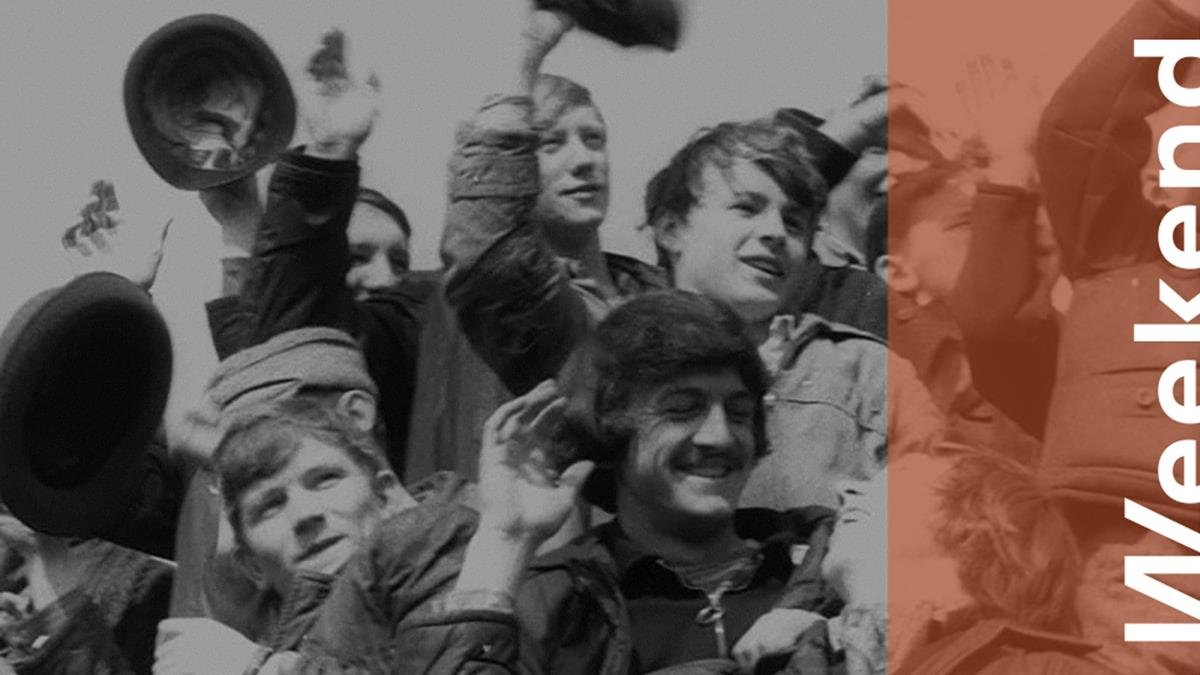
Although Sokurov, as a living classic of Russian cinema, is known to a wide audience thanks to the feature films “The Lonely Voice of a Man”, “Mother and Son”, “Russian Ark”, “Moloch”, “Faust”, “Fairy Tale”, throughout his professional career he has been involved in documentary cinema. His latest documentary film, “The Director’s Notebook,” like the feature film “Fairy Tale,” did not receive a distribution certificate, but was shown at the Moscow International Film Festival as part of the “Free Thought” program. And earlier – in the non-competition program of the Venice Festival. Despite the fact that the film runs for five hours with a fifteen-minute break in the middle, the second hall of the Oktyabr cinema was completely filled all this time. The audience’s attention and support for this film were special and very warm. “The Director’s Notebook” is a montage film consisting of Soviet chronicles of various years until 1991, which alternates with Sokurov’s diary entries, facts about disasters, significant events, dates of birth of famous people, and so on. This large-scale canvas allows you to understand how the appearance and worldview of a resident of the USSR changed, to see his dreams of building a paradise on earth and their collapse.
My Benjamin, directed by Victoria Clay Mendoza
“My Benjamin,” a film by Mexican director Victoria Clay Mendoza, who specializes in stories about creative people, became one of the best competitive films in the festival’s documentary program and was completely undeservedly left without an award. The film was shot at the Paris Opera and is dedicated to the premier dancer Benjamin Pesch. According to French law, ballet dancers must retire from the stage at age 42. A year before the end of his career, French stage star Pesch suffers a serious hip injury, which prevents him from performing leading roles on stage. Faced with a choice – to undergo surgery with an eight-month recovery or to remain on stage in modest character roles – the dancer chooses the latter. Mendoza accompanied him in making this difficult decision, filming his journey from diagnosis to his final retirement concert.
However, this film is also unusual in that from the very beginning the story of the dancer is intertwined with the personal story of the director: living in Paris, she learns about the serious illness of her mother living in Mexico, who is gradually losing touch with reality due to dementia. Mendoza reflects that soon she, like the hero of her film, will have to radically change her destiny, and this is not an easy decision. It is no coincidence that the film is called “My Benjamin”; at the end of the film, the fates of Pesch and Mendoza are intertwined. Co-director of the film Antoine Plousin Morvan, after a press conference dedicated to the film, said that for some time the heroes were a couple (in press materials their relationship is defined as friendly, which is not entirely true), but then they separated. All this is reflected in the picture, which gives this story a touch of nostalgia, passion, regret for the past, and inspiration by the art of dance and creativity in general.
“Museum”, director Marina Maria Melnik
The director has already participated in the Moscow International Film Festival with the film “Melnikov,” which subsequently received the Golden Eagle for best documentary film. Melnik also authored the paintings “Life is a High” about Vladimir Fenchenko, “Father Baikal”, “Art in Quarantine”, “City of the Sun. Leonidov.” Her films are characterized by high artistry, image standards more typical of feature films, and the psychological and poetic nature of documentary films. Both at Melnikov and at the Museum, Marina worked with Oscar-nominated cameraman and director Maxim Arbugaev, who creates a magnificent visual sequence that is difficult to tear yourself away from.
The film is dedicated to the life of one of the main Russian museums, the State Museum of Fine Arts. A.S. Pushkin. There are directors who change every year, a series of exhibitions – from the art of Rome to the life of the museum during the Great Patriotic War, and children’s excursions, and, of course, stories from museum curators about discoveries, treasures, collections and exhibits. In addition to the narrative outline of the picture, it also contains a plastic line, where dancers, similar to ancient statues, depict what happens to the museum exhibits in dance. Sometimes the director gets too carried away with this line, which somewhat delays the dynamics of the narrative, but overall it harmoniously complements the story.
“Post-Truth”, directed by Alkan Avcioglu
“Post-Truth” is the debut feature-length documentary film by Turkish film critic Alkan Avcioglu, who in 2022 changed his field of activity and began creating films and works of art using artificial intelligence. The entire visual range of the film was created by AI, the voice-over text, very journalistic and rich, which reveals the director’s journalistic background, was written by him himself. In the festival catalog, “Post-Truth” is positioned as “the first-ever feature-length documentary film created with the help of artificial intelligence.” Although, to be fair, films with this characteristic have been found at various festivals in the last couple of years, and it is quite difficult to track who was really the first.
“Post-truth” analyzes the phenomenon of modern society, when, thanks to social networks, every person lives in a kind of information bubble or echo chamber, where algorithms will always provide interesting information that confirms your view of the world. “Post-truth” is a phenomenon that characterizes the devaluation of facts and objective reality, as well as the primacy of emotions and personal attitudes to a particular problem. In the first part of the film, the director talks in some detail about how the creators of modern online services (social networks, stores, everything without which a modern person cannot imagine his life) deliberately united in order to build their work taking into account the conclusions made by psychologist Daniel Kahneman in the book “Think Slow, Decide Fast.” He received a Nobel Prize for his ideas, but in economics, not psychology.
Kahneman identified two systems in human thinking: one is fast, intuitive and error-prone, the other is slow, logical, but energy-consuming. He described that people are irrational by nature and their actions are largely dictated by automatic thinking, and not by logic and facts. Analytical thinking can help combat distortions, but this requires developing a certain critical mindset. It is the irrationality of human thinking that is used by modern online services, whose task is to attract and retain human attention for monetization.
Avcıoğlu’s voiceover is an interesting journalistic essay with a lot of references to modern psychologists and philosophers, while the visuals created by the AI, starting quite expressively, in the finale thanks to all the flaws and inaccuracies (six fingers on the hand, people in the crowd literally floating into each other, dancers with three legs) creates a frightening atmosphere, reminiscent in mood of the Dance of St. Vitus, a mysterious disease that has struck people in the 14th century, with which the author compares the current psychological state of a person living online.