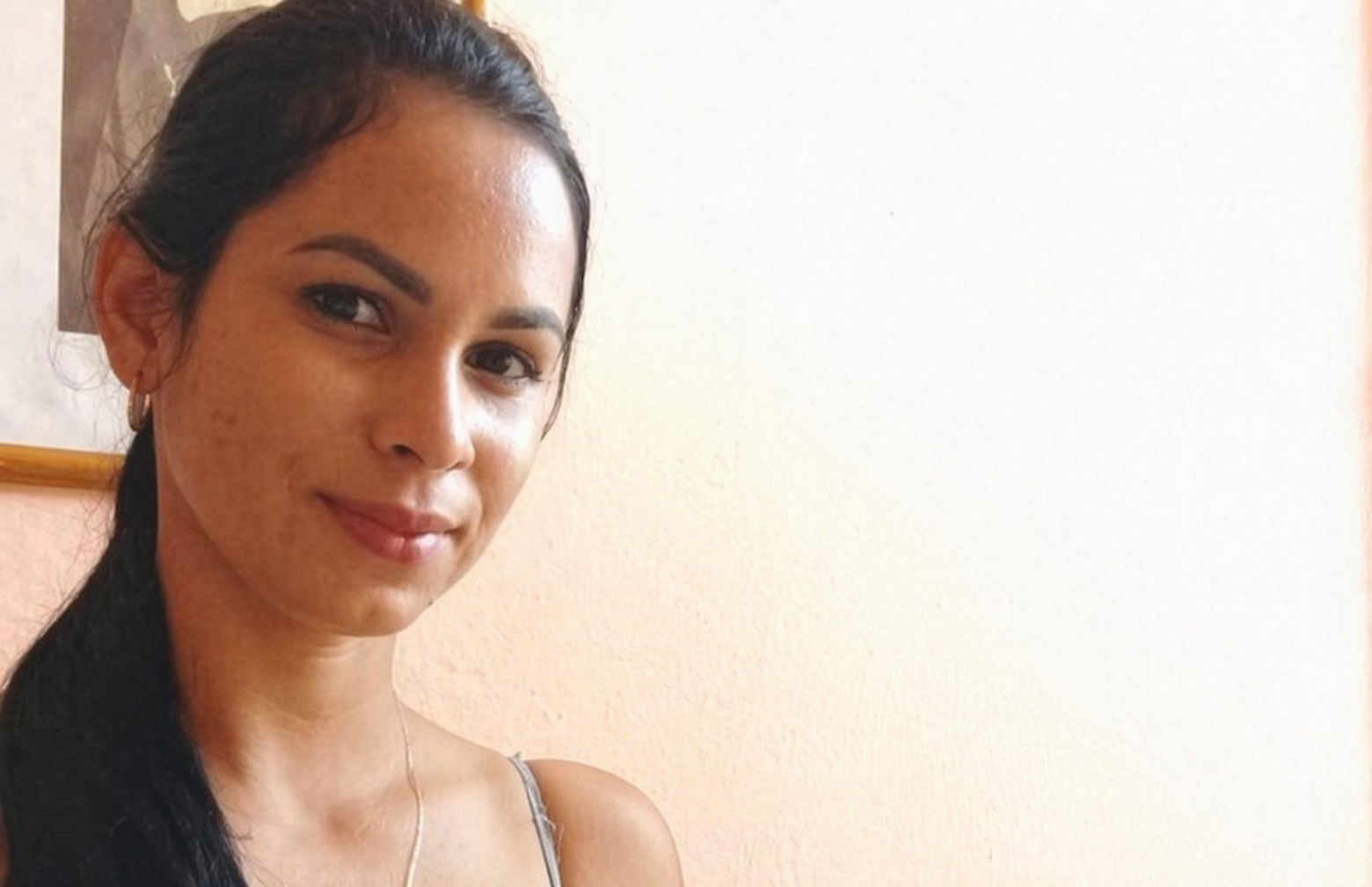
Havana/Madeleiny Fuentes León, 30 years old, resident in Santa Isabel de las Lajas, Cienfuegos, was detained last Friday by agents of the Technical Investigation Department (DTI), under orders from the Ministry of the Interior, after taking a video of a police search in her home and sending it to her sister Madeley Fuentes León, in the United States. According to the complaint from the Cubalex legal advice center this Tuesday, although the video was never published, the authorities threatened the woman with between three and five years in prison for recording the police.
According to the NGO, the agents arrived at the home with a search warrant, entered the house and confiscated two cell phones and money. The reason for the operation, according to the group Freedom For Cuba, which is based in West Palm Beach, Florida, and to which Madeleiny’s sister belongs, was in “retaliation because Madeley, from the United States, publicly defends the freedom of Cuba.”
In another publication by the group on their Facebook page, they even claim that the agents arrived at Madeleiny Fuentes’ house “with photographs taken from the United States, where Madeley appears participating in activities of the movement for the freedom of Cuba.”
Fuentes León’s relatives “continue without access to clear information about his situation”
Cubalex also reported that the young woman is in the detention center known as El Técnico, in Cienfuegos, after spending more than 72 hours in detention, awaiting arraignment. In this regard, the Cuban Institute for Freedom of Expression and Press (Iclep) pointed out that the relatives of Fuentes León “continue without access to clear information about his situation, after the authorities’ refusal to offer details for at least 72 hours.”
Meanwhile, Justicia 11J reported that it contacted Madeley in the United States, who stated that “she fears a possible arrest of her mother, Mabel León Fonseca, after responding to a summons from authorities of the Ministry of the Interior” in the same place where Madeleiny is detained. According to the activist, her mother went to the facilities this Monday at 8 in the morning and “it is these hours that I don’t know anything about my family.”
Cubalex stressed that her detention was arbitrary and that it “reveals a pattern of repression by association against her, and of transnational repression against her sister Madeley, for her participation in protests in West Palm Beach.”
Likewise, the legal advice center stressed that recording the police “is not a crime, it is a citizen’s right, as confirmed with the definitive file of the case against Anna Sofía Benítez and her mother, Caridad Silvente.”
Recording the police “is not a crime, it is a citizen’s right, as confirmed with the definitive file of the case against Anna Sofía Benítez”
In an analysis published last March, the NGO points out that the Constitution of Cuba (2019) “is clear”: the organs of the State, its directors and employees are obliged to submit to the control of the people. Furthermore, article 101 establishes that State bodies must act with due transparency. A police officer who delivers a summons is carrying out a public and official act, not a private one, which is why he is exposed to the control and verification of that act.
Likewise, it cites that the Criminal Procedure Law (2021), in its Article 326, explicitly recognizes that audio and image recordings made by private persons can be admitted as evidence as long as they are not obtained through deception or violence. “Filming an officer on the street while doing his job is not a crime; it is, in fact, a way to obtain lawful evidence about the legality of an act. In this way, this material could be used in a possible judicial process where it is judged whether or not the police officer’s behavior complies with the law,” he adds.
Cubalex emphasizes that recording the police while they carry out their duties is not an act of “disrespect” or “resistance,” but rather a guarantee that human rights and the dignity of people are respected.