On Thursday June 18, 2026, Rabat took a new step in its positioning as an African platform for cultural cooperation with the official inauguration of the headquarters of the secretariat of the African Capitals of Culture. Located in the capital of the Kingdom, this headquarters gives an address, visibility and institutional depth to a pan-African initiative carried by the African Union and supported by the Ministry of Youth, Culture and Communication.
Beyond the ceremony, the event embodies an ambition: to make culture no longer a simple symbolic register, but a lever for development, sovereignty, social cohesion and influence for African cities. The choice of Rabat is not trivial. First African Capital of Culture in 2022, the city now hosts the body called to support the next editions of the program, including that of Cape Verde in 2028, with Praia as the main host city.
In his speech, Adama Traoré, president of the African Capitals of Culture committee, recalled that this adventure took shape in Marrakech in 2018, during the Africities Summit, around a strong conviction: “culture must be fully recognized as a pillar of the sustainable development of the continent”. For him, the opening of the headquarters in Rabat marks a decisive step: “This headquarters is not just a building. It is a common house. A place for dialogue, cooperation, reflection and innovation.
A choice which establishes Morocco’s African positioning
The strategic dimension of Rabat has been widely underlined. For Adama Traoré, the choice of the Moroccan capital is part of a broader reading of Morocco’s role in Africa. “If we become aware of African geopolitics in recent years, Morocco is today a major player,” he said, citing its commitment to major sporting, cultural and institutional meetings. The Rabat headquarters thus appears to be the natural extension of an African policy which places culture at the heart of continental cooperation.
Making culture a driver of development and sovereignty
Salah-Eddine Abkari also highlighted the issue of the cultural and creative industries. Africa has, according to him, immense potential: a large, connected and increasingly better trained youth, dynamic metropolises, powerful musical and visual styles, stories, epics and imaginations capable of nourishing true cultural, media and digital sovereignty. The African Capitals of Culture are called upon to become vectors of this growth. In a statement to “Matin”, he placed this inauguration in the continuity of the success of Rabat, African Capital of Culture. The opening of the headquarters, he explained, confirms the influence of Rabat as the cultural and administrative capital of the Kingdom, while reflecting a Royal policy aimed at strengthening the African roots of Moroccan culture and deepening cooperation with the continent.
African cities at the heart of the continent’s transformations
His speech insisted on an essential point: African Capitals of Culture should not be limited to the organization of events. They must contribute to sustainably strengthening cultural policies, institutions, equipment, professional networks and creative industries. “The inauguration of this headquarters is more than a protocol ceremony. It is an act of commitment,” he declared, calling for culture to be made “an engine of sustainable development, an instrument of dialogue between peoples, a lever of cooperation between territories and a pillar of African integration.”
A place that tells the story of Africa through design and craftsmanship
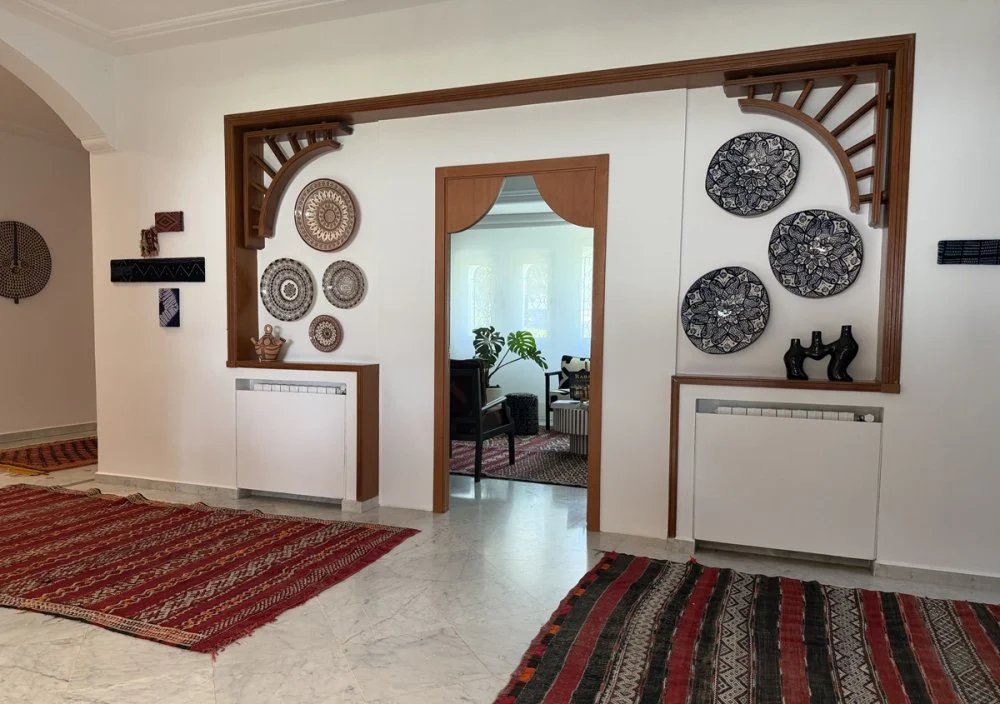
On “Matin”, Cheick Diallo explained that he wanted to create an “African house of culture” capable of incubating the desire to work together. The building, Moroccan in its vernacular architecture, should, according to him, receive a touch of modernity without losing its soul. “Valuing know-how means valorizing cultures,” he stressed. The objects, textiles, patterns and materials tell the story of an Africa in dialogue with itself: Morocco, Mali, the continent’s crafts, ancient gestures and contemporary forms.
A vision born in Marrakech and destined to shine throughout the continent
Aminata Lo Paye, member of the African Capitals of Culture committee, also praised the symbolic significance of this installation. Returning to the genesis of the project, she recalled the initial idea of highlighting African capitals and working on their cultural development. Morocco, she told “Matin”, offered the program a headquarters and a villa intended to become a place “of learning and transmission of African values”. For her, each city designated African Capital of Culture must make it possible to revisit, beyond the city itself, an entire country through its heritage, its practices and its cultural ambitions.
All the interventions converged on the same conviction: the issue goes far beyond the opening of a building. It is about giving substance to African cultural governance, capable of connecting the cities, artists, institutions, diasporas and youth of the continent. As Adama Traoré summarized, Africa has “the resources of its future”, but also “the stories of its future”. In Rabat, these stories now find a home.
They said
Adama Traoré, President of the African Capitals of Culture committee
“Today we are taking a major step forward in the construction of this program supported by the African Union. The opening of this headquarters finally gives us an essential institutional and operational anchor to support future editions. Thanks to the support of the Kingdom of Morocco, we now have a permanent space which will allow us to strengthen our action and further promote this initiative across the continent. The choice of Rabat is anything but trivial. Morocco has established itself in recent years as a key player in African cooperation, whether in the cultural, institutional or territorial fields. Hosting this headquarters in the Moroccan capital is a strong signal for the future of the program and for the development of pan-African cultural cooperation.”
Salah-Eddine Abkari, Acting Secretary General of the Department of Culture
“The choice of Morocco and Rabat to host the headquarters of the African Capitals of Culture is the natural extension of the influence that Rabat experienced during its mandate as African Capital of Culture. This establishment reflects the confidence of African and international partners in the Kingdom’s role in cultural cooperation. It is fully in line with the vision of His Majesty King Mohammed VI aimed at strengthening Morocco’s cultural presence in Africa and consolidating the historical, human and civilizational ties that unite the Kingdom to the continent.
Aminata Lo Paye, Member of the African Capitals of Culture committee
“This headquarters is the culmination of a vision held for several years: to highlight African capitals and make culture a real lever for transforming territories. Thanks to the commitment of the Kingdom of Morocco, this house today becomes a place of learning, transmission and promotion of African cultures, at the service of future generations. The choice of Rabat for this headquarters is part of a long-term vision. Already, when the program was launched, His Majesty King Mohammed VI wanted to make Rabat the first African Capital of Culture. The hosting of the permanent headquarters constitutes a new step in this ambition to make the Moroccan capital an African cultural crossroads open to the entire continent.
Cheick Diallo, Architect and scenographer of the headquarters
“This project is above all a story of encounter. The aim was to create an African cultural house capable of reflecting both the identity of Morocco and the wealth of the continent. We wanted to promote artisanal know-how, materials and traditions, while giving them a contemporary expression. We did not look for Africa elsewhere: we found it here, in Morocco. Through artisans, materials, shapes and objects, we discovered an Africa that dialogues with itself. This scenography tells precisely this meeting and this desire to build the future of the continent together.