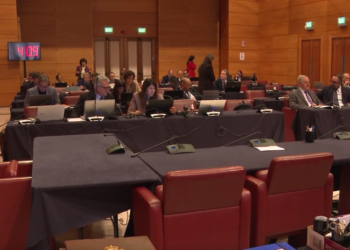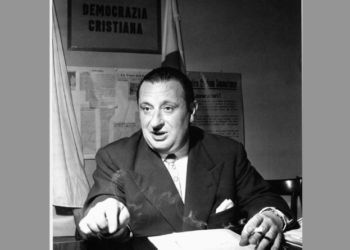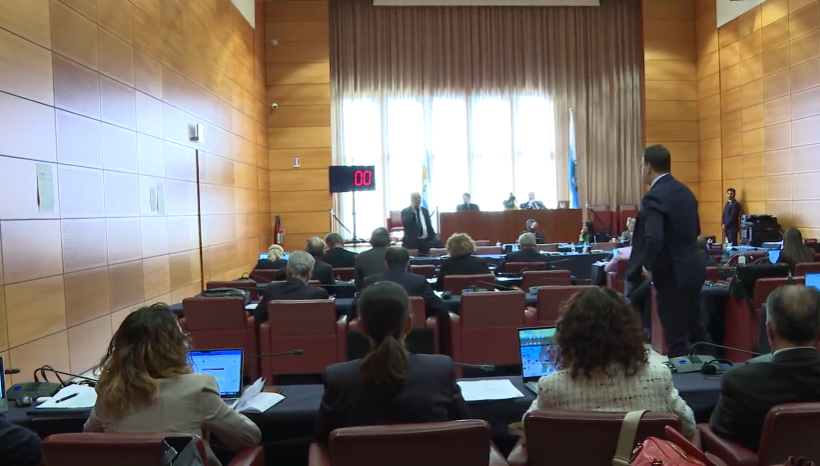
SAN MARINO – The Great and General Council ratified by majority, in the afternoon session of 29 October 2026, the Decree-Law of 5 October 2026 n. 149, which introduces provisions to protect the image and prestige of the Republic in the context of sporting activities. The provision, modified with an amendment by the Government, was at the center of a heated confrontation between the majority and the opposition, with particular reference to the affair of San Marino Calcio and its president Emiliano Montanari.
The decree regulates the use of the name “San Marino” and other names attributable to the Republic, such as “Sammarinese”, “Titano”, “Serenissima” and “RSM”, by associations, federations and sports clubs. The aim is to introduce a prior authorization system to protect the state’s reputation.
In the council debate, the connection with the situation of San Marino Calcio emerged, the association that is the holder of the registration to participate in the Italian Eccellenza championship and is currently subjected to forced liquidation. The reasons indicated include the failure to file financial statements for two financial years and the absence of the minimum number of resident members required.
The opposition first contested the use of the decree-law, believing that the matter would have required a more organic regulatory project. Gian Matteo Zeppa, from Rete, raised the risk that the provision could take on an ad personam character, recalling the judicial and sporting events attributable to Montanari. In his speech he also mentioned the preventive seizure of approximately 14 million euros, carried out by the Guardia di Finanza in June 2026 against the company Nuova Elettra Srl
Among the main technical critical issues highlighted by the opposition councilors, including Giovanni Maria Zonzini of Rete, was the obligation to change the company name within thirty days of the revocation of the authorization. A term that could conflict with the regulations of the FIGC and international sports federations, which do not allow name changes during a competitive season.
Zonzini also contested the original extension of the authorization obligations to companies based abroad, citing various international sports entities that use names attributable to San Marino without having links with the Republic.
Nicola Renzi of Repubblica Futura expressed his opinion on the need for broader regulatory intervention, calling for an organic regulation for the protection of State symbols in all sectors. Criticisms on the legislative method also came from Iro Belluzzi of Libera and Emanuele Santi of Rete, who recalled the need to strengthen the suitability criteria for those acquiring company shares in San Marino.
Oscar Mina of the PDCS spoke in support of the measure, underlining the importance of protecting the prestige of the Republic without penalizing the amateur and voluntary associations that operate regularly.
The intervention of Luca Della Balda, Libera’s councilor and former president of San Marino Calcio, was particularly detailed, reconstructing his involvement in the affair. As of January 2024, the association reportedly had debts of around 200,000 euros and had found no support from sports institutions or local entrepreneurs. In that context, Montanari would have taken care of the debts, investing around 2 million euros of his own resources.
Della Balda contested both the existence of the conditions of extraordinary necessity and urgency of the decree, and the speed of the automatic liquidation of the association, ordered pursuant to article 37 of Law no. 129/2010, without granting the thirty-day deadline required for document regularisation.
Paolo Crescentini of the PSD and Andrea Ugolini of the PDCS also spoke in favor of the regulatory system, recalling the responsibility of the sports clubs that represent the Republic abroad and the importance of the institutional relationships that allow the San Marino teams to participate in the Italian championships.
In the reply, the Secretary of State for Justice and Sport Rossano Fabbri rejected the hypothesis that the decree was aimed against a single person, reiterating the general nature of the law. Fabbri explained that the urgency was linked to the presence of a San Marino association in forced liquidation, a condition also confirmed by an appeal ruling, but still entitled to the registration to participate in a foreign championship. A situation which, according to the Government, could have compromised the regularity of the competitions and relations with the Italian sports authorities.
The comparison led to a change in the text. The Government presented an amendment to article 1 to specify that the provisions apply exclusively to associations, federations and sports clubs “under San Marino law”. The amendment incorporated the objections relating to the application of the rule to foreign bodies, prompting Rete to withdraw the suppressive amendments.
Fabbri also clarified that, in the event of revocation of the authorization during a competitive season, the San Marino National Olympic Committee (CONS) will have to allow the company concerned to complete the championship before requesting the change of name. The direction, formalized in the minutes, aims to avoid conflicts with foreign sports regulations and leave open the possibility of judicial appeal pursuant to Law no. 68/1989.
With these amendments, Legislative Decree no. 149/2026 was finally ratified by a majority of the Great and General Council.