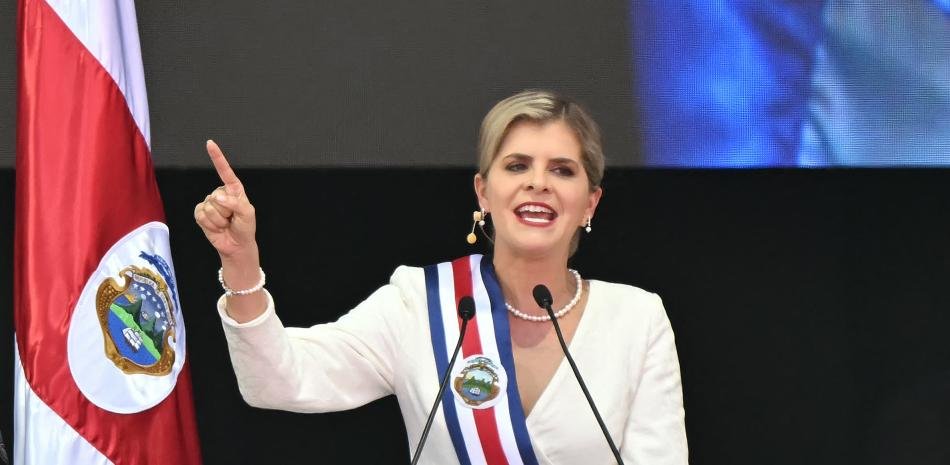
The president of Costa Rica, Laura Fernandezwas emergency evacuated this Friday after an explosion was heard while she was traveling through an area of illegal miningaccording to television images and the president herself.
Fernández, several ministers and deputies toured the town of Crucitas, near the border with Nicaraguawhen a detonation of unknown origin echoed in the mountains and her bodyguards threw her to the ground.
“I felt like what you see in the movies (…) that they grab him by the hair, throw him to the ground and put him (in the car). You don’t see how I turned out!” the president told the press shortly after.
“They checked me because it is the protocol, but I am very well. Don’t worry more than necessary,” he added, reporting that five people, including congressmen, received treatment for “pressure drops, sugar crashes, (and) heat strokes.”
According to the president, what happened demonstrates “the danger” that exists in Crucitas (Alajuela, north), where mafias illegally extract gold and contaminate the environment in the vicinity of the San Juan River.
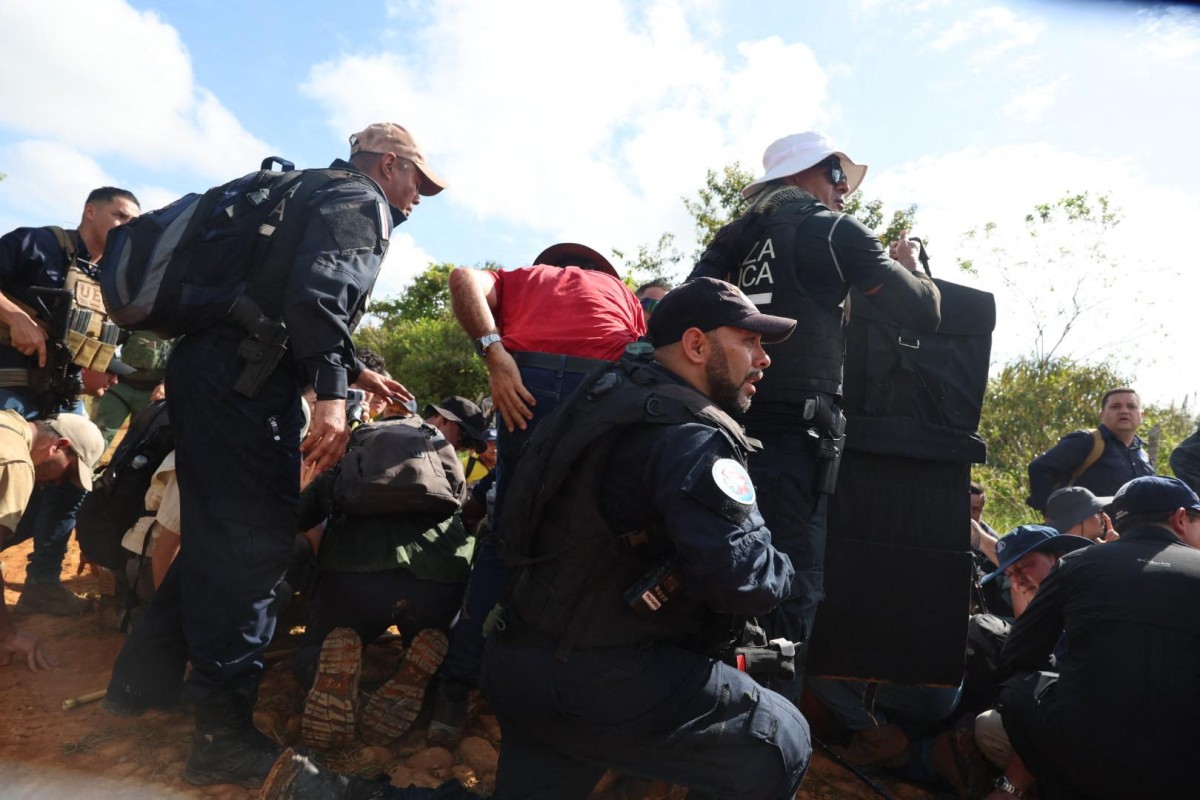
The image shows security members crouching and protecting Costa Rican President Laura Fernández with shields after an explosion that occurred during a visit to an illegal mining area.
Fernández is promoting a legislative project to allow mining exploitation in that area.
In the images released by people who accompanied the tour, we can see how the ruler reacts scared after the explosion. She is then seen lying on the dirt floor with several armed bodyguards covering her.
“I strongly repudiate today’s attack against the president (of Costa Rica). The racketeering He cannot break us. “I’m glad to know that he is fine,” the president of Panama, José Raúl Mulino, wrote on social network X.
Costa Rican authorities have not yet reported the origin of the explosion.
Illegal mining is a point of discussion between the governments of Costa Rica and Nicaragua, which last March agreed to coordinate actions to confront this crime.
The incident in Crucitas occurred after on June 3 the Costa Rican government claimed to have received information about an alleged plan to attack the president that was being hatched from a prison.
In May, Fernández replaced his mentor Rodrigo Chaves, whose government denounced in January an alleged plot to attack the then president, although the authorities never offered concrete evidence.
The main suspect turned out to be an activist human rightsreview of Chaves in social networkswho described the case as a “vile hoax.”